
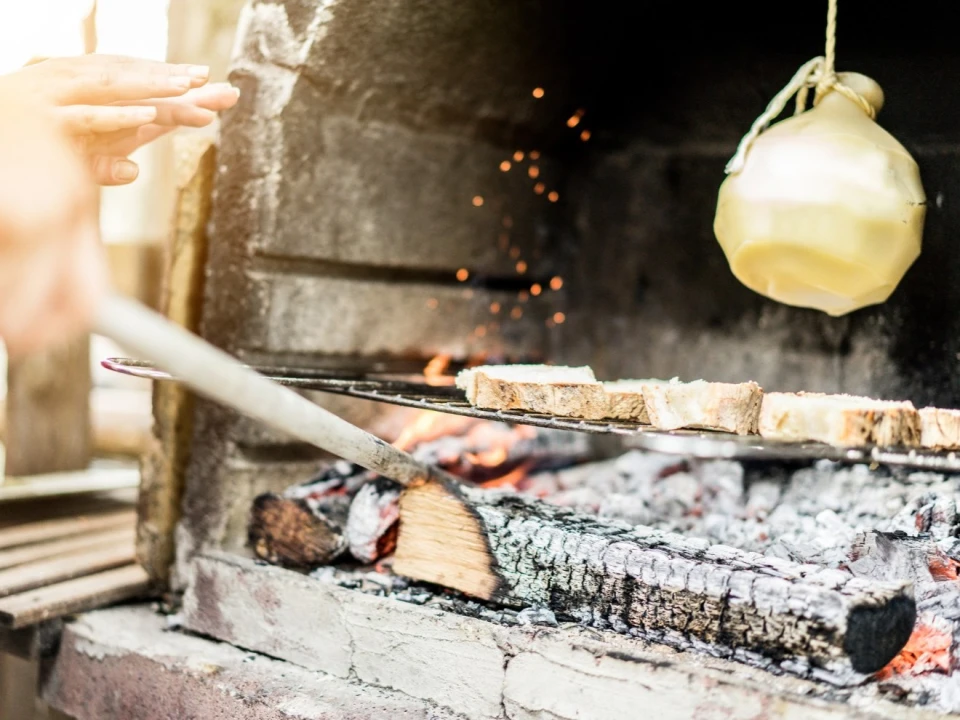
Long before anyone thought of holding a cheese over a fire, the Neapolitan dialect already had an expression for someone about to be executed: fare la fine del caciocavallo, to end up like a caciocavallo. The comparison came from the cheese itself, which narrows at the top into a pinched neck tied with cord, giving it the unfortunate look of something hanging from a noose.
So when a menu in Basilicata or Puglia today offers caciocavallo impiccato, literally “hanged caciocavallo,” the name is actually older than the dish, because the expression came first and the cooking method – the cheese tied by its neck and suspended over hot embers, with bread underneath to catch the melted cheese – followed much, much later.