
Columbus Day 2026 brought renewed attention to Christopher Columbus monuments across the United States, highlighting their historical significance, the contributions of Italian American immigrants, and ongoing efforts to determine how these landmarks should be preserved and interpreted.
From Syracuse, New York, to Seattle, Washington, and Pueblo, Colorado, developments surrounding Columbus statues illustrated the different ways American communities are approaching their historical heritage during the nation's 250th anniversary.
In Washington, D.C., Representative Claudia Tenney of New York introduced a congressional resolution supporting the preservation of Columbus statues and monuments. Announced on October 12, the proposal emphasizes the cultural importance of memorials created by Italian American communities, particularly those established by immigrants who faced discrimination while building new lives in the United States.
The resolution specifically identifies the Columbus Monument in Syracuse, New York, which was dedicated in 1934 after fundraising efforts by working-class Italian immigrants. The measure expresses congressional support for preserving these memorials for future generations. It is a proposed resolution, not an enacted federal law.
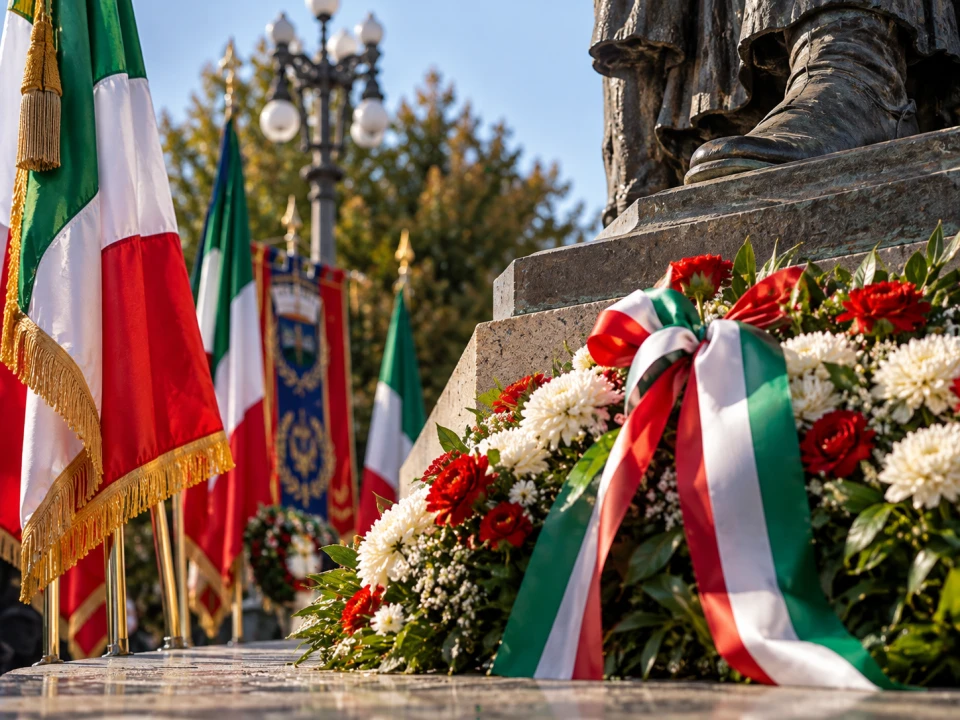
Syracuse was also the setting for one of the most significant Columbus Day ceremonies of 2026. On October 12, the Columbus Monument Corporation held its traditional wreath-laying at Columbus Circle, continuing a ceremony that began when the monument was inaugurated 92 years ago.
The monument features a 12-foot statue sculpted in Florence by Italian artist Renzo V. Baldi. Nick Pirro, vice president of the Columbus Monument Corporation and former Onondaga County executive, emphasized the monument's importance as a tribute to the immigrant families whose contributions helped finance its construction.
The ceremony took place amid continuing discussions about the monument's future. Former Mayor Ben Walsh proposed removing the statue in 2020 and developing a redesigned public space. The Columbus Monument Corporation has opposed removal, while the Onondaga Historical Association is pursuing proposals for improvements to the surrounding area.
Design proposals are scheduled for public review November 10–24, with a selection expected in December. The process offers an opportunity for residents to participate in discussions about the historic district and its future.
Across the country, another Columbus monument attracted attention in Seattle, Washington.
A bronze statue donated to the city by the Italian-American Club in 1978 stood for decades in Waterfront Park between Piers 57 and 59. Following repeated vandalism, the city removed the statue in 2012 and placed it in storage for restoration.
The waterfront reconstruction project was completed in 2025, but the monument has not returned to its former location.
On October 12, Seattle journalist Jason Rantz reported that the city's Office of Arts & Culture declined to answer questions about the statue's present location, restoration expenses, and potential future display. The report renewed interest in the preservation and documentation of publicly owned artworks donated by immigrant communities.
In Pueblo, Colorado, Columbus Day also drew attention to the Christopher Columbus Piazza. Photographs taken October 12 documented protesters outside the public space, illustrating the continuing discussion surrounding the historical figure and the monument's meaning.
For many Italian Americans, Columbus monuments are closely connected to the history of immigration, cultural identity, and community achievement. Other Americans, including Indigenous communities, emphasize the importance of acknowledging the consequences of European colonization.
These perspectives have prompted conversations about historical interpretation, preservation, and the role of public monuments in contemporary civic life.
As the United States celebrates 250 years of independence, the developments in New York, Washington, and Colorado demonstrate the continuing importance of local history. The monuments also provide opportunities to explore the experiences of Italian immigrants, the communities they established, and the lasting contributions of their descendants to American society.