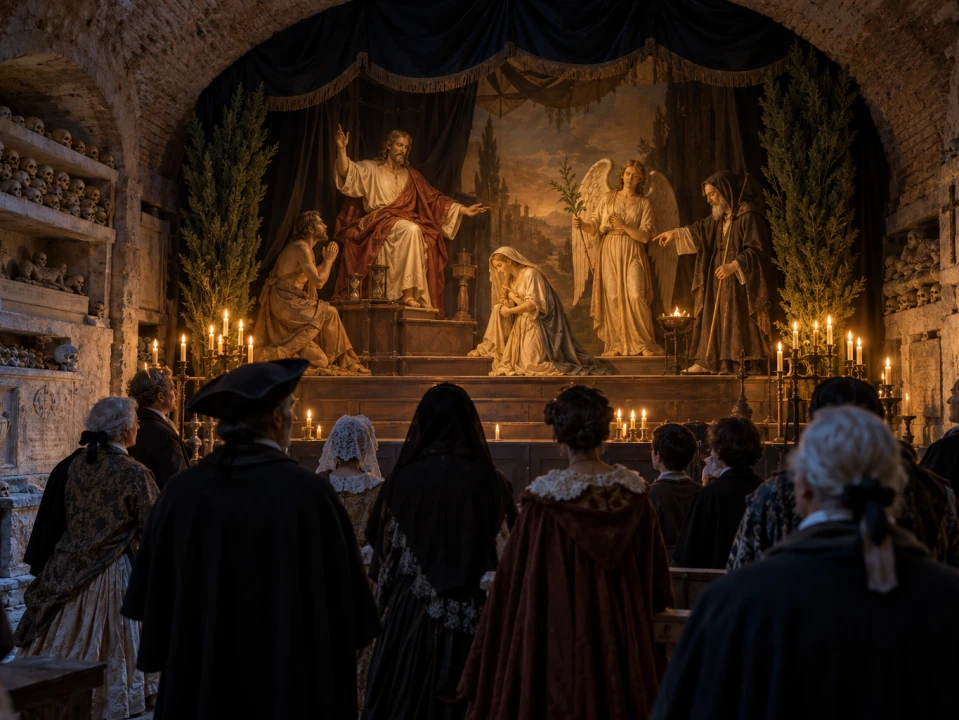
In eighteenth-century Rome, the first days of November brought crowds into the churches to pray for the dead, but some of those visitors also went underground, into burial chambers where they found something remarkably close to a theater. There were black curtains, cypress branches and painted scenery, with life-size wax figures dressed to represent biblical stories, the lives of saints and, occasionally, the Last Judgment itself.
The stages stood among actual tombs and human bones, and people came to see them during the Ottavario dei Morti, eight days of religious observances beginning on November 1. The displays became so popular that visitors could even pay a small donation and take home an engraving of what they had seen.