
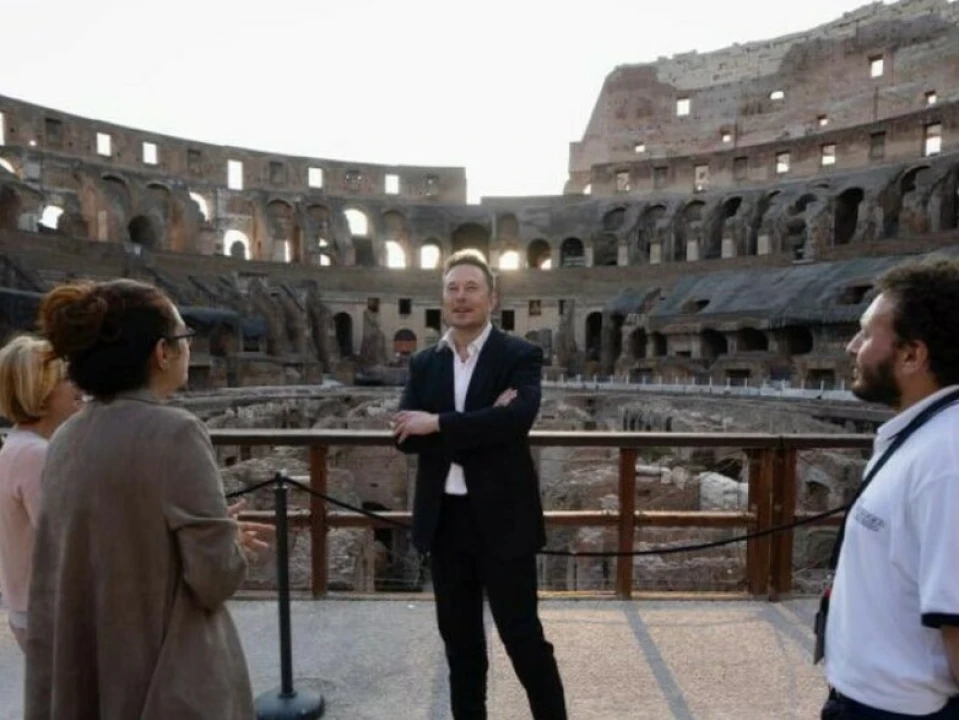
In a surprising move that blends technology with history, Elon Musk’s charitable foundation has pledged one million dollars to support the preservation and study of ancient Rome. The initiative – called “Expandere Conscientiae Lumen” – aims to protect and digitally document archaeological sites while promoting education and public access through new technologies.
The program will be managed by research teams and cultural organizations dedicated to combining traditional archaeology with modern innovation.
The funded projects cover a wide range of fields. Among them are the 3D scanning of the Column of Marcus Aurelius in Rome, underwater explorations of the ancient port of Puteoli, pigment and material analysis at Pompeii, and digital mapping of textile production during the Roman Empire. Each project seeks to apply artificial intelligence, laser scanning, and high-definition imaging to reveal new information about everyday life, architecture, and craftsmanship in the classical world.
During the public announcement held in Rome, Musk emphasized his fascination with the story of civilizations that have risen and fallen over the centuries. He noted that ancient Rome represents not only a crucial chapter in world history but also a mirror reflecting the challenges and ambitions of modern society. According to Musk, advanced technology can open new windows onto the past – offering a more precise and engaging understanding of human development.
Rather than going directly to local government, the donation will be distributed among universities, archaeological institutes, and conservation centers in Italy and abroad. Twelve different projects have been selected, including initiatives in countries once part of the Roman Empire such as Tunisia, Morocco, and Jordan. This international perspective underscores the universal importance of Rome’s heritage – and the global interest in preserving it for future generations.
Scholars and cultural observers see the gesture as more than a simple act of philanthropy. By investing in the study of antiquity, Musk highlights the relevance of the ancient world in shaping the future. The project reflects a growing trend in which private foundations and tech leaders contribute to cultural preservation – using digital tools to expand access and knowledge.
Ultimately, the partnership between technology and archaeology represents a new way of engaging with the past. Through detailed scans, virtual reconstructions, and AI-driven research, the ruins of Rome are no longer static remnants but living archives of human ingenuity. Musk’s involvement adds momentum to this vision – turning the preservation of ancient history into a forward-looking mission that connects innovation, memory, and the enduring curiosity that drives progress.