In 2026, We the Italians celebrates “Two Anniversaries, One Heart” – the 250th anniversary of the United States and the 80th anniversary of the Italian Republic. This article is part of the “Happy Birthday USA: Italy’s Role in America’s Greatness” project, in which we tell the stories of 18 well-known figures of Italian heritage who helped make the United States great.
---
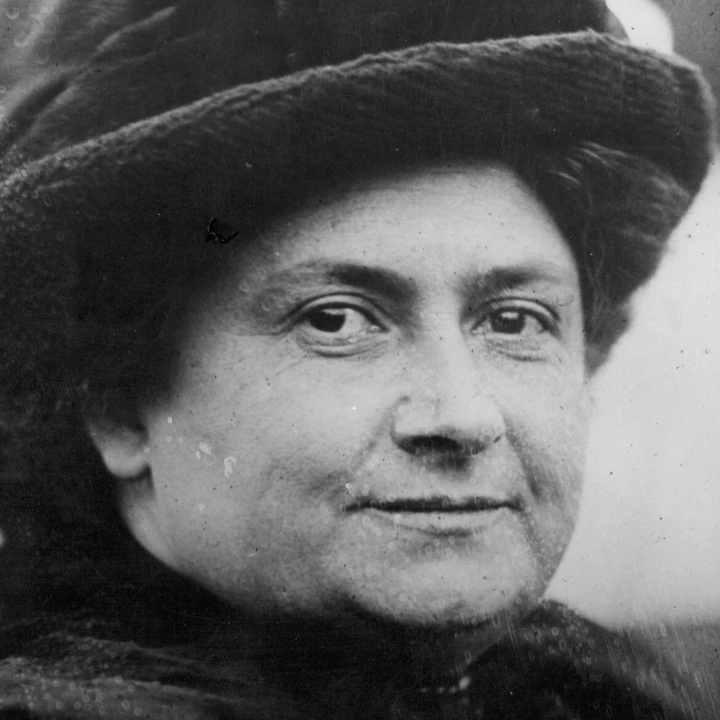
Maria Montessori, innovation and educational excellence in America
In 1909, the American journal The Kindergarten Primary Magazine published an article comparing different approaches to early childhood education. It introduced the Italian experience of the Casa dei Bambini, founded in Rome by Maria Montessori in 1907, highlighting its role in fostering the holistic development of young children.
It was the first sign of an interest that would grow exponentially, eventually making the United States the country where the Montessori educational approach achieved its widest and most sustained expansion. Through the dedication and expertise of hundreds of educators and teachers, Montessori principles became deeply integrated into the American public education system.
The pioneers of this movement were the first American teachers and education scholars who traveled to Italy between 1909 and 1911 to observe Montessori's work firsthand and study the foundations of her method. Upon returning home, they became its earliest and most influential advocates.
Building on these experiences, in February 1911 Professor Henry W. Holmes of the Harvard University Division of Education encouraged Montessori to translate The Montessori Method: Scientific Pedagogy as Applied to Child Education in the Children's Houses into English to reach a broader audience.
"This suggestion," Montessori wrote in the preface to the American edition published in 1912, "represented one of the greatest events in the history of my educational work" because it opened the door to the spread of both the Montessori Method and the Casa dei Bambini in the United States. The first American Children's House had already been established in 1911 in a suburb of New York by Anne George, a dedicated teacher who had spent an extended period in Italy observing Montessori's classrooms and who personally helped translate her work into English.
The popularity of the American edition inspired 68 American teachers and educators to travel to Rome in 1913 to attend the first international Montessori teacher training course.
The growing interest in Montessori's educational philosophy – particularly its remarkable success in addressing the needs of children with learning differences – attracted the support of influential American figures such as Alexander Graham Bell, Thomas Edison, Helen Keller, and Margaret Woodrow Wilson, daughter of President Woodrow Wilson. Each recognized the transformative potential of Montessori's ideas.
In 1913, American journalist and publisher Samuel McClure persuaded Montessori to travel to the United States for a lecture tour that included Washington, New York, and Boston. He described it as "a journey to conquer the world."
Her lectures, meetings with educators, scholars, public officials, and intellectuals, together with the extensive coverage in McClure's Magazine, gave tremendous momentum to the creation of Montessori schools and the emergence of a genuine educational movement.
The Montessori American Committee was established in New York in 1912, followed in 1913 by the Montessori Educational Association in Washington, D.C. Both organizations played a key role in promoting the Montessori Method throughout public and private schools across the country.
That same year, Alexander Graham Bell and his wife Mabel published an article in the Evening Star expressing their hope that Washington would become the headquarters of Montessori education in America.
The Bells also arranged a meeting between Montessori and Washington State's Superintendent of Public Instruction, who declared that Montessori education brought to the United States "the seed of true freedom – the freedom that liberates individuality from constraint and subjugation and allows the human personality to develop naturally."
Montessori's emphasis on independence, self-directed learning, and respect for the child's natural development sparked an intense national conversation about the need to modernize educational practices. Numerous experimental programs followed, many of them achieving remarkable success.
When Montessori returned to the United States in 1915 with her son Mario, 130 Children's Houses were already operating successfully across the country.
During this second visit, she met with hundreds of educators in Los Angeles, San Francisco, and San Diego. She also participated in the Panama-Pacific International Exposition in San Francisco, where she presented one of the most memorable demonstrations of her method through the famous "Glass Classroom." Visitors were able to observe 30 children working independently in a fully functioning Montessori classroom, witnessing the method in action.
Montessori's two visits to America, together with the English translations of many of her educational writings, significantly accelerated the spread of her educational philosophy. However, it was the founding of the American Montessori Society (AMS) in 1960, inspired by Mario Montessori, that firmly established the Montessori Method as a respected educational model within American public education.
In 1967, Hilltop School in Reading, Ohio (now closed), became the first public Montessori school in the United States. From that pioneering initiative, the method expanded into public schools serving students of all grade levels throughout the nation.
Building on these early successes, the American Montessori Society, together with the Association Montessori Internationale (AMI) and the Montessori Children's Academy (MCA), helped launch a quiet but lasting educational revolution. Today, the United States is one of the countries where Montessori education is most widely represented, with approximately 5,000 public and private Montessori schools, including about 500 accredited public schools recognized by the AMS.
American public Montessori schools have become models of educational excellence. One notable example came in 2010, when Clark Montessori Junior and High School in Cincinnati, Ohio, was selected as a finalist in the Race to the Top Commencement Challenge, a nationwide competition launched by the Obama administration and the U.S. Department of Education. Public high schools were invited to submit creative applications and videos demonstrating how they prepared students for college and careers. The winning prize was a commencement address by President Barack Obama.
Maria Montessori made an extraordinary contribution to educational innovation in the United States. Her work advanced educational research, elevated the professional development of teachers and educators, and laid the foundation for the continuous improvement of American public education. More than a century after her ideas first crossed the Atlantic, her vision continues to inspire schools committed to nurturing the intellectual, social, and personal growth of every child.
Nel 2026 We the Italians celebra Two Anniversaries One Heart, i 250 anni degli Stati Uniti e gli 80 anni della Repubblica Italiana. Questo articolo fa parte del progetto Happy Birthday USA: Italy’s role in America’s greatness, in cui raccontiamo 18 famosi personaggi di origine italiana che hanno fatto grandi gli Stati Uniti.
---
Maria Montessori, innovazione ed eccellenza educativa in America
Nel 1909 sulla rivista americana “The Kindergarten Primary Magazine” apparve un articolo in cui, mettendo a confronto modelli ed esperienze educative per la prima infanzia, si presentava ’esperienza italiana della Casa dei Bambini fondata e Roma da Maria Montessori nel 1907 e se ne sottolineava la funzione di promozione di crescita globale delle bambine e dei bambini.
Fu il primo segnale di un interesse che sarebbe stato destinato a crescere in modo esponenziale, portando gli Stati Uniti a diventare il primo paese in cui l’approccio educativo montessoriano ha conosciuto una diffusione ed una espansione costante e crescente, innervando in modo efficace il sistema dell’istruzione pubblica grazie alla motivazione ed alla preparazione di centinaia di educatori e di insegnanti.
I pionieri sono stati indubbiamente i primi insegnanti e pedagogisti americani che tra il 1909 e il 1911 partirono per l’Italia per osservare il lavoro educativo della Montessori e per apprendere i fondamenti del suo metodo, dandone poi diffusione di ritorno nel loro paese.
Sulla scorta di queste esperienze nel febbraio del 1911, il Professore Henry W. Holmes, della Division of Education presso la Harvard University suggeriva alla Montessori di far tradurre in inglese ”Il Metodo della Pedagogia Scientifica applicato all' educazione infantile nelle Case dei Bambini” per consentirne una maggiore diffusione.
“This suggestion” scrisse la pedagogista nella prefazione alla edizione americana, che vide la luce nel 1912 “represented one of the greatest events in the history of my educational work” (Montessori, 1912) perché aprì le porte alla diffusione americana del Metodo e delle Case dei Bambini, la prima delle quali fu fondata nel 1911 in un sobborgo di New York da Anne George, insegnante appassionata che aveva trascorso un lungo periodo di osservazione e documentazione in Italia e che si era impegnata in prima persona nella traduzione del lavoro della Montessori.
Sulla scia della popolarità della edizione americana del “Metodo” 68 insegnanti e pedagogisti americani partirono per Roma per partecipare al primo corso di formazione professionale sul metodo Montessori tenutosi a Roma nel 1913.
Il forte interesse per l’approccio educativo della Montessori, e le sue molteplici applicazioni a partire dai sorprendenti risultati ottenuti in risposta a bisogni educativi speciali, è testimoniato dall’importante supporto dato alla diffusione delle sue idee pedagogiche negli Stati Uniti da figure come quelle di I Alexander Graham Bell, Thomas Edison, Helen Keller, e Margaret Woodrow Wilson, figlia del presidente degli Stati Uniti, che ne intuirono la forza e le potenzialità di sviluppo.
Nel 1913 il giornalista ed editore americano Samuel McClure convinse la Montessori a partire a sua volta per gli Stati Uniti per tenere un ciclo di conferenze a Washington, New York e Boston che egli descrisse come “un viaggio alla conquista del mondo”.
Le conferenze e gli incontri con intellettuali, studiosi, insegnanti, politici e la risonanza mediatica che ebbero gli articoli apparsi sul McClure's Magazine diedero un fortissimo impulso alla diffusione delle Case dei Bambini e alla nascita di un vero e proprio movimento educativo.
Nel 1912 viene fondato il “Montessori American Committee» (1912), con sede a New York, e nel 1913 viene fondata la «Montessori Educational Association» con sede a Washington che eserciteranno una forte spinta propulsiva per la diffusione del Metodo nelle scuole pubbliche e private.
Nel 1913 sull’Evening Star apparve un articolo di Alexander Graham Bell e di sua moglie Mabel che auspicavano di istituire nello stato di Washington il quartier generale dell’educazione montessoriana in America.
Furono poi gli stessi coniugi Bell a favorire un incontro tra la Montessori ed il Dirigente dell’Istruzione Pubblica dello Stato di Washington, il quale ebbe a dire che la pedagogia montessoriana portava «negli Stati Uniti il seme della vera libertà, quella che affranca l’individualità dalla costrizione e dalla soggezione, che deriva e deforma gl’istinti della libera personalità umana» .
La diffusione delle idee montessoriane, che promuovono l’autonomia e l’indipendenza dei bambini e l’apprendimento autodiretto, accese un serrato dibattito sulla necessità di innovare i modelli educativi nella scuola e spinse alla creazione di numerose sperimentazioni che ebbero notevole successo.
Quando la Montessori tornò nuovamente negli Stati Uniti nel 1915 accompagnata da suo figlio Mario risultavano attive, e con successo, 130 Case dei Bambini.
Nel corso di questo secondo viaggio la Montessori incontrò centinaia di educatori ed insegnanti tra Los Angeles, San Francisco, e San Diego e partecipò alla Panama-Pacific International Exposition (“World’s Fair”) a San Francisco dove diede una famosissima dimostrazione del sue metodo attraverso l’istallazione di una “Classe di Vetro” che consentiva agli spettatori di osservare dal vivo 30 bambini impegnati nelle attività di una classe modello.
I due viaggi della Montessori in America, la traduzione in inglese di molti dei suoi scritti pedagogici hanno dato un fortissimo impulso alla diffusione della pedagogia montessoriana ma è con la nascita dell’American Montessori Society (AMS) (1960) su impulso di Mario Montessori che il Metodo viene riconosciuto come valida opzione pedagogica per lo sviluppo del sistema della scuola pubblica americana.
Nel 1967 la Hilltop School a Reading, Ohio (attualmente chiusa) diventa la prima scuola pubblica Montessori negli Stati Uniti e a partire da questa prima esperienza il Metodo viene applicato in scuole pubbliche di diverso ordine e grado in tutto il Paese.
A partire da queste sperimentazioni, l’American Montessory Society, insieme alla Association Montessori International (AMI) e la Montessori Children’s Academy (MCA), hanno dato l’avvio ad una silenziosa e continua rivoluzione educativa che ha portato gli Stati Uniti ad essere uno dei Paesi in cui il Metodo Montessori è maggiormente diffuso nelle scuole pubbliche e private (circa 5000 in totale di cui 500 scuole pubbliche di diverso ordine e grado accreditate e riconosciute dall’AMS).
Le scuole pubbliche montessoriane negli Stati Uniti sono una vera eccellenza educativa come dimostra il fatto che nel 2010 la Clark Montessori Junior and High School di Cincinnati, Ohio sono risultate finaliste al “Race to the Top Commencement Challenge” competizione nazionale lanciata dall'amministrazione Obama e dal Dipartimento dell'Istruzione degli Stati Uniti in cui si invitavano le scuole superiori pubbliche a presentare candidature e video creativi che dimostrassero come preparavano al meglio i loro studenti per l'università e il mondo del lavoro, con il primo premio rappresentato da una visita del Presidente Barack Obama per tenere il discorso di fine anno scolastico.
In conclusione possiamo dire che Maria Montessori abbia dato un fondamentale contributo all’innovazione educativa, alla ricerca pedagogica, allo sviluppo professionale degli insegnanti e degli educatori negli Stati Uniti gettando le basi per un processo di costante e continuo miglioramento del sistema dell’istruzione pubblica, che richiede un impulso sistematico e progressivo per poter esercitare al meglio la sua funzione di promozione della crescita globale della persona.