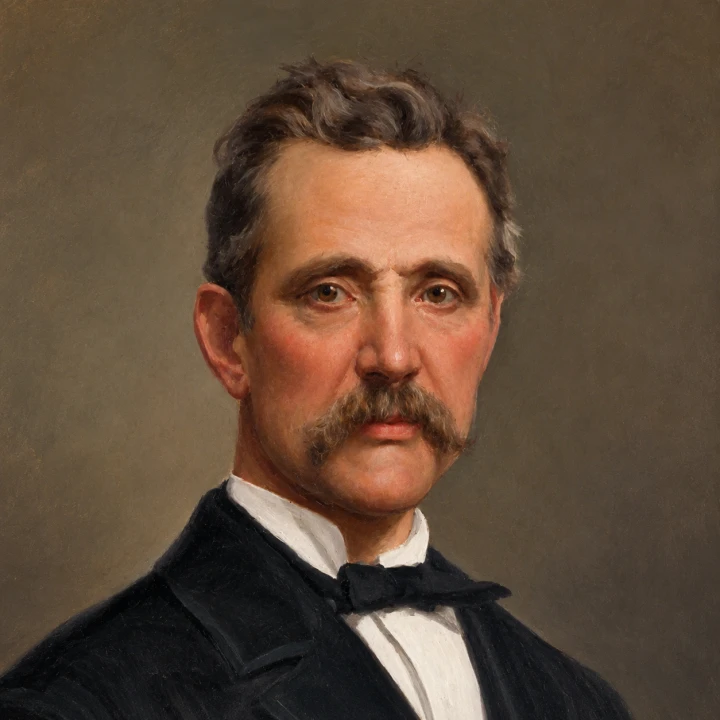
In 2026, We the Italians celebrates “Two Anniversaries, One Heart” – the 250th anniversary of the United States and the 80th anniversary of the Italian Republic. This article is part of the “Happy Birthday USA: Unsung Italian Heroes” project, in which we share how, in every corner of the United States, an Italian has made a positive impact on their local community.
---
Iron from Alabama, artistry from Italy. The legacy of Giuseppe Moretti
Few artists have left a mark on Alabama as monumental – and as literally visible – as Giuseppe Moretti. Born in Siena, Italy, in 1857, Moretti brought the traditions of Italian sculpture to the United States and ultimately created an image that became inseparable from Birmingham: Vulcan, the colossal figure that still watches over the city from Red Mountain.
Moretti was trained in the rigorous Italian artistic tradition, studying sculpture in Florence before developing an international career. After arriving in the United States in the late 19th century, he worked on major public commissions in several states. But Alabama would become one of the places where his Italian talent produced its most enduring legacy.
His defining commission came when Birmingham prepared for the 1904 Louisiana Purchase Exposition in St. Louis. The young industrial city wanted a spectacular symbol representing Alabama’s iron and steel industry. Moretti designed Vulcan, the Roman god of fire and metalworking – an inspired connection between classical Italian culture and Birmingham’s modern industrial identity.
The result was extraordinary. Standing 56 feet tall and weighing approximately 100,000 pounds, Vulcan was cast in Birmingham from local iron. Today it is recognized as the world’s largest cast-iron statue and one of the largest statues ever created in the United States. After its appearance in St. Louis, Vulcan returned home and eventually took its permanent place atop Red Mountain.
More than 120 years later, the Italian-born figure remains Birmingham’s best-known visual symbol. It represents the furnaces, mines, workers and industries that transformed the city into one of the great industrial centers of the American South. Yet behind this thoroughly Alabamian icon was the imagination and craftsmanship of an Italian immigrant.
Moretti’s Alabama story extended beyond Birmingham.
While working in the state, the sculptor became fascinated by the exceptionally white marble found around Sylacauga. Italian craftsmen understood marble better than almost anyone, and Moretti immediately recognized its artistic and commercial potential. He became closely associated with efforts to develop the local marble industry, helping draw attention to a natural resource that would become internationally celebrated.
Moretti established a studio in the Sylacauga area and worked with its marble. His presence helped connect Alabama stone with the centuries-old Italian tradition of marble sculpture and encouraged its use as an artistic material rather than simply a geological resource.
That connection endured. Sylacauga became known as “The Marble City,” and Alabama marble would eventually be used for sculpture, architecture and major public buildings. The industry became an important part of the area's economic and cultural identity.
Moretti therefore left Alabama two remarkable legacies. In Birmingham, he transformed iron into art and gave a growing American city an enduring symbol. In Sylacauga, he helped reveal the possibilities contained in Alabama marble and contributed to a tradition that continues to distinguish the community.
His story is also an Italian American story at its best. Moretti did not leave his Italian heritage behind when he crossed the Atlantic. He brought with him an artistic education rooted in Florence, a classical imagination and an Italian understanding of sculpture and stone. He then applied those gifts to the materials, ambitions and identity of his adopted country.
Giuseppe Moretti died in Italy in 1935, but in Alabama his work never really left. Iron and marble still tell his story – the story of an Italian artist who helped Alabama see the beauty and potential already present in its own land.
Nel 2026 We the Italians celebra Two Anniversaries One Heart, i 250 anni degli Stati Uniti e gli 80 anni della Reubblica Italiana. Questo articolo fa parte del progetto Happy Birthday USA: The Unsung Italian Heroes, in cui raccontiamo perchè in ogni angolo degli Stati Uniti qualcuno italiano ha lasciato un impatto positivo per il singolo territorio.
---
Ferro dall’Alabama, arte dall’Italia. L’eredità di Giuseppe Moretti
Pochi artisti hanno lasciato in Alabama un segno monumentale – anche nel senso più letterale del termine – quanto Giuseppe Moretti. Nato a Siena nel 1857, Moretti portò negli Stati Uniti la grande tradizione della scultura italiana e finì per creare un’immagine divenuta inseparabile da Birmingham: Vulcan, la figura colossale che ancora oggi domina la città dalla cima di Red Mountain.
Moretti si formò nella rigorosa tradizione artistica italiana, studiando scultura a Firenze prima di intraprendere una carriera internazionale. Dopo essere arrivato negli Stati Uniti alla fine dell’Ottocento, lavorò a importanti commissioni pubbliche in diversi Stati. Ma l’Alabama sarebbe diventato uno dei luoghi in cui il suo talento italiano avrebbe lasciato l’eredità più duratura.
La commissione che avrebbe definito la sua carriera arrivò mentre Birmingham si preparava alla Louisiana Purchase Exposition del 1904 a St. Louis. La giovane città industriale desiderava un simbolo spettacolare che rappresentasse l’industria siderurgica dell’Alabama. Moretti progettò Vulcan, il dio romano del fuoco e della lavorazione dei metalli – un collegamento perfetto tra la cultura classica italiana e la moderna identità industriale di Birmingham.
Il risultato fu straordinario. Alta 56 piedi, circa 17 metri, e pesante approssimativamente 100.000 libbre, oltre 45 tonnellate, la statua di Vulcan fu realizzata a Birmingham utilizzando ferro locale. Oggi è riconosciuta come la più grande statua in ghisa del mondo e una delle più grandi statue mai realizzate negli Stati Uniti. Dopo l’esposizione a St. Louis, Vulcan tornò a Birmingham e trovò infine la sua collocazione permanente sulla Red Mountain.
Più di 120 anni dopo, la figura concepita dall’artista italiano rimane il simbolo visivo più riconoscibile di Birmingham. Rappresenta le fornaci, le miniere, i lavoratori e le industrie che trasformarono la città in uno dei grandi centri industriali del Sud degli Stati Uniti. Dietro questa icona profondamente legata all’Alabama c’erano però l’immaginazione e la maestria di un immigrato italiano.
La storia di Moretti in Alabama andò ben oltre Birmingham.
Durante la sua permanenza nello Stato, lo scultore rimase affascinato dallo straordinario marmo bianco presente nell’area di Sylacauga. Forte della tradizione italiana nella lavorazione della pietra, Moretti ne comprese immediatamente il potenziale artistico e commerciale. Si legò allo sviluppo dell’industria locale del marmo e contribuì ad attirare l’attenzione su una risorsa naturale destinata a diventare famosa.
Moretti stabilì uno studio nell’area di Sylacauga e lavorò con il marmo locale. La sua presenza contribuì a creare un ponte tra la pietra dell’Alabama e la secolare tradizione italiana della scultura, favorendo la percezione di quel materiale non soltanto come risorsa geologica, ma come materia prima per l’arte.
Quel legame è sopravvissuto nel tempo. Sylacauga sarebbe diventata nota come “The Marble City”, mentre il marmo dell’Alabama sarebbe stato utilizzato nella scultura, nell’architettura e in importanti edifici pubblici, diventando parte dell’identità economica e culturale della zona.
Moretti lasciò quindi all’Alabama due eredità straordinarie. A Birmingham trasformò il ferro in arte e regalò a una città americana in piena crescita un simbolo destinato a durare. A Sylacauga contribuì a mostrare le possibilità racchiuse nel marmo dell’Alabama e allo sviluppo di una tradizione che ancora oggi distingue quella comunità.
La sua è anche una storia italoamericana nel senso più autentico. Moretti non lasciò la propria italianità dall’altra parte dell’Atlantico. Portò con sé la formazione artistica maturata a Firenze, l’immaginario classico e una sensibilità italiana per la scultura e la pietra. Mise poi questi talenti al servizio dei materiali, delle ambizioni e dell’identità del suo Paese d’adozione.
Giuseppe Moretti morì in Italia nel 1935, ma in Alabama la sua opera non se n’è mai veramente andata. Il ferro e il marmo continuano a raccontare la sua storia – quella di un artista italiano che aiutò l’Alabama a riconoscere la bellezza e il potenziale già presenti nella propria terra.