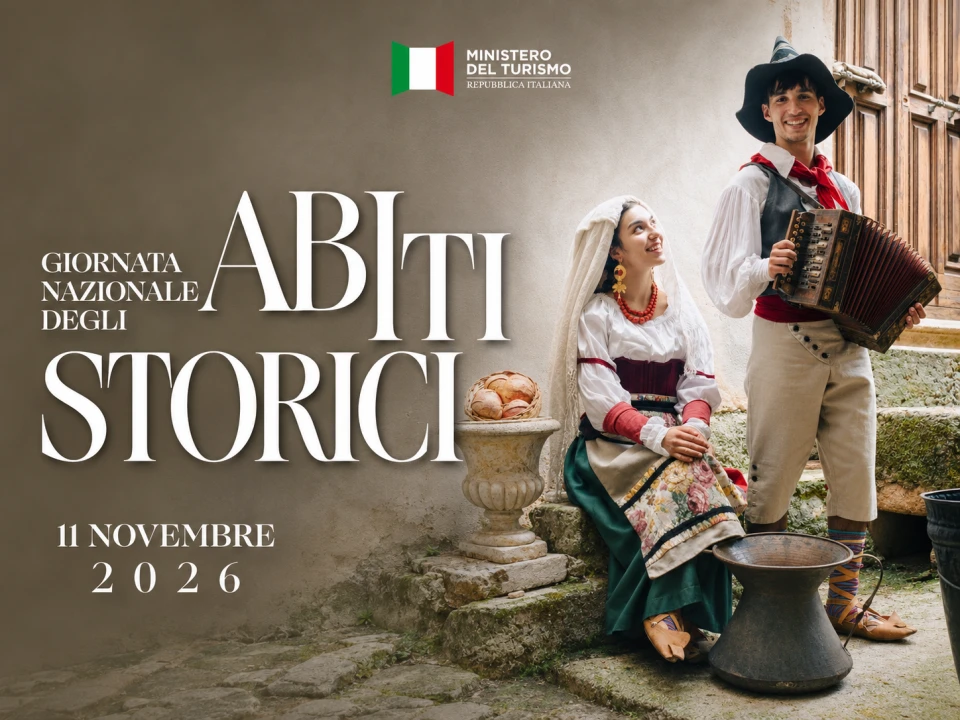
A dress can preserve the memory of an entire community. Across Italy, embroidered sleeves, woven fabrics, and ceremonial garments are taking center stage as more than 110 initiatives celebrate the country’s second National Historic Clothing Day.
Observed on November 11, 2026, the celebration extends through December 11, bringing a month of activities to villages, museums, historic centers, and artisan workshops. Promoted by the Ministry of Tourism, the program connects local traditions through a shared national calendar called “L’Italia vestita di storia” – Italy dressed in history.
The initiative highlights the remarkable variety of Italian clothing traditions, from Sardinian dress and Arbëreshë garments to Venetian styles and elaborate Sicilian Baroque brocades. Each reflects a distinct combination of local history, craftsmanship, and community life.
Visitors can discover these stories through narrated dressing demonstrations explaining the meaning of colors, fabrics, and decorative details. Parades and exhibitions bring garments into public spaces, while open workshops introduce the techniques behind embroidery, weaving, and tailoring.
Participation is central to the program. Activities involving schools and young people encourage the transfer of skills between generations. Hands-on workshops also invite travelers to try traditional techniques, turning a cultural visit into an opportunity to learn directly from local craftspeople.
Beyond their beauty, these garments represent an economic resource. Seamstresses, embroiderers, weavers, and independent workshops help sustain the small businesses that give many Italian communities their character. The initiative aims to support their visibility while encouraging cultural tourism in inland areas and travel outside peak vacation periods.
For Italian Americans exploring their family origins, historic clothing offers another meaningful connection to ancestral places. A pattern, a headdress, or a familiar ceremonial outfit can open a conversation about the lives of earlier generations.
Through these encounters, Italy’s textile heritage becomes a shared experience – connecting skilled hands, curious visitors, and communities proudly carrying their traditions forward.