

Sardinia’s drinking culture extends far beyond wine. Across the island, families and artisans have transformed berries, herbs, citrus peels and grape pomace into distinctive spirits that evoke the Mediterranean landscape. These drinks are not simply after-dinner pleasures – they are expressions of hospitality, rural knowledge and a tradition in which almost nothing from the harvest is wasted.
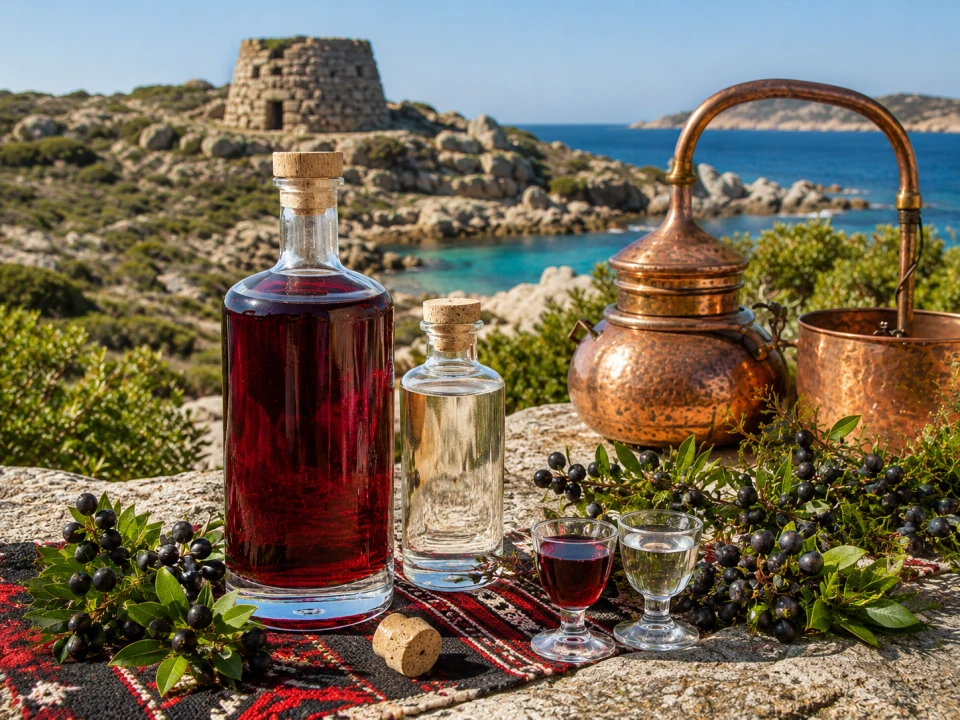
The best-known Sardinian liqueur is mirto, made from the berries of Myrtus communis, the evergreen myrtle that grows throughout the island’s aromatic scrubland. Its leaves release a resinous fragrance when crushed, while its dark berries ripen between late fall and winter. Traditionally, families gathered them by hand and steeped them in alcohol before adding sugar and water.
Protected as a geographical indication, Mirto di Sardegna must be produced on the island with locally harvested berries. Regulations require at least 150 grams of berries per liter and an alcohol content between 28% and 36%. Artificial colors and flavors are prohibited. The resulting liqueur is deep ruby red, with aromas of wild fruit, herbs and Mediterranean vegetation. Its sweetness is balanced by a slightly bitter, balsamic finish.
Mirto rosso is generally served cold, often from a bottle kept in the freezer, after a substantial meal. It accompanies holidays, weddings and family gatherings, but it is equally at home after a simple dinner. Mirto bianco offers a different interpretation. Usually made with myrtle leaves or pale berries, it tends to be lighter in color, drier and more herbal.
Sardinia’s most powerful traditional spirit is filu ’e ferru, also called abbardente, a name related to the idea of “burning water.” It is a clear acquavite distilled primarily from grape pomace – the skins, seeds and other material left after pressing. Although its raw material comes from grapes, filu ’e ferru is not wine. Distillation concentrates the alcohol and aromas, producing a dry, warming spirit comparable to grappa but marked by Sardinia’s own methods and identity.
Its unusual name means “iron wire.” According to a popular story, when home distillation was restricted or taxed, Sardinians hid bottles underground and marked their location with a piece of wire emerging from the soil. Whether literal history or colorful folklore, the tale captures the spirit’s association with secrecy, independence and domestic craftsmanship.
Filu ’e ferru is traditionally served neat in a small glass, usually at room temperature. Depending on the producer and raw material, it may present floral, fruity or earthy notes beneath its initial alcoholic intensity. Some versions are aged in wood, gaining golden color and softer flavors of spice and vanilla.
Today, a new generation of Sardinian distillers is expanding this heritage. Contemporary gins, bitters and botanical liqueurs incorporate juniper, myrtle, lentisk, citrus peel, wild fennel, helichrysum and other island plants. Their goal is not merely to imitate international styles, but to give Sardinia a recognizable place within modern craft distilling.
From chilled mirto to fiery abbardente, Sardinian spirits preserve the scent of the macchia, the thrift of agricultural life and the pleasure of welcoming guests. Each small glass offers a concentrated portrait of an island – rugged, fragrant and proudly individual.