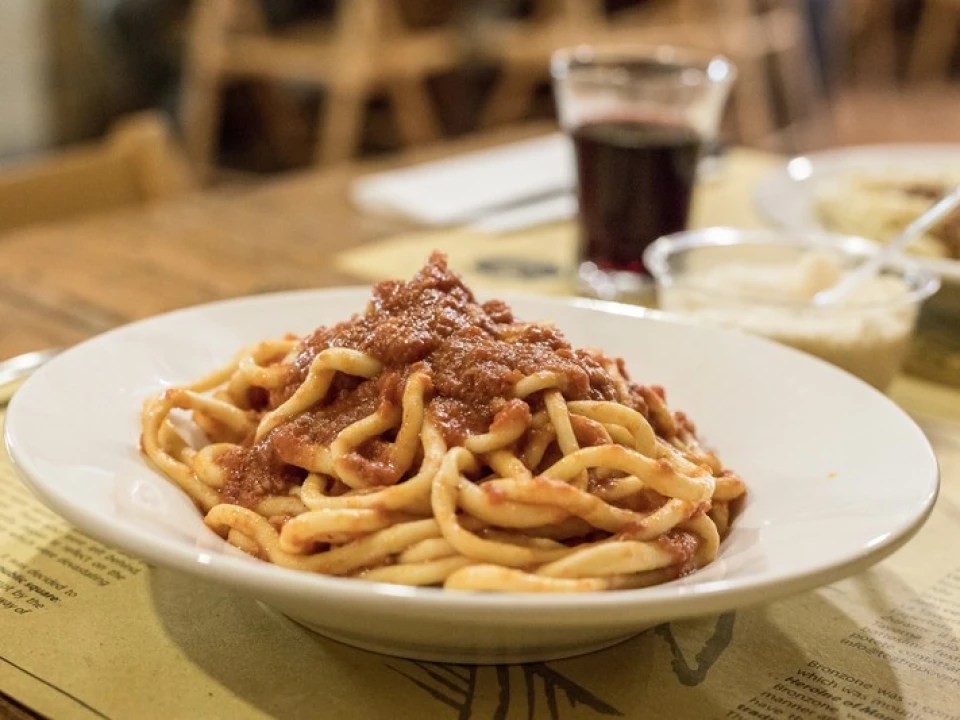
In Nuoro, Sardinia, there is a pasta made from semolina, water, and salt that very few people know how to prepare. It is called su filindeu, meaning “threads of God,” and although its ingredients are the same ones used for countless other Italian pastas, the preparation is so demanding that the traditional method has survived in the hands of only a small number of people. Even an experienced cook would have trouble making it without being shown how, because much of the work depends on judging the dough by touch.
The preparation begins with kneading, and the dough must be worked until it reaches a particular elasticity, firm enough to hold together but supple enough to be stretched repeatedly without breaking. Once the maker is satisfied, a piece is pulled, doubled over, and pulled again, eight times in succession, until it has become 256 strands as fine as hair.