
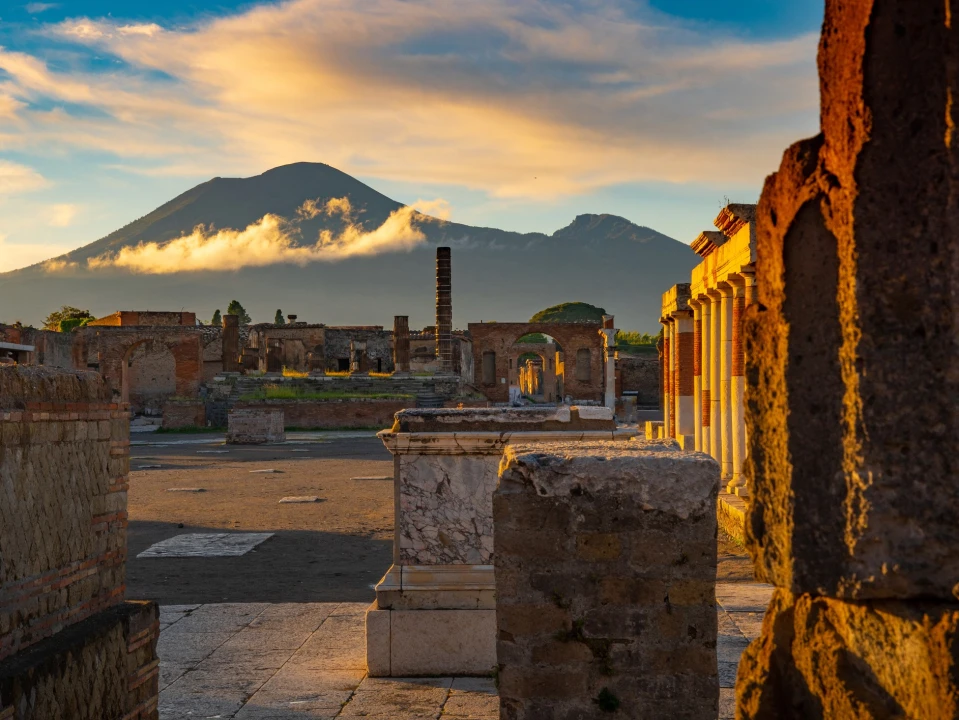
Pompeii is famous for preserving a Roman city frozen in time, but the volcanic material that buried it is also an extraordinary scientific archive. Nearly 2,000 years after Mount Vesuvius erupted in 79 CE, researchers continue to extract information from ash, pumice, rocks and even ancient building materials that goes far beyond archaeology.
The eruption was a massive natural event. Its sustained Plinian phase lasted roughly 19 hours, releasing an estimated 4 cubic kilometers of magma in dense-rock equivalent. The eruptive column reached approximately 30 kilometers into the atmosphere, while Pompeii accumulated around 2.5 meters of pumice before pyroclastic currents swept through the city.
Those deposits effectively recorded conditions at the moment of the catastrophe. Volcanic rocks contain magnetic minerals that can preserve the direction and intensity of Earth’s magnetic field when they cool. Scientists can therefore use material from precisely dated eruptions such as Vesuvius to reconstruct how the planet’s magnetic field changed centuries ago.
Pompeii offers an unusually valuable reference point because the eruption’s historical context is exceptionally well documented. Magnetic information has been recovered not only from volcanic deposits but also from Roman roof tiles, plaster and even pigments used in wall paintings. Researchers have found that some ancient murals retain measurable magnetic signatures.
The same deposits also reveal how hot pyroclastic currents were, how quickly they traveled and how they interacted with buildings. At nearby Herculaneum, evidence indicates heating of at least 400°C.
What destroyed Pompeii therefore created something scientifically remarkable – a precisely dated geological snapshot connecting archaeology, volcanology, geophysics and the history of Earth itself.