
Five hundred years ago this week, Martin Luther is said to have nailed his 95 theses to the door of Wittenberg, Germany’s Castle Church, ushering in a revolt against the Roman Catholic Church. The ensuing theological demolition also involved its artwork, much of which was defaced or burned in now-Protestant areas of Europe.
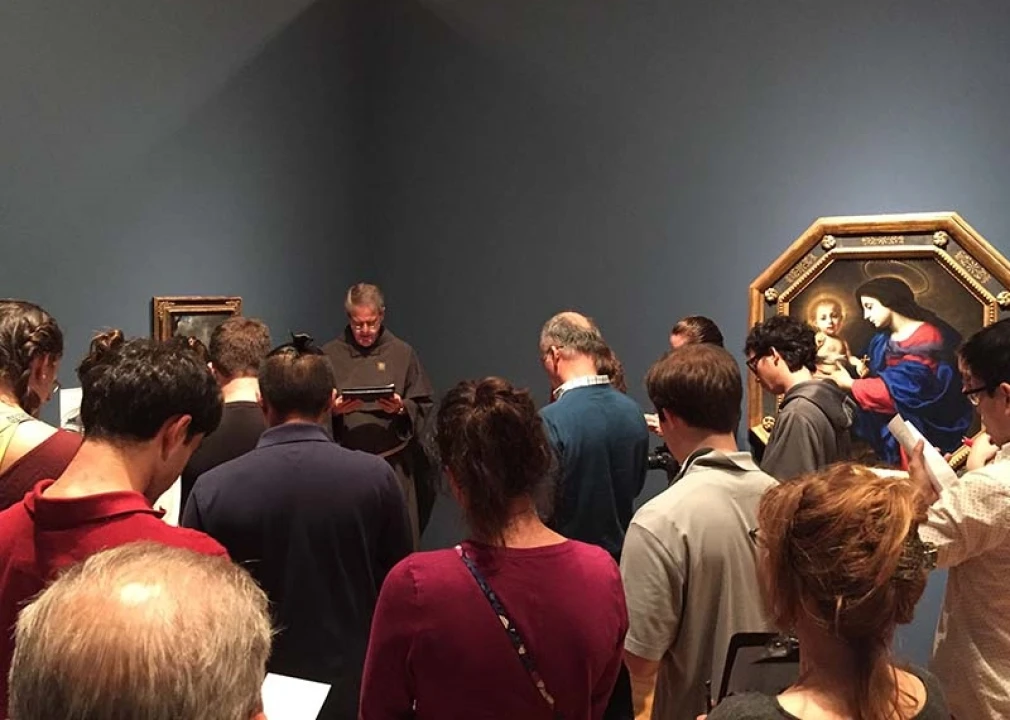
On the turf it managed to hold, the church mounted a response - the Counter-Reformation, a multi-pronged movement responding to and resisting the reforms. It, too, had an artistic aspect: Titian, El Greco and Caravaggio. But also Carlo Dolci of Florence, Italy, whose meticulous paintings of Christian themes, saturated with emotion and glistening with color, were everything the iconoclast reformers railed against.