

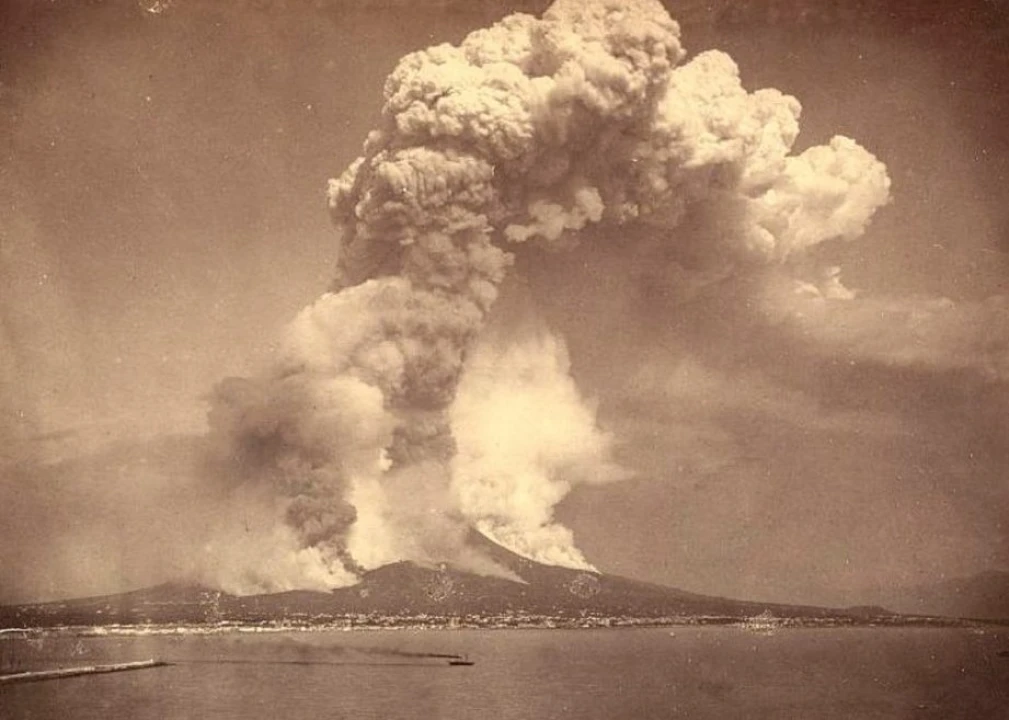
Volcanic eruptions evoke images of lava, fire, and destruction; however, this is not always the case. The Plinian eruption of Mount Vesuvius around 4,000 years ago – 2,000 years before the one that buried the Roman city of Pompeii— left a remarkably intact glimpse into Early Bronze Age village life in the Campania region of Southern Italy.
The village of Afragola was situated near present-day Naples, about 10 miles from Mount Vesuvius. Following the eruption, the village was encased in meters of ash, mud, and alluvial sediments, which lent a surprising degree of protection to the site, a rarity for archaeological sites from this era in Europe. Owing to the level of preservation and the diversity of preserved plants at the site, researchers were interested to see if they could pinpoint the time of year when the eruption occurred.