
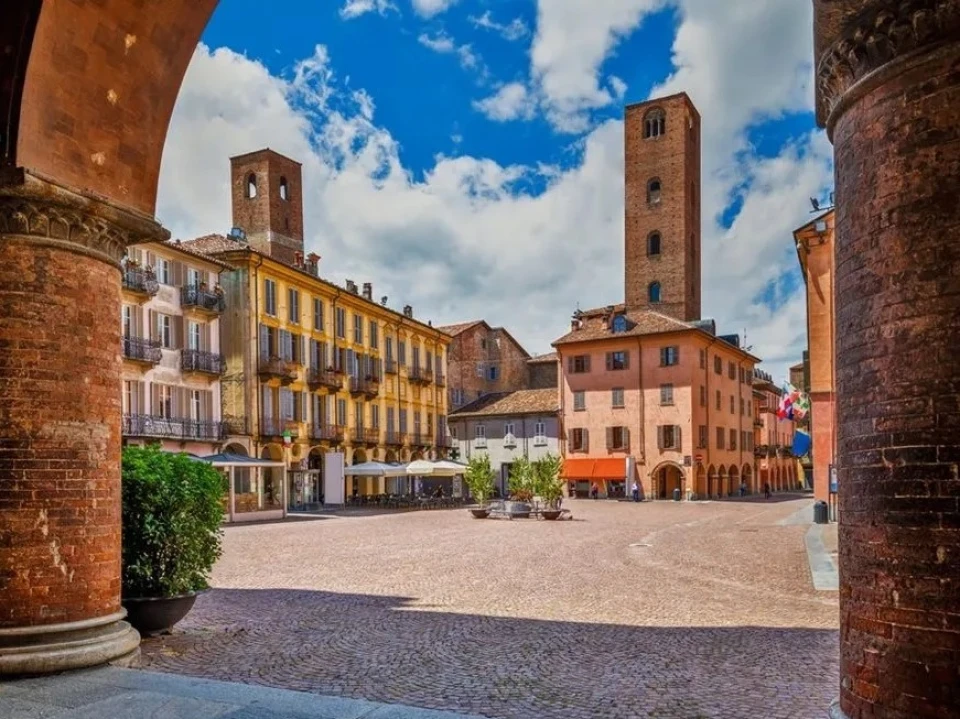
The town of Alba in Italy’s Piedmont region has been selected as the Italian capital of contemporary art for 2027. The recognition comes after a competitive process among four finalist cities and reflects the municipality’s ambitious vision for art, landscape and community. The centerpiece of the winning proposal is a project titled “Le fabbriche del vento,” which promises to turn the surrounding Langhe, Roero and Monferrato area – a UNESCO-recognized cultural landscape – into a living laboratory for creativity and regeneration.
The application stood out for its capacity to connect artistic production with local identity, tradition and environment. By drawing on the territory’s history and natural environment, the proposal offered more than conventional exhibitions: it imagined a long-term cultural presence anchored in community engagement and landscape transformation.
As part of this new cultural mandate, Alba will host the inaugural Biennale delle Langhe, a major event dedicated to contemporary art in dialogue with territory and society. Alongside the biennial timeline, a broader program of permanent initiatives, public art, site-specific works and participatory projects is planned. The city will receive a state contribution of one million euros to implement its program, underscoring national support for its ambitions.
Local leaders describe the designation as a victory for the entire region, not just the town itself. Through this initiative, they aim to reposition Alba and its surrounding hills as a new axis of cultural innovation that links heritage and modernity, tourism and social inclusion. The message is clear: contemporary art is not merely an ornament, but a tool for urban, territorial and community renewal.
For the many who visit, live and work there, the years leading up to 2027 will be a time of transformation. Alba is preparing to emerge as a creative hub where landscape, viticulture, architectural heritage and cutting-edge artistic vision converge. In doing so, it offers a model for how small towns can aspire to cultural significance on the national stage.