

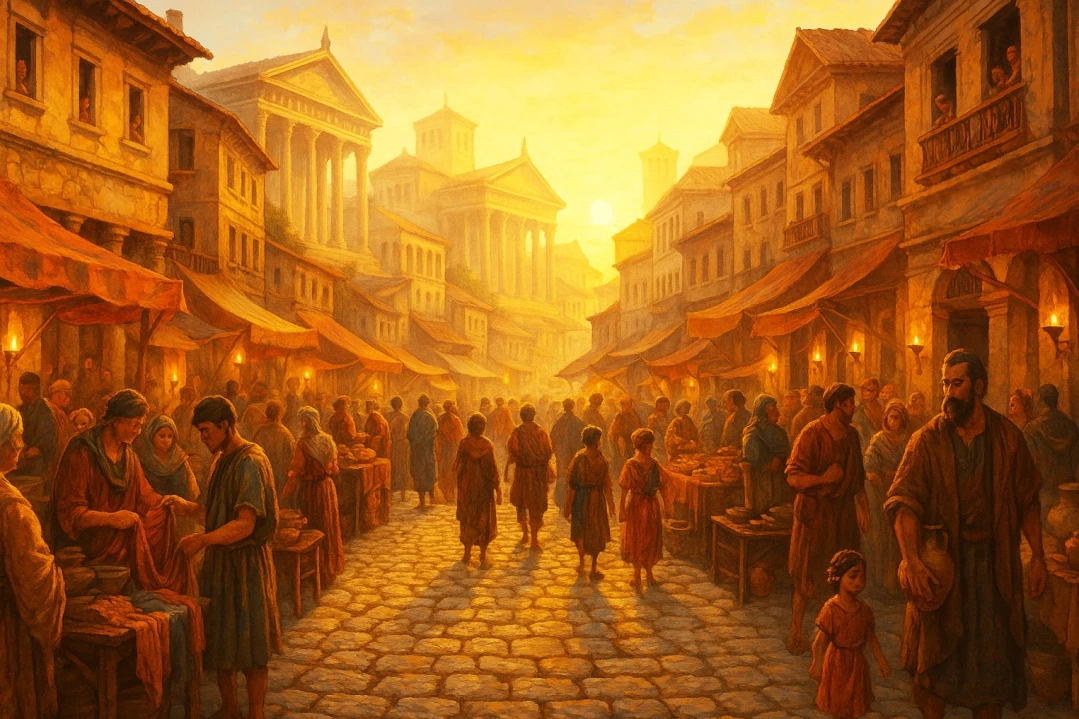
Just steps away from the grandeur of the Roman forums, between the Quirinal, Viminal, and Esquiline hills, the Suburra was a neighborhood that never quite fit Rome’s polished image. It was dense, noisy, working-class, and essential, home to those who sustained the city’s daily rhythms. From the third century BC onwards, this district came to represent the heart of everyday Rome: alive with activity, but never far from disrepute in the eyes of the élite.
The neighborhood below the city
The name Suburra – or Subura in Latin – likely derives from the expression sub urbe, meaning “below the city.” The reference was both topographical and symbolic, because the neighborhood sat in a valley beneath the hilltop temples and civic buildings of the Forum, physically lower, and often seen as morally so as well.