
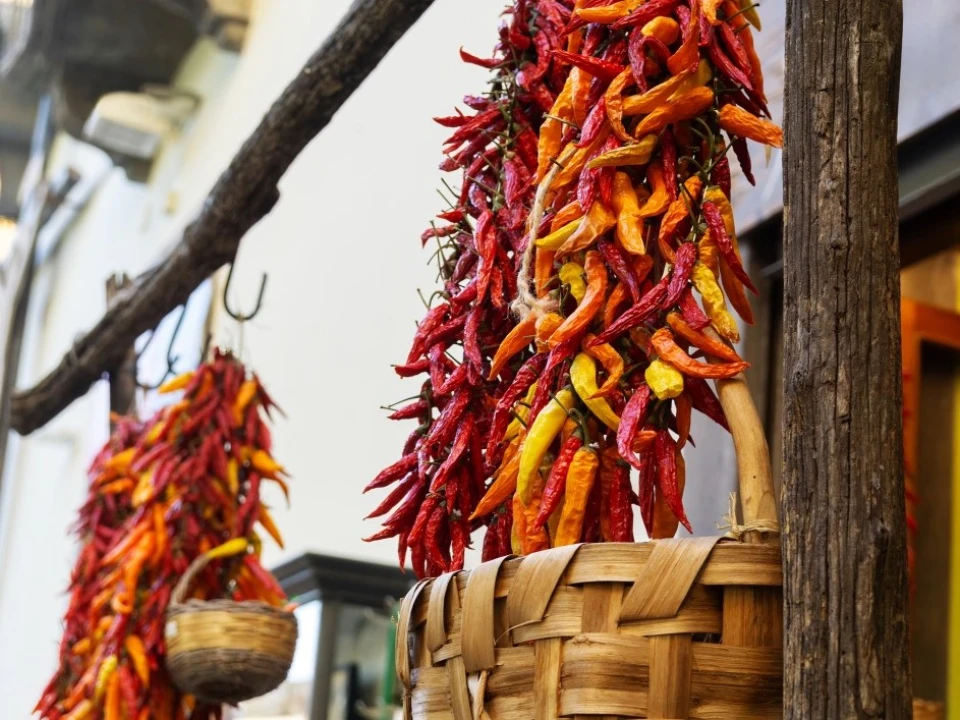
Every September, Calabria turns red. On balconies and along sunny walls, strings of peperoncini sway in the breeze, a sign that the harvest has begun and that kitchens across the region are getting ready for a year of heat. The sight is so common that locals barely notice it, yet for visitors it says a lot about this corner of southern Italy: it speaks of strong flavors, practical traditions, and a way of working with the climate rather than against it.
Chiles reached Europe after the first voyages across the Atlantic and spread quickly through Iberia and the Mediterranean: Calabria, with its long sunny season, sea air, and well-drained soils, proved to be an ideal home. Moreover, the crop was inexpensive to grow and easy to preserve, which made it valuable in a rural economy where households needed to stretch basics and add flavor to simple dishes.