"Nebraska: where the West begins" was a tourism slogan referring to the fact that the Cornhusker State (the name comes from the way corn, the state's main product, was commonly harvested, by "husking" it by hand) occupies the central portion of the Frontier Strip, that unbroken border line that bisects the United States from north to south, starting in North Dakota and ending in Texas.
So what does Nebraska have to do with We the Italians? Italians arrived here too, more precisely Sicilians, even more precisely Carlentinesi, from Carlentini, a small town in the province of Siracusa from which many left to arrive in Omaha, Nebraska's most important city. Lisa Bolamperti Garrett, the first woman in the history to lead the American Italian Heritage Society of Omaha, tells us about it. Welcome to We the Italians!
Lisa, you have been the Chairman of the Board of the American Italian Heritage Society of Omaha, Nebraska. Please tell us a bit about the history and the activities if this club
My term as Chairwoman of the Board ended at the end of last year. I was the first female Chairman of the Board ever in the history of the American Italian Heritage Society. I am the daughter of AIHS founders Ted and Jeaniene Bolamperti.
While serving my 3 year term, we were plagued with covid. We continued the mission of the AIHS but on a smaller scale and with some events having to be cancelled.
The AIHS Board organized many drive-thru events to continue our mission. What do Italians do best? Food! So we organized several drive-thru events to sell our homemade pasta, meatballs, sausage, cannoli and pizza. Omaha loves our food! The turn outs were amazing.
AIHS was founded over 40 years ago by 8 people who had a passion for sharing their Italian culture and traditions. Our events have included pasta dinners, cooking classes, wine tasting events, folk dancing classes, Italian language classes, the celebration of the Epiphany, bocce tournaments, picnics, and our favorite event, La Festa Italiana.
Please, tell our readers what happens during this event
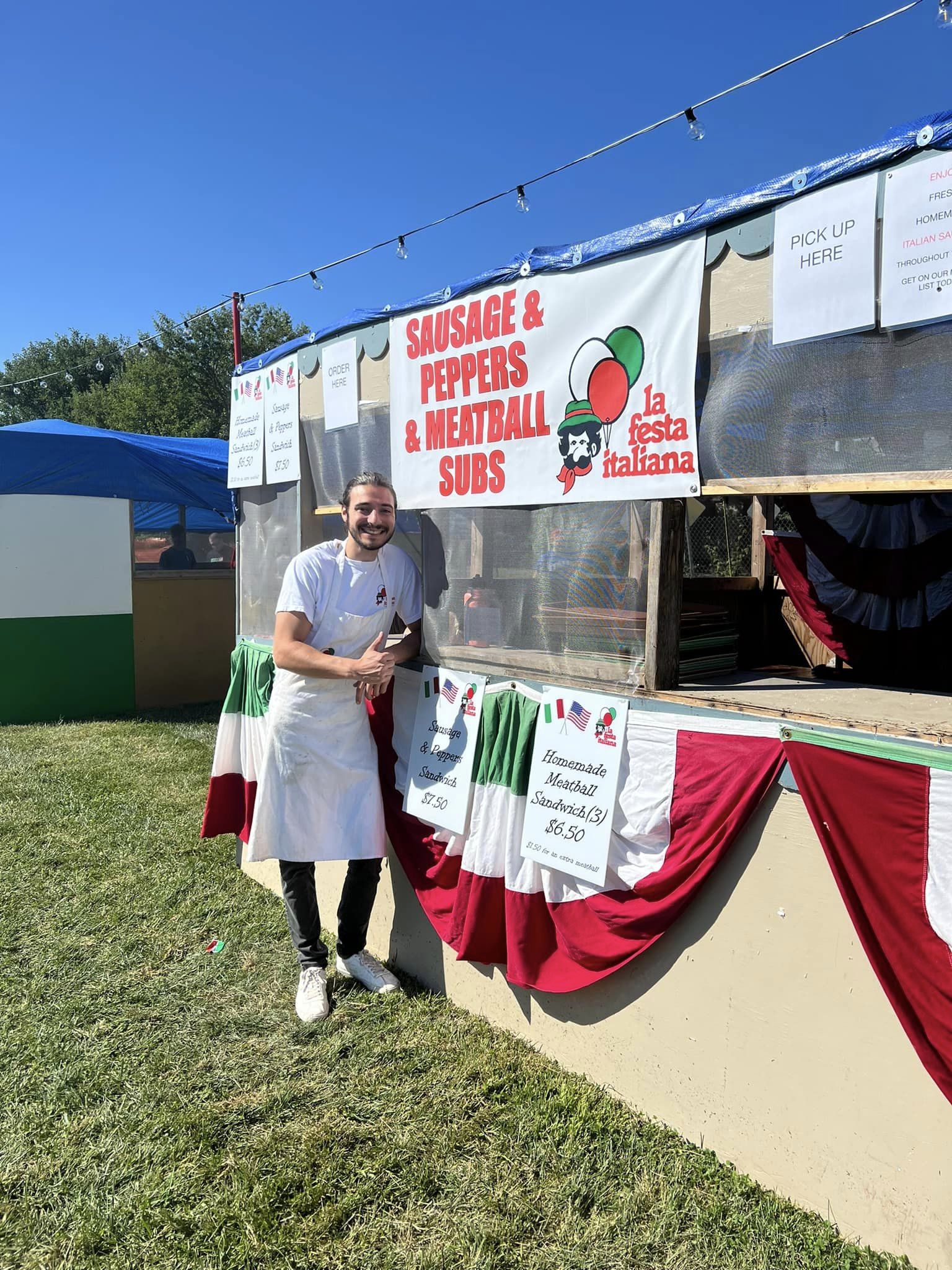
La Festa Italiana is a 3-day celebration of Italian food, culture and fun. Held at Il Palazzo, in Omaha, La Festa is attended by 1000s of people in the area. With over 500 volunteers, our homemade food is the main draw. Preparation for La Festa begins several months in advance.
In addition to food, we sell Italian wine and beer, have a Bocce ball tournament with local celebrities, provide cooking demonstrations, and have live music along with other entertainment. La Festa has been our tradition for over 40 years. Our tag line is…”everyone should be Italian at least once a year.”
I see that you have your own Bocce League… do you play Bocce?
No, I do not play:) But we do have a bocce ball tournament at our La Festa.
What is “Il Palazzo”?
Il Palazzo, “the palace,” is our building where our events are held. With the help and generous support of so many people, we were able to design and build a building that we now call home. Il Palazzo opened it’s doors in 2017. In addition to our own events, Il Palazzo is a venue for weddings, holiday parties and special events.
What’s the story of the Italian emigration in Nebraska?
Most Italian immigrants arrived in Omaha before the 1920s and many came from the Sicilian town of Carlentini. They were pushed from Sicily due to poor economic conditions and heard Nebraska and Omaha offered a chance of prosperity.
The people from Carlentini stayed a close-knit community in Omaha, held on to many traditions, and kept in touch with relatives and friends left behind in Sicily.
In September 2021, the mayor of Omaha and Carlentini, Sicily, entered into a Sister City Friendship Agreement, recognizing the century-old connection between the cities and a history of family, faith, culture and tradition.
The virtual signing ceremony, held at the Durham Western Heritage Museum, is the first step towards becoming Sister Cities in the future. The museum location was used to recognize the Union Pacific Railroad as an employer for many of the first Carlentini immigrants.
In that moment, these were the words from Mayor Jean Stothert, Honorary Chair of the Omaha Sister Cities Association: “Union Station is a National Historic Landmark and a symbol of the railroad’s important role in the history of Omaha and the people or Carlentini. The early Carlentini population led to the development of Omaha’s Little Italy neighborhood with family-owned restaurants, shops, food markets, and small businesses, just a few blocks from where we are today.”
Are there family names of that have a meaningful importance in describing the Italian community in Omaha of the past and nowadays?
Common names that are joined between Carlentini and Omaha are La Greca, Distefano, Caniglia, Procopio, DiGiacomo, Ingalise, Vacanti, to name a few.
"Nebraska: dove ha inizio il West" era uno slogan turistico di qualche anno fa, che si riferiva al fatto che il Cornhusker State (il nome deriva dal modo in cui il mais, principale prodotto dello stato, veniva comunemente raccolto, "decorticandolo" a mano) occupa la porzione centrale del Frontier Strip, vale a dire quella linea di confine ininterrotta che divide in due gli Stati Uniti da nord a sud, partendo dal Nord Dakota e finendo in Texas.
E che c'entra il Nebraska con We the Italians? C'entra, eccome se c'entra. Perché anche qui arrivarono gli italiani, più precisamente i siciliani, ancora più precisamente i Carlentinesi, da Carlentini, una piccola cittadina in provincia di Siracusa dalla quale molti partirono per arrivare a Omaha, la città più importante del Nebraska. Ce lo racconta Lisa Bolamperti Garrett, prima donna presidente nella storia dell'American Italian Heritage Society di Omaha. Benvenuta su We the Italians!
Lisa, fino a poco fa sei stata presidente del board dell'American Italian Heritage Society di Omaha, Nebraska. Ci parli un po' della storia e delle attività di questo club?
Il mio mandato di presidente del board è terminato il 31 dicembre 2021. Sono stata la prima donna presidente nella storia dell'American Italian Heritage Society. Sono la figlia dei fondatori dell'American Italian Heritage Society, Ted e Jeaniene Bolamperti.
Il mio mandato di tre anni ha coinciso con il periodo del covid. Abbiamo continuato la missione dell'American Italian Heritage Society, ma su scala ridotta e con alcuni eventi che hanno dovuto essere cancellati.
Il Consiglio Direttivo dell'American Italian Heritage Society ha organizzato molti eventi drive-thru per continuare la nostra missione. Cosa sanno fare meglio gli italiani? Il cibo! Così abbiamo organizzato diversi eventi drive-thru per vendere la nostra pasta fatta in casa, le polpette, le salsicce, i cannoli e la pizza. Omaha ama il nostro cibo! L'affluenza è stata straordinaria.
L'American Italian Heritage Society è stata fondata oltre 40 anni fa da 8 persone che avevano la passione di condividere la cultura e le tradizioni italiane. I nostri eventi comprendono cene a base di pasta, corsi di cucina, degustazioni di vini, corsi di danze popolari, corsi di lingua italiana, la celebrazione dell'Epifania, tornei di bocce, picnic e il nostro evento preferito, La Festa Italiana.
Racconta ai nostri lettori cosa succede durante questo evento
La Festa Italiana è una celebrazione di 3 giorni di cibo, cultura e divertimento italiano. Si svolge presso Il Palazzo, a Omaha, e vede la partecipazione di migliaia di persone della zona. Con oltre 500 volontari, il cibo fatto in casa è l'attrazione principale. I preparativi per La Festa iniziano diversi mesi prima.
Oltre al cibo, vendiamo vino e birra italiani, organizziamo un torneo di bocce con celebrità locali, forniamo dimostrazioni di cucina, musica dal vivo e altri intrattenimenti. La Festa è una tradizione da oltre 40 anni. Il nostro slogan è "tutti dovrebbero essere italiani almeno una volta all'anno.”
Ho visto che avete una vostra lega di bocce... tu giochi a bocce?
No, non gioco:) Ma abbiamo un torneo di bocce alla nostra Festa.
Che cos'è "Il Palazzo"?
Il Palazzo è l'edificio in cui si svolgono i nostri eventi. Con l'aiuto e il generoso sostegno di tante persone, siamo stati in grado di progettare e costruire un edificio che ora chiamiamo casa. Il Palazzo ha aperto le porte nel 2017. Oltre ai nostri eventi, Il Palazzo è una sede per matrimoni, feste natalizie ed eventi speciali.
Qual è la storia dell'emigrazione italiana in Nebraska?
La maggior parte degli immigrati italiani è arrivata a Omaha prima degli anni '20 dello scorso secolo e molti provenivano dalla città siciliana di Carlentini. Furono spinti ad allontanarsi dalla Sicilia a causa delle cattive condizioni economiche e sentirono che il Nebraska e Omaha offrivano una possibilità di prosperità.
I carlentinesi sono rimasti una comunità affiatata a Omaha, hanno mantenuto molte tradizioni e sono rimasti in contatto con parenti e amici rimasti in Sicilia.
Nel settembre 2021, il sindaco di Omaha e quello di Carlentini, in Sicilia, hanno stipulato un accordo di amicizia tra città sorelle, riconoscendo il legame secolare tra le città e una storia di famiglia, fede, cultura e tradizione.
La cerimonia virtuale di firma, tenutasi presso il Durham Western Heritage Museum, è il primo passo per diventare in futuro città sorelle in un vero e proprio gemellaggio ufficiale. La sede del museo è stata utilizzata per riconoscere la Union Pacific Railroad come datore di lavoro di molti dei primi immigrati Carlentini.
In quel momento, queste sono state le parole del sindaco Jean Stothert, presidente onorario dell'associazione Omaha Sister Cities: "La Union Station è un punto di riferimento storico nazionale e un simbolo dell'importante ruolo della ferrovia nella storia di Omaha e dei Carlentinesi. I primi abitanti di Carlentini hanno portato allo sviluppo del quartiere Little Italy di Omaha, con ristoranti a conduzione familiare, negozi, mercati alimentari e piccole imprese, a pochi isolati da dove ci troviamo oggi".
Ci sono nomi di famiglia che hanno un'importanza significativa nel descrivere la comunità italiana di Omaha del passato e di oggi?
I nomi comuni che si uniscono tra Carlentini e Omaha sono La Greca, Distefano, Caniglia, Procopio, DiGiacomo, Ingalise, Vacanti, per citarne alcuni.