
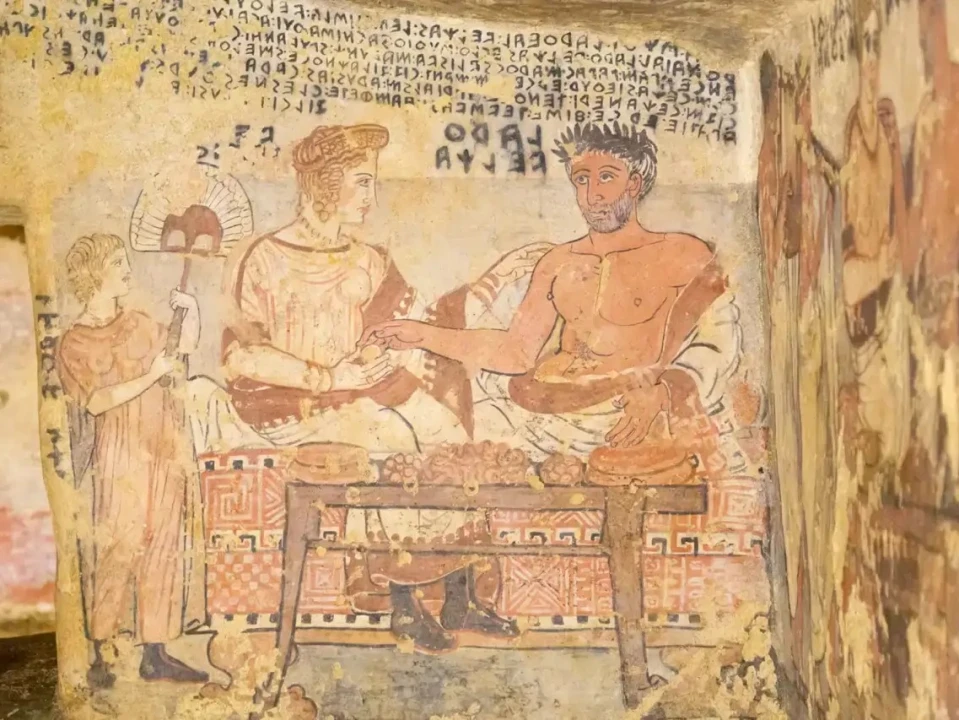
The painted tombs of ancient Tarquinia may have been much more than burial chambers. New research suggests that some Etruscan tombs created carefully structured sensory experiences through architecture, images, darkness and sound – potentially producing disorientation and even trance-like states.
The study focused on 2 fifth-century BCE tombs in Tarquinia: the Tomba del Gallo and the Tomba dei Demoni Azzurri. Researchers Maurizio Forte and Jacqueline K. Ortoleva combined acoustic measurements with artificial intelligence, visual analysis and computer simulations to investigate how ancient visitors may have experienced these underground spaces.
The results reveal striking differences. The Tomba del Gallo appears to have offered a more controlled experience, directing movement and attention through its architecture and painted scenes. The Tomba dei Demoni Azzurri, however, produced an unusually intense acoustic environment. Earlier research had already found reverberation there comparable in some areas to St. Paul’s Cathedral in London.
The new analysis measured exceptionally long reverberation in parts of the tomb. At 125 Hz and below, reverberation at the rear wall reached 7.52 seconds. Low-frequency sound generated by drums, voices or other ritual activity could therefore have been felt physically as well as heard.
Combined with limited illumination from candles or torches and dramatic painted figures – including the tomb’s famous blue demon – these acoustic effects may have altered visitors’ perception of space and intensified emotional responses.
The researchers cautiously propose a 3-stage sensory journey: initial calm observation, followed by heightened alertness and disorientation, and finally a more immersive state potentially associated with theta brain-wave activity.
The findings do not prove that Etruscans deliberately engineered tombs to induce trance. Instead, they provide evidence that architecture, sound and imagery could have worked together during funerary rituals.
More than 2,400 years later, technology is offering a fascinating new way to understand Etruscan spirituality – not simply by examining what ancient people saw, but by reconstructing what they may have heard and felt.