
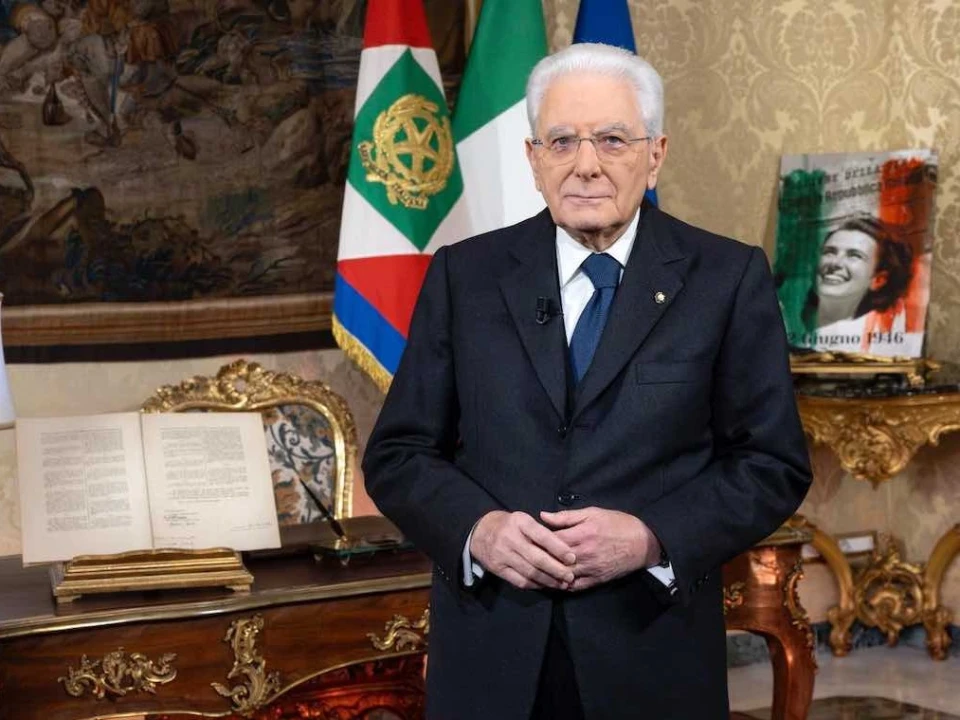
On the evening of December 31, 2025, President Sergio Mattarella delivered his traditional end-of-year address to Italians, broadcast live at 8:30 p.m. from the Quirinale Palace in Rome. It was the eleventh time he had spoken to the nation in this format, and his remarks combined a sober assessment of the past year with an appeal for unity, civic responsibility, and confidence as Italy moves toward the 80th anniversary of the Republic in 2026.
Mattarella acknowledged that 2025 had been a complex and often painful year, both nationally and internationally. Ongoing wars and geopolitical instability continued to affect Europe and the broader world, with heavy consequences for civilian populations. In this context, he stressed that the pursuit of peace must remain a central objective, not only in diplomacy but also in everyday behavior. According to the President, peace is not a sign of weakness but a shared commitment rooted in respect, dialogue, and responsibility.
He warned against the escalation of aggressive rhetoric, noting that words can become instruments of conflict when they fuel fear, hatred, or division. For this reason, he called on citizens and institutions alike to “disarm language” and promote constructive dialogue, especially in political debate. Social cohesion, he said, is a strategic asset for the country and must be defended with care and determination.
Looking back at Italy’s republican history, Mattarella invited citizens to reflect on the path taken since 1946. He recalled how democratic institutions were built after the war through participation, sacrifice, and trust in shared rules. The Constitution, universal suffrage, and the protection of fundamental rights were presented as achievements that continue to shape daily life. He emphasized that the Republic is not an abstract concept but the result of collective effort, renewed every day through civic engagement.
Turning to economic and social issues, the President recognized persistent challenges, including uneven growth and rising costs of living. At the same time, he pointed to encouraging indicators, such as increased employment levels and gradual improvements in public finances, which have strengthened Italy’s credibility at the European and international level. These results, he said, show that progress is possible when institutions, businesses, and workers act responsibly.
A central part of the address was dedicated to younger generations. Mattarella acknowledged their uncertainty and frustration, especially in a world marked by rapid change and global crises. He rejected the idea that young people are disengaged, instead describing them as attentive and demanding. He urged them to participate actively in democratic life and to approach the future with confidence, just as earlier generations did when they rebuilt the country decades ago.
The speech concluded with wishes for a peaceful and hopeful 2026. Mattarella reaffirmed that democracy, solidarity, and respect for others remain the foundations of Italy’s future, and that every citizen has a role to play in strengthening the Republic as it approaches an important historical milestone.