

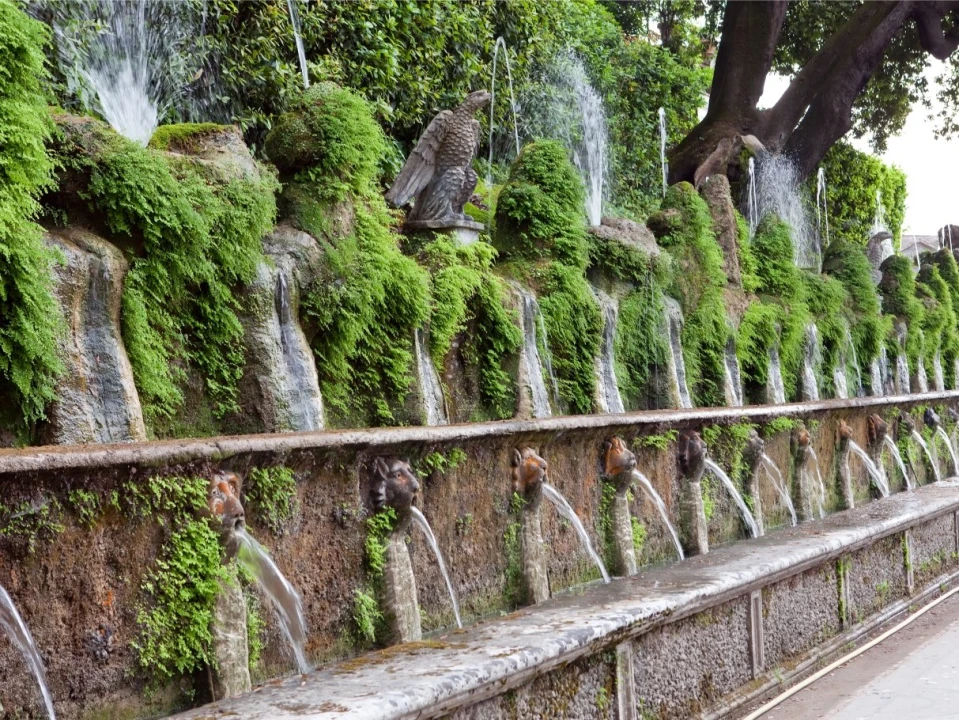
Italy’s fontane sonore are fountains designed to produce music by purely hydraulic means. The core idea is mechanical: a controlled drop of water turns a wheel or turbine, the wheel powers a set of bellows or a wind pump, and the resulting air pressure feeds organ pipes concealed behind stone or stucco façades.
Many Renaissance examples also used a pinned wooden cylinder, essentially a large programmable drum, to open and close valves in sequence so that a short melody played automatically. In other words, the same hydraulic head that drives jets and cascades also powers a compact pipe organ.