
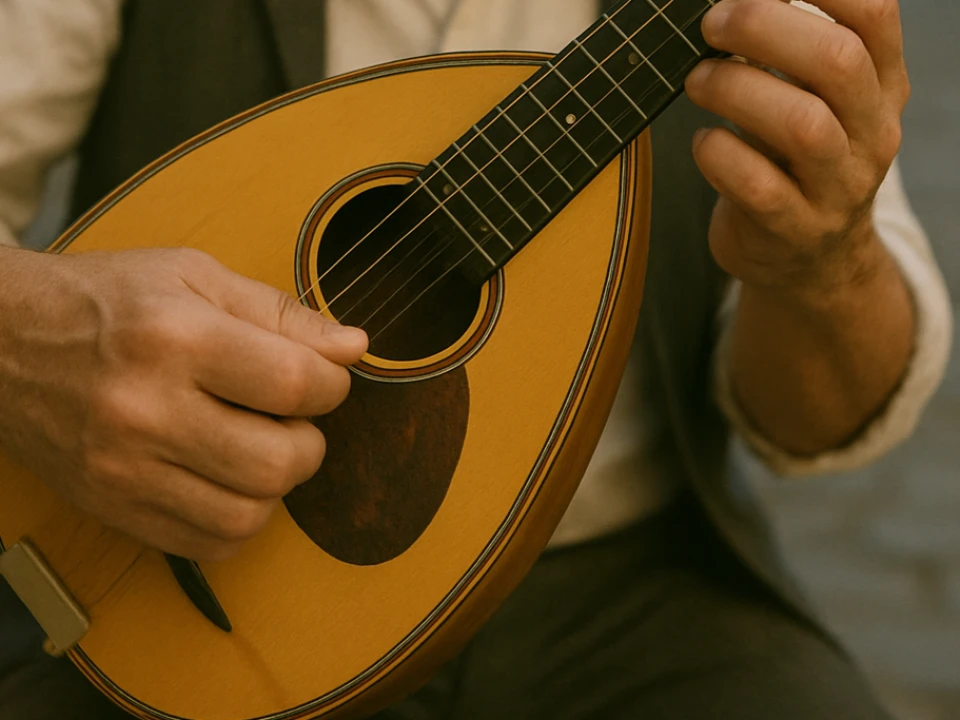
Italy gave the world the mandolin, but did you know that North America gave it a second life? In 18th-century Naples, makers – led by the Vinaccia family – defined the modern mandolino: bowl-back, paired strings, G–D–A–E tuning made it a popular instrument played in salons and theaters.
In the late 1800s, makers such as Embergher and Calace refined concert models and published method books that students and teachers carried with them abroad. When Italian migrants reached the United States, the mandolin came with them and quickly moved beyond parish halls and social clubs to college parlors and civic stages. In a short time, it became part of American popular and vernacular music, reshaped by American builders and new styles.