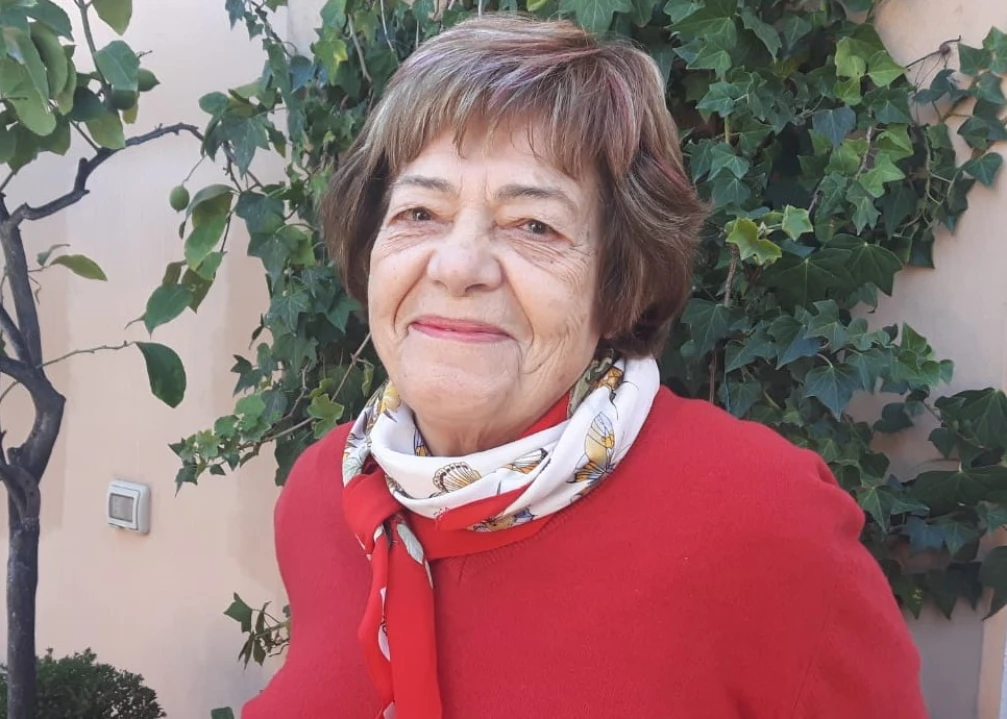
For those like me who are not particularly familiar with the world of jewelry, which is also such a fundamental part of the production in which Italy has always excelled, it was curious to verify Maria Teresa Cannizzaro's passion and knowledge for the world of bijoux. A world that I do not know, but that I have learned to appreciate by being in the company of this beautiful lady who, like me, is Italian by birth and American at heart, who in life is a teacher and has a vitality that I would dare to define "contagious", trying to give again to this term a minimum of positive meaning (another term that needs to be re-evaluated).
Maria Teresa taught me how important bijoux were in the experience of Italian emigration to America, especially in Providence, Rhode Island. And I was happy to participate in the inauguration of an exhibition (which I would like to bring to America in 2022) that relates the link between these poor works of art and Dante Alighieri, in an unprecedented but fascinating combination. So, I thank and welcome with great pleasure on We the Italians a friend that I hold dear, Maria Teresa Cannizzaro
Maria Teresa, you have recently inaugurated the exhibition “Dolce color d’oriental zaffiro. La gemme in Dante e nei bijoux americani” ("Sweet color of oriental sapphire. Gems in Dante and in American bijoux”) at the Museo del Bijoux at Casalmaggiore in Lombardy. I ask you to tell me about the exhibition, and I ask you the question that many have already asked you: what does Dante have to do with bijoux?
The question is entirely legitimate. Honestly, I too thought that I was making a nice leap of imagination when, placing the beautiful brooch that we then chose for the cover of the catalog of the exhibition on a bulletin board, I surprised myself reciting the Dante verses that celebrate the "sweet" color of the sky that the poet returns to see again when he comes out of the gloomy infernal atmosphere.
I wanted to trust my intuition and reflecting it became increasingly clear to me that there is a real link between Dante and the many Italian creators of costume jewelry, albeit so far from each other in time and space.
The first thing that unites them is the common condition of being exiles, because if the poet is forced by the unjust accusations of his political opponents to pilgrim away from the beloved Florence, even Augusto Trifari, Gene Verri, Pennino, the Panetta brothers, Pellegrino Gaeta as millions of Italians between the end of the 1800s and the first decades of the 1900s were in fact exiles, forced by political choices that penalized many Italians to leave their newly unified homeland to escape the humiliating condition of extreme poverty.
Another point in common is the courage not to let oneself go to the temptation of passive resignation, rather to be able to see an opportunity in difficulties, leveraging one's creativity. If Dante, just when he experiences how much "it tastes like salt" eating the bread of others, manages to find in himself the strength and inspiration that will lead him to compose his masterpiece, our emigrants, while they sang "... and it costs us tears this America”, sharpened their ingenuity and, putting their talent to good use, they invented something new, costume jewelry, costume jewelry, making an industrial production of enormous success flourish for the beauty that characterized it.
And above all both Dante with the creation of a "vulgar" language that could be understood even by the illiterate, and the little unknown artists who created - with materials considered poor - cheap bijoux that were affordable for all budgets, yet capable of competing for elegance with real jewels, in this way wanted to share as much as possible with others the love for the beauty they had within themselves.
In the experience of Italian emigrants to America, those who brought their talent and creativity working on bijoux find a place that is decidedly more important than any other: Providence, Rhode Island. Why? Who were these Italian emigrants who became protagonists of this very particular activity?
The unification of Italy, and even more so the taking of Rome which finally became the capital, resulted in the loss of work for all those who for centuries, from generation to generation, in the southern center of the peninsula had worked for the Bourbons and for the Church as stonemasons, goldsmiths, furniture makers, upholsterers and craftsmen of all kinds. To hope for a future that was not one of total misery, the only possibility was to have the courage to immigrate to the New World. After all, the agents of the Shipping Companies, in search of third-class passengers with which to fill the ships on the transoceanic route, encouraged them in every way, even providing in advance the ticket for the trip and a contract of employment to those who knew how to make a specialized craft.
For the latter, the ideal destination was precisely Providence, Rhode Island. In the capital of the small but highly industrialized American state, textile, mechanical and electrical industries had flourished for more than a century and renowned goldsmiths created jewelry and silver objects for the home. For this reason, since the end of the Civil War between North and South, the demand for workers with manual skills at various levels was increasing.
Furthermore, having made religious tolerance one of its rules of life, the Catholic community was welcome and became increasingly numerous thanks to the commitment of the Scalabrinian missionaries who offered assistance of all kinds to Italian emigrants. They therefore encouraged their villagers to join them and this explains why currently more than 30% of the city's population has Italian origins.
The serious economic crisis of 1929, when a large part of the population had difficulty in surviving, particularly affected goldsmiths and jewelers. The Italians who worked in the field, however, did not lose heart. Taking advantage of their inventiveness, they found a way to use low-cost materials to create bijoux as beautiful as the real ones, which could satisfy, even in such a dramatic moment, the irrepressible desire to embellish and decorate both women and men.
Hearing you speak, I have the impression that bijoux are very important, indeed very symbolic, in the story of the Italian emigration to America ...
Between the 30s and the 70s of the last century, about 700 manufacturers of various sizes operated in the Providence area, which became known as the birthplace of costume jewelry, industrially producing bijoux and components for costume jewelry, but also machines for cutting, melting, cleaning and polishing metals. In those factories they spoke essentially in Neapolitan, Sicilian, Abruzzese and also Friulan. It was a highly sought-after workforce for the elegance and refinement of the designs it proposed, for the precision with which it made them and also for the elegance of the packaging with which it put the product on the market. These artisans, men and women, were the first real exporters of made in Italy, because in a land so far from Italy they put to good use skills inherited from centuries of taste and adoration of beauty, typical of the inhabitants of the whole peninsula, and therefore they knew how to send a message of elegance through the products of this art, minor but only in name.
Furthermore, they were very industrious people, who performed work that was respectable. Even the women, while working underpaid by the piece, were happy to contribute their earnings to the needs of the family; they were ambitious people, eager to achieve economic well-being, above all to offer their children the opportunity to study and climb higher and higher on the social ladder.
Since the second half of the 1900s, in fact, the increasing number of lawyers, doctors, architects and engineers of Italian origin have enriched the cultural and social panorama of all of Rhode Island and there has been no shortage of prestigious senators and politicians of national importance.
In telling these stories, you often use the term beautification and in fact I seem to understand that Hollywood itself is fundamental in the story you share: please, tell us more
Surely the fortunate coincidence of the strong development of the cinema industry in the 1930s was the driving force behind the success of the creations of fantasy bijoux. For the Hollywood producers it was much cheaper to have bijoux produced in Providence, given their very high quality, rather than renting real jewels for their films, with all the risks that this entailed.
On the other hand, being industrial creations, even if in most cases their finishing was entrusted to specialized craftsmen, these were put on the market in the department stores of all American states at affordable prices for all, with a double positive result: to advertise the films for which they were created and at the same time to satisfy the desire of women of all walks of life to adorn themselves with the same jewel worn by Doris Day or Liz Taylor or Ava Gardner. Because, as Peter Di Cristofaro, tireless promoter of the Providence Costume Jewelry Museum has always pointed out, “a diamond is forever, but a rhinestone is for everyone”. The poor but handsome democratic bijoux industrialist anticipates all the messages of Andy Warhol’s multiples by a few decades.
I ask you to share with our readers some anecdotes and some curiosities related to the world of American bijoux made by Italian immigrants, a topic of which I believe you are the world's leading expert.
What is very interesting when you analyze the history of this particular segment of Italian emigrants is that you get a message of great positivity. Unlike what happened, for example, to those who, having no specific skills, in large cities such as New York or Chicago had to be satisfied with even very humiliating living and working conditions or, in any case, face great sacrifices, those who arrived in Providence found difficult living conditions, but which at the same time offered many opportunities to those who knew how to do a trade or could easily earn one.
For example Augusto Trifari, coming from a family of Campania jewelers who had long worked for the Bourbons, closed the jewelry store in New York in the middle of the Depression, and opened a factory in the Providence area that grew exponentially both in size, arriving to employ several thousand people, as well as in the esteem of the public. His collections met with such satisfaction that, as evidenced by the orders, nothing was put into production for less than 10,000 pieces.
His bijoux that reproduced the lines of real jewelry, while using imitation pearls and a modest but absolutely unalterable alloy that he wanted to call trifanium, appealed so much to Mamie Eisenhower that for both the two inaugural ceremonies of her husband's presidency she chose to wear sets of this brand. After being shown off in the White House, today they are on display at the Smithsonian in Washington.
I still feel a lot of tenderness thinking about when, at the end of the 1980s, fascinated by the beauty of some Christmas tree brooches signed by Pell, I went to interview its creator. I was faced with an elderly gentleman, carefully dressed, who had achieved much success in his field. As the creator of bridal jewels he was now unrivaled and he had been chosen several times to make the crown for Miss America.
He explained to me that the brand he used, Pell, was actually an abbreviation for his name, Pellegrino, too long and difficult for Americans to pronounce. Even more illuminating than the condition of those arriving from Italy between 1920 and 1930 was the origin of his surname. He told me that excited and practically illiterate, when he arrived on Ellis Island he had not really been able to understand what the immigration agent was asking of him. Then, as if to cut it short, he replied in his own dialect: "I come from Gaeta ". And Gaeta had thus become his surname on American documents.
Again, I cannot fail to mention the splendid person of Gene Verri (Americanization of Verrecchia), who after having designed for the manufacturer Coro pieces of great beauty and enormous success with the public, such as the Duette Quivering Camelia (today highly sought after by collectors), opened his own factory in Providence.
His son Ron follows in his footsteps by directing a business that produces bijoux for all the most prestigious brands. Kenneth Jay Lane has always used him and his successor continues in the tradition: he trusts only this manufacturer to make his precious jewels, including the famous starfish commissioned by Jackie Kennedy, or the pearl choker that Barbara Bush was said not to remove even to sleep.
You are also the President of the "Past and Future" Association, which acts as a point of contact with American collectors interested in these objects, and is also the Italian branch of the Vintage Fashion & Costume Jewelry Club ...
At the suggestion and with the support of Lucille Tempesta, an Italian American teacher I met in the late 1980s in New York by a happy coincidence, founder of the Vintage Fashion & Costume Jewelry Club, Fiorella Operto and I decided to found the Italian section of the American club with the aim of promoting the collection and study of artifacts related to American, but also European decorative bijoux, and any other collectible object related to fashion and costume.
A topic of particular interest of the Association is the study of Italian emigration to the United States, especially in the Providence area where, as we have seen, many Italians settled from the second half of the 1800s onwards, making the manufacturing industry of fantasy bijoux flourish.
For this we have carried out various activities.
We have published, and encouraged the publication, of various types of literary works aimed at learning about the history of fashion and costume artifacts.
We have organized conferences, also involving the American partners, as in the case of the conference organized for the 150th anniversary of the Unification of Italy, entitled "Italy outside of Italy: The Talent of Italians in America” and the conference The Perfume of Music "for the 100th anniversary of the death of Giuseppe Verdi, whose work was fundamental for Italian emigrants to America, also for learning of the Italian language.
We organize seminars and exhibitions several times a year and carry out research on the life and activities of Italians in the United States, with particular reference to emigration to the Rhode Island area and the history of the costume jewelry industry.
We have always followed and supported with interest and enthusiasm the commendable work done by Dr. Joseph Scelsa to enhance the Italian American Museum in New York, dedicated exclusively to Italian emigration, of whose new headquarters we look forward to the inauguration.
Given the many similarities that link the history of the production of the so-called "crazy gold" to the history of American costume jewelery, the members of the Past and Future Association have a particular bond with the Casalmaggiore Bijou Museum, whose managers and friends appreciate the lively curiosity, love for local tradition and enthusiastic, indefatigable activism.
We also promote the sale and exchange of material between members by providing free expertise, and we also try to make the Association's activities accessible from all over the territory, in particular in Italy and Europe, by expanding the visibility and active participation of members through interactivity and the web.
I know that you and the Vice President of the Association, Fiorella Operto, are writing a text on Dante and America for Fondazione Migrantes. Without spoilers, can you tell me something, also to entice our readers to buy the work when it is available?
From the deepening of the studies that Fiorella Operto and I carried out to realize the exhibition in Casalmaggiore, interesting news and information arose on how and when American men of culture discovered Dante, and in particular the Divine Comedy, and on how the man and the poet Dante have come to arouse the interest of Italian emigrants in America. We accepted the invitation of Fondazione Migrantes to share the pleasure of the discovery!
Per chi come me non ha particolare familiarità col mondo dei gioielli, che pure è parte così fondamentale della produzione in cui da sempre eccelle l'Italia, è stato curioso verificare la passione e la conoscenza di Maria Teresa Cannizzaro per il mondo dei bijoux. Un mondo che non conosco, ma che ho imparato ad apprezzare frequentando questa splendida signora che come me è italiana di nascita e americana nel cuore, che nella vita è un'insegnante ed ha una vitalità che oserei definire "contagiosa", cercando di dare nuovamente a questo termine un minimo di significato positivo (altro termine che necessita di essere rivalutato).
Maria Teresa mi ha insegnato quanto siano stati importanti i bijoux nell'esperienza dell'emigrazione italiana in America, specialmente a Providence, Rhode Island. E sono stato felice di partecipare all'inaugurazione di una mostra (che nel 2022 vorrei portare anche in America) che racconta il legame tra queste opere d'arte povera e Dante Alighieri, in un connubio inedito ma affascinante. Dunque, ringrazio e do il benvenuto con grande piacere su We the Italians ad un'amica alla quale tengo in modo particolare, Maria Teresa Cannizzaro
Maria Teresa, avete da poco inaugurato al Museo del Bijoux di Casalmaggiore in Lombardia la mostra “Dolce color d’oriental zaffiro. La gemme in Dante e nei bijoux americani”. Ti chiedo di parlarmi della mostra, e ti faccio la domanda che ti avranno già fatto in tanti: che c’entra Dante coi bijoux?
La domanda è del tutto legittima. Sinceramente anche io ho pensato che stavo facendo un bel volo pindarico quando, sistemando in una bacheca la bella spilla che poi abbiamo scelto per la copertina del catalogo della Mostra, mi sono sorpresa a recitare i versi danteschi che celebrano il “dolce” colore del cielo che il poeta torna a rivedere uscendo dalla tetra atmosfera infernale.
Ho voluto però fidarmi della mia intuizione e riflettendo mi apparso sempre più chiaro che c’è un vero e proprio legame tra Dante e i tanti italiani creatori della bigiotteria, seppure così lontani tra loro nel tempo e nello spazio.
La prima cosa che li unisce è la comune condizione di esiliati, perché se il poeta è costretto dalle ingiuste accuse dei suoi avversari politici a pellegrinare lontano dall’amatissima Firenze, anche Augusto Trifari, Gene Verri, Pennino, i fratelli Panetta, Pellegrino Gaeta come milioni di italiani tra la fine del 1800 e i primi decenni del 1900 furono di fatto esuli, costretti da scelte politiche che penalizzavano molti italiani a lasciare la patria appena unificata per sfuggire all’umiliante condizione di estrema povertà.
Un altro punto in comune è il coraggio di non lasciarsi andare alla tentazione della rassegnazione passiva, anzi di saper vedere nelle difficoltà un’opportunità, facendo leva sulla propria creatività. Se Dante, proprio quando sperimenta quanto “sa di sale” mangiare il pane altrui, riesce a trovare in sè stesso la forza e l’ispirazione che lo porteranno a comporre il suo capolavoro, i nostri emigrati, mentre cantavano “…e ce ne costa lacrime ‘st’America”, aguzzarono l’ingegno e, mettendo a frutto il loro talento, inventarono qualcosa di nuovo, la bigiotteria, la costume jewelry, facendo fiorire una produzione industriale di enorme successo per la bellezza che la caratterizzava.
E soprattutto sia Dante con la creazione di un linguaggio” volgare” che potesse essere compreso anche dagli analfabeti, che i piccoli sconosciuti artisti che realizzarono - con materiali considerati poveri - bijoux economici che fossero alla portata di tutte le tasche, eppure capaci di competere per eleganza con i gioielli veri, vollero così condividere il più possibile con gli altri l’amore per la bellezza che avevano dentro di sé.
Nell’esperienza degli emigrati italiani in America, coloro che hanno portato il loro talento e la loro creatività lavorando sui bijoux trovano un luogo che è decisamente più importante di qualsiasi altro: Providence, in Rhode Island. Perché? Chi erano questi emigrati italiani che si resero protagonisti di questa attività così particolare?
L’unificazione d’Italia, e ancor più la presa di Roma divenuta finalmente capitale, ebbero come conseguenza la perdita di lavoro per tutti coloro che per secoli, di generazione in generazione, nel centro sud della penisola avevano lavorato per i Borbone e per la Chiesa come scalpellini, orafi, mobilieri, tappezzieri e artigiani di ogni tipo. Per sperare in un futuro che non fosse di totale miseria l’unica possibilità consisteva nell’avere il coraggio di emigrare verso il Nuovo Mondo. Del resto gli agenti delle Compagnie di Navigazione, in cerca di passeggeri di terza classe con cui riempire le navi sulla rotta transoceanica, li incoraggiavano in ogni modo, anche fornendo in anticipo il biglietto per il viaggio ed un contratto di lavoro a chi sapesse fare un mestiere specializzato.
Per questi ultimi la meta ideale era appunto Providence, in Rhode Island. Nella capitale del piccolo, ma altamente industrializzato stato americano, da più di un secolo erano fiorite industrie tessili, meccaniche, elettriche e rinomati orafi creavano gioielleria e oggettistica d’argento per la casa. Per questo, dalla fine della guerra civile tra Nord e Sud era sempre più crescente la richiesta di operai che avessero abilità manuali a vario livello.
Inoltre, avendo Providence fatto della tolleranza religiosa una delle sue regole di vita, la comunità cattolica era ben accetta e divenne sempre più numerosa grazie all’impegno dei missionari scalabriniani che offrivano assistenza di ogni tipo agli emigrati italiani. Questi incoraggiarono perciò i loro paesani a raggiungerli e ciò spiega come mai attualmente più del 30% della popolazione della città abbia origini italiane.
La grave crisi economica del 1929, quando grandissima parte della popolazione ebbe difficoltà di sopravvivenza, colpì in particolare orafi e gioiellieri. Gli italiani che lavoravano nel campo tuttavia non si persero d’animo. Sfruttando la loro inventiva, trovarono il modo di utilizzare materiali dal costo contenuto per realizzare bijoux belli come quelli veri, che potevano soddisfare, anche in un momento così drammatico, l’insopprimibile desiderio di abbellirsi e addobbarsi sia delle donne che degli uomini.
Sentendoti parlare, ho l’impressione che i bijoux siano molto importanti, anzi decisamente simbolici, nel racconto della storia dell’emigrazione italiana in America…
Tra gli anni ’30 e gli anni ’70 dello scorso secolo operavano nella zona di Providence, che viene per questo definita la birthplace of costume jewelry, circa 700 manifatture di varie dimensioni che, industrialmente, producevano bijoux e componentistica per la bigiotteria, ma anche macchine per il taglio, la fusione, la pulitura e lucidatura dei metalli. In quelle fabbriche si parlava essenzialmente in napoletano, siciliano, abruzzese ed anche friulano. Si trattava di manodopera molto ricercata per l’eleganza e la raffinatezza dei disegni che proponeva, per la precisione con la quale li realizzava e anche per l’eleganza delle confezioni con cui metteva sul mercato il prodotto. Questi artigiani, uomini e donne, sono stati i primi veri esportatori del made in Italy, perché in una terra così lontana dall’Italia misero a frutto abilità ereditate da secoli di gusto e culto del bello, tipici degli abitanti di tutta la penisola, e seppero perciò mandare un messaggio di eleganza attraverso i prodotti di quest’arte, minore ma solo di nome.
Inoltre si trattava di gente molto operosa, che svolgeva un lavoro apprezzato e decoroso. Anche le donne, pur lavorando sottopagate a cottimo, erano felici di contribuire con i loro guadagni ai bisogni della famiglia; erano persone ambiziose, desiderose di raggiungere il benessere economico soprattutto per offrire ai propri figli l’opportunità di studiare e di salire sempre più in alto nella scala sociale.
Dalla seconda metà del 1900, infatti i sempre più numerosi avvocati, medici, architetti ed ingegneri di origine italiana hanno arricchito il panorama culturale e sociale di tutto il Rhode Island e non sono mancati prestigiosi senatori e politici di rilevanza nazionale.
Nel raccontare queste storie, tu usi spesso il termine beautification e in effetti mi sembra di capire che la stessa Hollywood sia fondamentale nella storia che racconti: dicci di più
Sicuramente la fortunata coincidenza del forte sviluppo negli anni ‘30 dell’industria del cinema fece da volano al successo delle creazioni dei bijoux fantasia. Per i produttori di Hollywood fu molto più conveniente economicamente farsi produrre bijoux a Providence, vista la loro altissima qualità, piuttosto che affittare per le proprie pellicole gioielli veri, con tutti i rischi che questo comportava.
D’altra parte, trattandosi di creazioni industriali, anche se nella maggior parte dei casi la loro rifinitura era affidata ad artigiani specializzati, queste furono messe in commercio presso i grandi magazzini di tutti gli stati americani a prezzi abbordabili da tutti, col doppio risultato positivo di fare pubblicità ai film per cui erano stati creati e nello stesso tempo di soddisfare il desiderio delle donne di ogni condizione sociale di ornarsi con lo stesso gioiello indossato da Doris Day o Liz Taylor o Ava Gardner. Perché, come ha sempre sottolineato Peter Di Cristofaro, infaticabile promotore del Providence Costume Jewelry Museum, “un diamante è per sempre, ma uno strass è per tutte”. Il democratico bijou industriale, povero ma bello, anticipa di qualche decennio tutti i messaggi dei multipli di Andy Warhol.
Ti chiedo di condividere con i nostri lettori qualche aneddoto e qualche curiosità relativa al mondo dei bijoux americani realizzati dagli immigrati italiani, un tema del quale credo tu sia la massima esperta mondiale
Quello che è molto interessante quando si analizza la storia di questo particolare segmento di emigrati italiani, è che se ne ricava un messaggio di grande positività. A differenza di quanto avvenne ad esempio a quelli che, non avendo competenze specifiche, nelle grandi metropoli come New York o Chicago dovettero accontentarsi di condizioni di vita e di lavoro anche molto umilianti o, comunque, andare incontro a grandissimi sacrifici, chi arrivò a Providence trovò condizioni di vita dura, ma che al contempo offriva molte opportunità a chi sapeva fare un mestiere o aveva facilità ad impararlo.
Ad esempio Augusto Trifari, proveniente da una famiglia di gioiellieri campani che avevano a lungo lavorato per i Borbone, chiuso in piena Depressione il negozio di gioielleria a New York, aprì nella zona di Providence una manifattura che crebbe in modo esponenziale sia nelle dimensioni, arrivando a dare lavoro a diverse migliaia di persone, sia nella stima del pubblico. Le sue collezioni incontravano tanto gradimento che, come, risulta dagli ordinativi, non si metteva in produzione niente per meno di 10.000 pezzi.
I suoi bijoux che riproponevano le linee del gioiello vero, pur utilizzando perle d’imitazione e una lega modesta ma assolutamente inalterabile che volle chiamare trifanium, piacquero talmente tanto a Mamie Eisenhower che per entrambe le due cerimonie inaugurali della presidenza del marito scelse d’indossare parure di questa firma. Dopo essere state sfoggiate alla Casa Bianca, oggi sono in mostra agli Smithsonian di Washington.
Provo ancora molta tenerezza pensando a quando, alla fine degli anni ’80, affascinata dalla bellezza di alcune spille a forma di alberello natalizio a firma Pell, andai ad intervistare il suo creatore. Mi trovai davanti un anziano signore, vestito con accuratezza, che aveva raggiunto nel suo campo molto successo. Come creatore dei gioielli da sposa ormai non aveva rivali e più volte era stato scelto per realizzare la corona per Miss America.
Mi spiegò che il marchio che utilizzava, Pell, in realtà era l’abbreviazione del suo nome, Pellegrino, troppo lungo e difficile da pronunciare per gli americani. Ancora più illuminante di quella che era la condizione di chi arrivava dall’Italia tra il 1920 e il1930, era però l’origine del suo cognome. Mi raccontò che, emozionato e praticamente analfabeta, al suo arrivo ad Ellis Island non era proprio riuscito a capire che cosa l’agente dell’immigrazione gli chiedesse. Allora, quasi per tagliare corto, aveva risposto nel suo dialetto: ”I’ vegno da Gaeta”. E Gaeta sui documenti americani era divenuto così il suo cognome.
Ancora, non posso non menzionare lo splendido Gene Verri (americanizzazione di Verrecchia), che dopo aver disegnato per la manifattura di Coro pezzi di grande bellezza ed enorme successo di pubblico come la duette Quivering Camelia (oggi ricercatissima dai collezionisti), aprì una sua manifattura a Providence.
Suo figlio Ron ne segue le orme dirigendo un’attività che produce bijoux per tutte le più prestigiose firme. Kenneth Jay Lane si è sempre servito da lui ed il suo erede continua nella tradizione: si fida solo di questa manifattura per realizzare i suoi pregiati monili, compresa la famosa starfish commissionatagli da Jackie Kennedy, o i girocollo di perle che si diceva Barbara Bush non si togliesse neppure per dormire.
Tu sei anche la Presidente dell’Associazione “Passato e futuro”, che fa da punto di contatto con collezionisti americani interessati a questi oggetti, e siete anche la branca italiana del Vintage Fashion & Costume Jewelry Club…
Su suggerimento e con l’appoggio di Lucille Tempesta, una maestra italoamericana incontrata alla fine degli anni ‘80 a New York per una felice coincidenza, fondatrice del Vintage Fashion & Costume Jewelry Club, Fiorella Operto ed io abbiamo deciso di fondare la sezione italiana del club americano con lo scopo di promuovere il collezionismo e lo studio dei manufatti inerenti ai bijoux di decoro americani, ma anche europei, ed ogni altro oggetto di collezionismo collegato alla moda ed al costume.
Un tema di particolare interesse dell’Associazione è lo studio dell’emigrazione italiana verso gli Stati Uniti, soprattutto nell’area di Providence dove, come abbiamo visto, si stabilirono molti italiani dalla seconda metà del 1800 in poi, rendendo fiorente l’industria produttrice dei bijoux fantasia.
Per questo abbiamo svolto diverse attività.
Abbiamo pubblicato, e favorito la pubblicazione, di opere letterarie di vario tipo dirette alla conoscenza della storia dei manufatti della moda e del costume.
Abbiamo organizzato convegni, coinvolgendo anche i soci americani, come nel caso del convegno organizzato per i 150 anni dell’Unità d’Italia, intitolato” L’Italia fuori dall’Italia. Il Talento degli italiani in America” e del convegno “Il profumo della Musica” per i 100 anni dalla morte di Giuseppe Verdi, la cui produzione è stata fondamentale per gli emigrati italiani in America, anche per l’apprendimento della lingua italiana.
Organizziamo più volte l’anno seminari e mostre e portiamo avanti ricerche sulla vita e le attività degli Italiani negli Stati Uniti, con particolare riferimento all’emigrazione nell’area del Rhode Island ed alla storia della industria della Costume Jewelry.
Abbiamo sempre seguito e appoggiato con interesse ed entusiasmo l’encomiabile lavoro fatto dal dottor Joseph Scelsa per valorizzare l’Italian American Museum di New York, dedicato esclusivamente alla emigrazione italiana, della cui nuova sede aspettiamo con ansia l’inaugurazione.
Viste le molte affinità che legano la storia della produzione del cosiddetto “oro matto” alla storia della bigiotteria americana, i soci dell’Associazione Passato e Futuro hanno un particolare legame col Museo del Bijou di Casalmaggiore, dei cui dirigenti ed amici apprezzano la vivace curiosità, l’amore per la tradizione locale e l’entusiastico, infaticabile attivismo.
Promuoviamo inoltre la cessione e lo scambio di materiale tra soci fornendo expertise gratuite, e cerchiamo anche di rendere fruibile l’attività dell’Associazione da tutto il territorio, in particolare italiano ed europeo, allargando la visibilità e partecipazione attiva dei soci attraverso l’interattività e la rete Web.
So che tu e la Vice Presidente dell’Associazione, Fiorella Operto, state scrivendo un testo su Dante e l’America per la Fondazione Migrantes. Senza fare spoiler, puoi anticiparmi qualcosa, anche per invogliare i nostri lettori ad acquistare l’opera quando sarà disponibile?
Dall’approfondimento degli studi che Fiorella Operto ed io abbiamo effettuato per realizzare la Mostra a Casalmaggiore, sono scaturite interessanti notizie ed informazioni su come e quando gli uomini di cultura americani abbiano scoperto Dante, ed in particolare la Divina Commedia, e su come l’uomo ed il poeta Dante siano arrivati a suscitare l’interesse degli emigrati italiani in America. Abbiamo accettato l’invito della Fondazione Migrantes per condividere il piacere della scoperta!