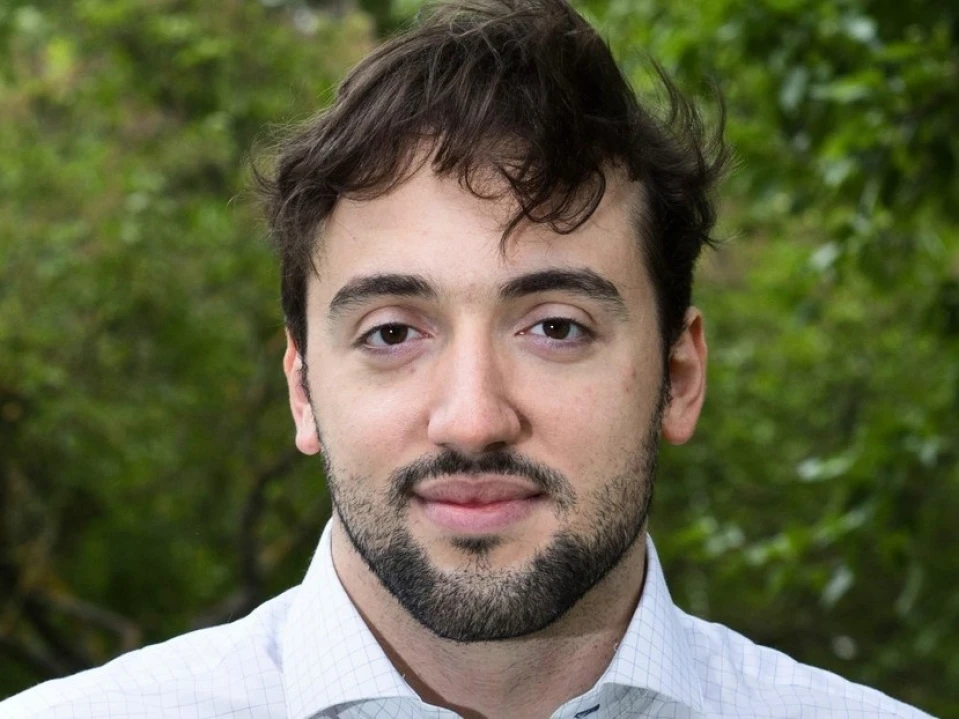
Italian scientist Gioele La Manno has won the 2026 Eppendorf & Science Prize for Neurobiology for research revealing an intricate chemical landscape inside the brain. His work offers researchers a new way to investigate how the nervous system develops, functions, and changes.
Originally from Palermo, La Manno leads the Laboratory of Brain Development and Biological Data Science at EPFL in Lausanne, Switzerland. At 36, he is receiving international recognition for investigating lipids – molecules whose remarkable diversity adds another dimension to our understanding of the brain.
Lipids help form cell membranes and myelin, the insulating material surrounding nerve fibers. They also participate in cellular communication and other biological processes. Mapping their distribution can therefore reveal information that conventional anatomical images or measurements of gene activity do not fully capture.
Working with colleagues, including Giovanni D’Angelo’s laboratory at EPFL, La Manno helped construct a three-dimensional lipid atlas of the adult mouse brain. The study, published in Nature, mapped 172 lipids across 109 brain sections from 11 mice.
The researchers identified 539 distinct territories, which they named “lipizones.” Each territory has a characteristic mixture of lipids. These are chemically defined regions, rather than 539 newly discovered cell types.
Some lipizones follow familiar anatomical boundaries, while others reveal differences that traditional maps overlook. The findings suggest that the brain’s chemical organization contains valuable clues about its underlying biology.
The team combined imaging mass spectrometry with computational analysis, bringing together millions of measurements to reconstruct this molecular landscape. The approach connects laboratory experimentation with the mathematical and computational methods central to La Manno’s research.
Another finding highlights why lipid measurements matter: gene activity accounted for only about 50% of the explainable variation in lipid composition. Studying genes alone therefore leaves part of this biochemical diversity unresolved.
The researchers also observed changes during pregnancy, showing that the lipid map can respond to physiological conditions. This opens opportunities to investigate how molecular organization adapts as the body changes.
La Manno’s international career began with biotechnology studies at the University of Palermo. He continued his education at Karolinska Institutet in Stockholm, completing his doctorate in 2018. That year, he established his research group at EPFL through its ELISIR program, later becoming an assistant professor in 2023.
His laboratory combines single-cell genomics, quantitative biology, and machine learning to explore how different nervous system cells emerge and develop.
Established in 2002, the Eppendorf & Science Prize recognizes outstanding contributions by scientists early in their careers. The 2026 award ceremony is scheduled for November 15 in Washington, DC, during the week of the Society for Neuroscience annual meeting.