I am always fascinated by young - in the meaning we give it in Italy, that is, under 40, more or less - Italian scientists or innovators, often men and even more often women, of whom the United States recognizes talent, passion and vision, rewarding them with well-deserved prestigious roles. I consider them to be one of the best parts of my country, I admire and thank them, and when I have the honor and pleasure of interviewing one, especially if she is a woman, I feel lucky, and I would like this to be conveyed to my readers as well.
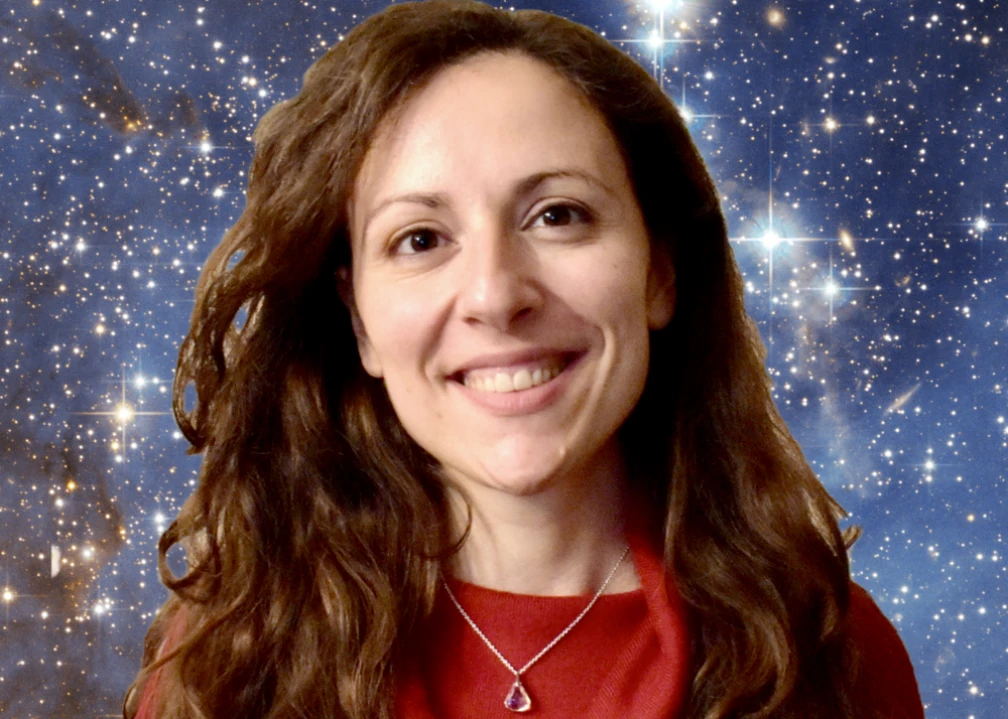
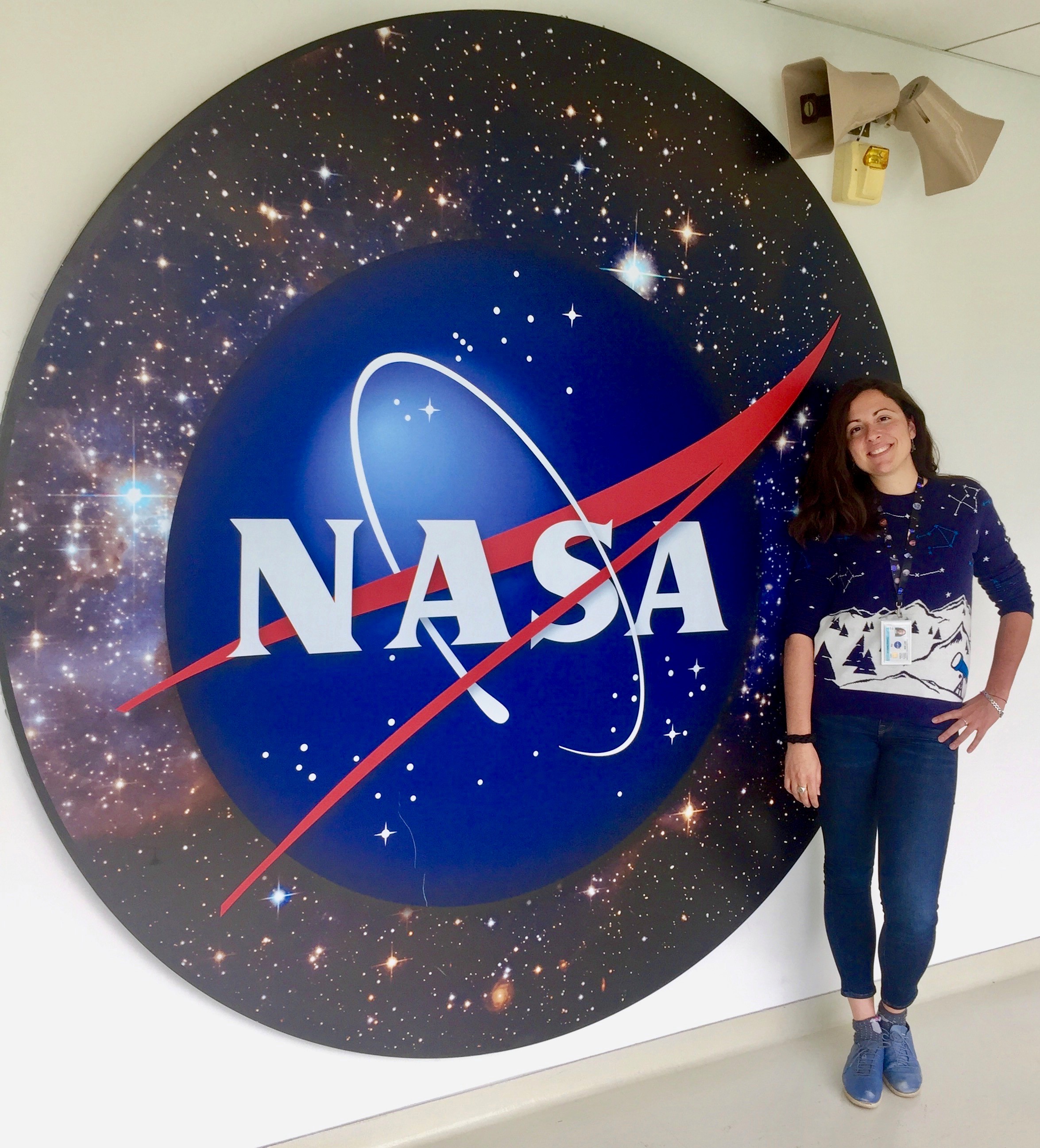
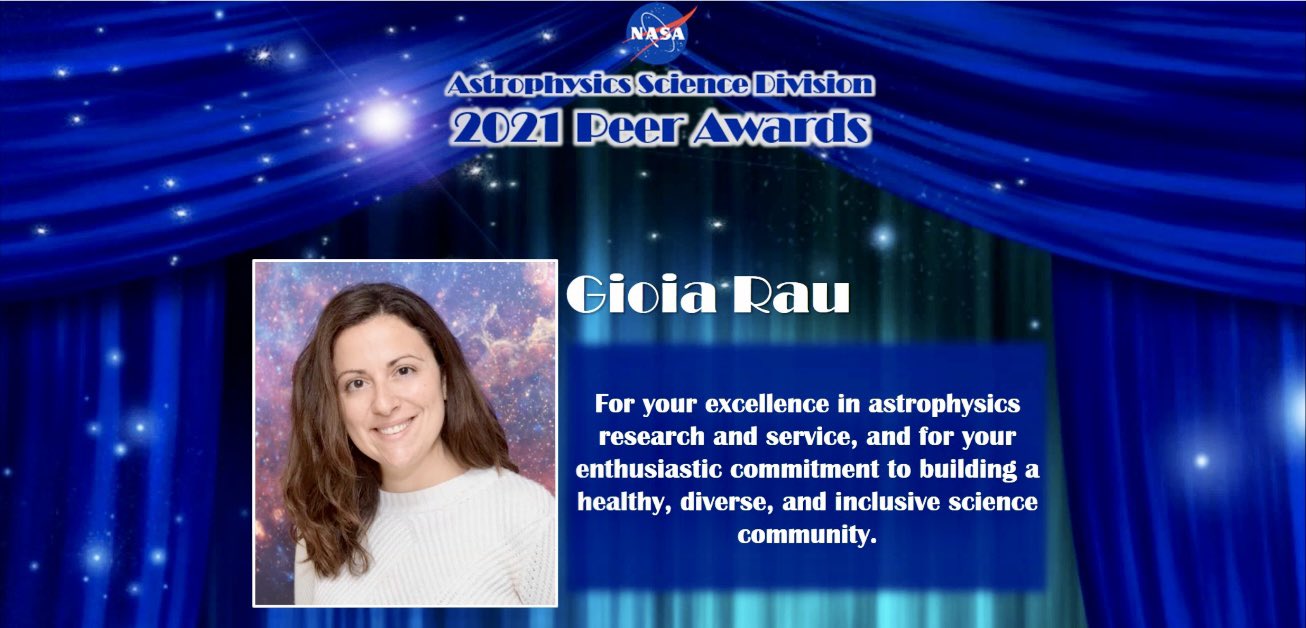
Today's guest in our interview column is one of these wonderful fellow Italians, Dr. Gioia Rau: an astrophysicist at NASA's Goddard Space Flight Center, and a Faculty Research Assistant Professor at Catholic University of America. I would say that, in this case, to the traditional “Two Flags One Heart” we can add “One extraordinary Mind”. Last December, the Italian newspaper Corriere della Sera - rightly - included her in its 50 Women of the Year, in a list that began with Queen Elizabeth. I really thank Gioia for sharing her story with us, and for allowing Italy to be magnificently represented in the United States, once again.
Gioia, please tell me about your love and passion for the universe, born in Italy while looking at the stars with your toy telescope
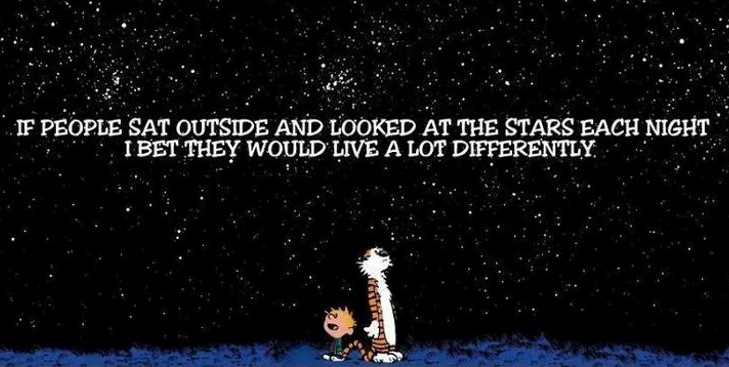
My love for the Universe started when I was very young. I was a curious young girl coming from the outskirts of Rome, passionate about many things and loving science and nature! I was always asking: “why is this so? How does it work? What is that?” But something about the Universe fascinated me so much!
I loved observing the sky, getting lost in its depths, learning about all its mystical objects: from mighty galaxies to space ogre black holes and our own solar system, and asking to adults questions like: “what is out there? How old is the Universe? How did it form? How does it work? ”. I really wanted to know what was "out there" and understand how the universe worked.
It does not mean that I did not have other passions! I was really interested in many different things, and even now, I have many hobbies and interests (time for those, that’s another story…). But something about space particularly fascinated me. So I cultivated my dream and passion, and, avid of knowledge, I asked astronomy books for my birthday presents; at scout I was taking the astronomy specialty; at school I convinced my teacher to bring us to the Rome planetarium (at that time a very old one), and to give us lecture about astronomy; at home I was watching the Space Shuttle launches with my dad. Those were the 90’s, and getting on cathode TV a live launch was not that easy…
It was a passion to follow for me, and I was extremely determined to follow my dreams from an early age.
Is it true that your relationship with the United States began when you were 10 years old, when you wrote to the U.S. Aerospace Agency to ask if you could attend a summer camp they organized, but which was open only to U.S. citizens?
True story. But, well, more than a relationship, that was a dream for me at that age. I was so fascinated by NASA and its activities that I decided that NASA is where I wanted to work, and I would work really hard to follow my dream and make it true. So, during elementary school, I took pen and paper and wrote a letter to NASA, saying I wanted to become an astrophysicist and study the universe! Indeed, I saw that there was a summer camp for kids, and indeed at that time, things were very different than now, so it was only open to US citizens.
Well, guess what: NASA replied, sent me some cool stickers, and wrote me: “study and work hard, and one day you’ll arrive here!” And this is precisely what I did. 20 years later, here I am. I cherish this and my childhood-related space memories a lot. When times are hard, I remember that resilience, grit and hard work, are the essential ingredients to make dreams come true, wherever you start in life.
When did you arrive in the United States?
I arrived in 2017, just one year after my dad passed away; but ‘il viaggio’ (the trip) that brought me here, is a long story.
I continued to cultivate my passion for space and astronomy over the years. During high school, which has been Liceo Classico for me, I took whatever opportunity to deepen my research of astronomy-related topics; scientifically but also from a literature point of view.
Also, I was probably the only one who loved math & science in my high school class (Liceo Classico is notoriously not deepening scientific subjects) So, at the university I had no doubts: I wanted to study physics - though, I also loved philosophy, and it’s straightforward to see the connection there!
Studying Physics was not easy at all: in Italy, all exams are first written, and ONLY IF you pass the written exam, you are admitted to the oral exam. With my classicist background, the first years were challenging; all exams and classes were really tough, especially coming from a “classical high school”. However, I persisted. Ultimately, I was one of the very few in my University class to graduate on time - this is really tough in the Italian University system! - and ‘cum laude’.
My passion for astronomy was (and is) so strong that during my third year of University, I felt the need to share it. I wanted to light the spark in other people and show them the Universe's beauty. So during my third year of University, I applied for a class in science outreach at the Planetarium of Rome and was selected. Since then, my passion for science communication has fueled up. Ever since, I have eagerly organized, been invited to, and involved in dozens of outreach events!
During my last, 5th year, of university, I got awarded a fellowship to develop my master thesis abroad, because I obtained the highest GPA (Grade Point Average) among all students enrolled in science faculties (Physics, Math, Biology, Chemistry, Natural Sciences). This was an extremely competitive fellowship to obtain (only four fellowship, and over 10,000 students!) Thanks to this fellowship, I developed my Master's thesis at Caltech & JPL. This was the first awakening moment for me, where I truly discovered the richness that getting to know another culture, another way of working and of living, other people away from home, in another country, brought me.
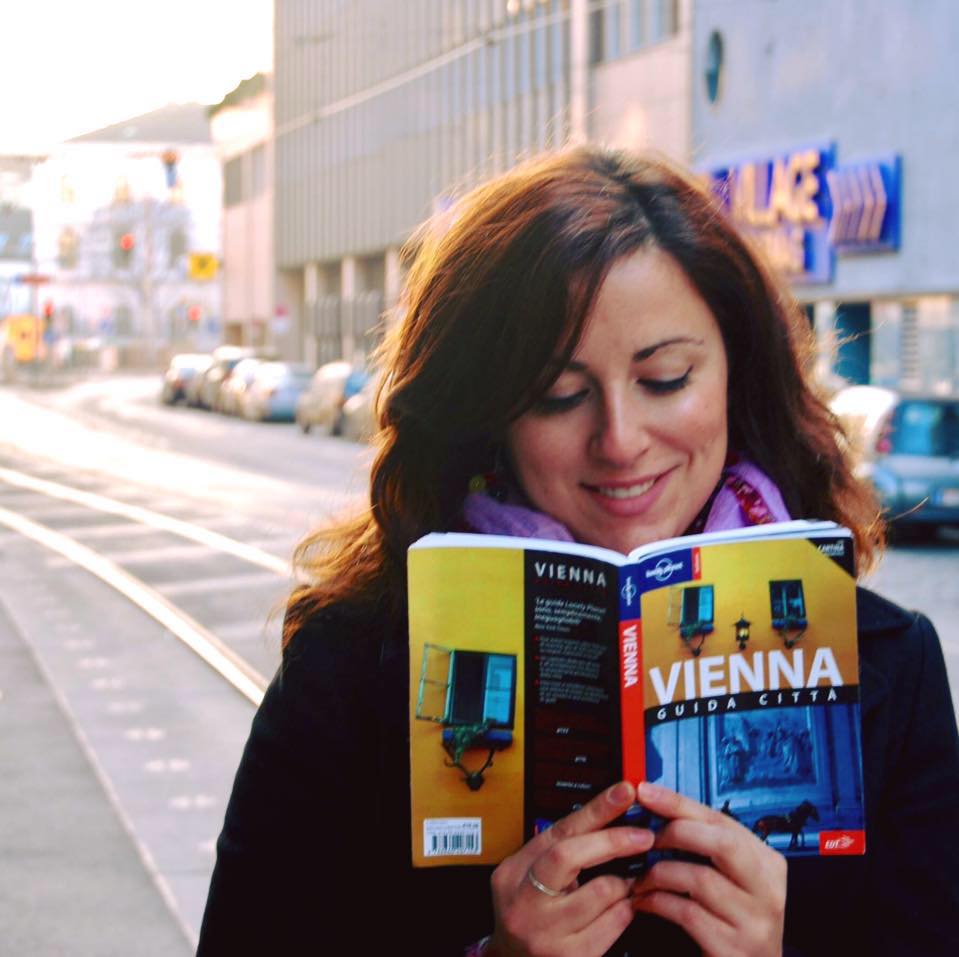
With that in mind, when I returned to Italy to graduate from my Master’s degree, I had no doubt: I wanted to leave my ‘little reality’, away from my comfort zone, and pursue my Ph.D. abroad. So I applied, interviewed, and got three grad school offers. Among those, I chose to pursue my doctoral degree at the University of Vienna. Vienna offered me a lot, including the opportunity to learn German (and I do not hide you how difficult that was!), and I strongly encourage all students to study abroad: you will immensely grow not only professional in your field, but also immensely personally! And the opportunity to get to know another culture and learn from the differences and challenges you will experience is invaluable.
After completing my Ph.D., I did a postdoc and was a visiting scientist at the European Southern Observatory (ESO) Head Quarter in Germany; meanwhile, I ideated from scratch projects to continue my studies and applied for fellowships to continue my research. I was awarded three of these: Austria, Paris (France), and NASA; and so I have chosen to come to work at NASA Goddard Space Flight Center.
What is your role at NASA?
I’m a Research Scientist. As such, I work on a multitude of projects that extend from cool evolved stars (i.e., Red Giants and Red Supergiants), to exoplanets, and mission concepts in development. I use artificial intelligence techniques, the most advanced computational models, and data from the most powerful telescopes on Earth and in Space to look at stars and exoplanets and to model them. I’m also leading the science side of several mission concepts in development at NASA Goddard, which is a part of my work I love.
Another part of my work I particularly enjoy is the supervision of postdocs, Ph.D. students, and undergraduate students. I also teach astrophysics classes at the university.
Please let us understand a bit more about your actual work. What are the practical applications from which we will benefit, directly or indirectly, from what you study and analyze today?
Have you ever heard the sentence: “we are all made of star dust”? Well, if not, it was not me but the famous 20th century astrophysicist Carl Sagan. Most of the elements of our bodies were formed in stars over the course of billions of years and multiple star lifetimes. Only a small portion of our hydrogen (which makes up roughly 9.5% of our bodies) and lithium, which our body contains in very tiny trace amounts, originated from the Big Bang - together with Helium. But all the other, heavier elements of the periodic table, like the calcium in our bones, the iron in our blood, and the gold in our wedding rings, were literally made in the interior of stars during a process called stellar nucleosynthesis. And these elements came to Earth at the moment of the formation of the solar system. Fascinating, right?!
Let me also add a few more benefits on how NASA and our work is beneficial for the world: I’m using very powerful AI algorithms and models to discover exoplanets in several types of data. There are applications of these models to other problems in society, which are very beneficial to all. Additionally, all the technologies we are developing while ideating and building mission concepts in development at NASA go directly to benefit society. For example, here the NASA Technology Transfer Program describing how NASA technologies developed for Space, benefit us all.
These are only a few example of why it’s important to study space. I could go on and on in a very long conversation!
In addition to all of this, I’d like to add emphasize how, per se, acquiring new knowledge on the Universe and our place in it is a huge added value for society. As Dante taught us: “Fatti non foste per viver come bruti, ma per seguir virtute e canoscenza” (Ye were not made to live as brutes, but to follow virtue and knowledge)! This is one of the values I live my life by!
Do you think having an Italian dna, being born and raised in Italy, has helped you cultivate your talent and passion?
The Italian DNA has certainly given me the luck of being born and raised in a country full of culture, art, and Beauty. As I mentioned, I attended the Liceo Classico, which gave me a different perspective and point of view on many things, deepening my capacity to understand, seeing the world “on the shoulder of the giants”, and sharpening my critical thinking.
In addition, the Italian university provides deeply enriching theoretical training, complementary to the very practical American way of working, for which our background is highly appreciated.
My passion for the Universe, grit, and resilience made the rest.
How the Italian research system is viewed by a community of great excellence like NASA?
Italy has much excellence, but we cannot compare apples to oranges. NASA has a billion-dollars magnitude budget - incomparable to any of the Italian universities or astronomy research centers. We are talking about two very different scales. Also, the mindset is very different.
Working here at NASA has given me a lot: numerous skills, working in teams even very large (NASA Goddard Space Flight Center is house to 10,000 between scientists and engineers); and above all, it taught me a way of working deeply different from that of the realities I experienced before. That is, a modus lavorandi extremely dynamic, based on trust, knowledge, and strongly rewarding merit. If engaged and great, young people are lifted and not penalized just for being young. Also, the concept of young here is very different than in Italy. Italian ‘young’ is until 40. Here at 18, you are already considered an adult.
But again, NASA is enormous compared to Italian national laboratories. And already in itself contains so many different cultures, which is a massive personal enrichment and helps to see and rethink Italian culture differently (not bad or good, only with other eyes and perspectives).
In addition, the United States in general, NASA included, focuses much on personal development - more than even for European standards. This is an aspect I appreciate a lot of this culture.
I’ve to add that I left Italy 12 years ago, and so many things might have changed - hopefully for the best!
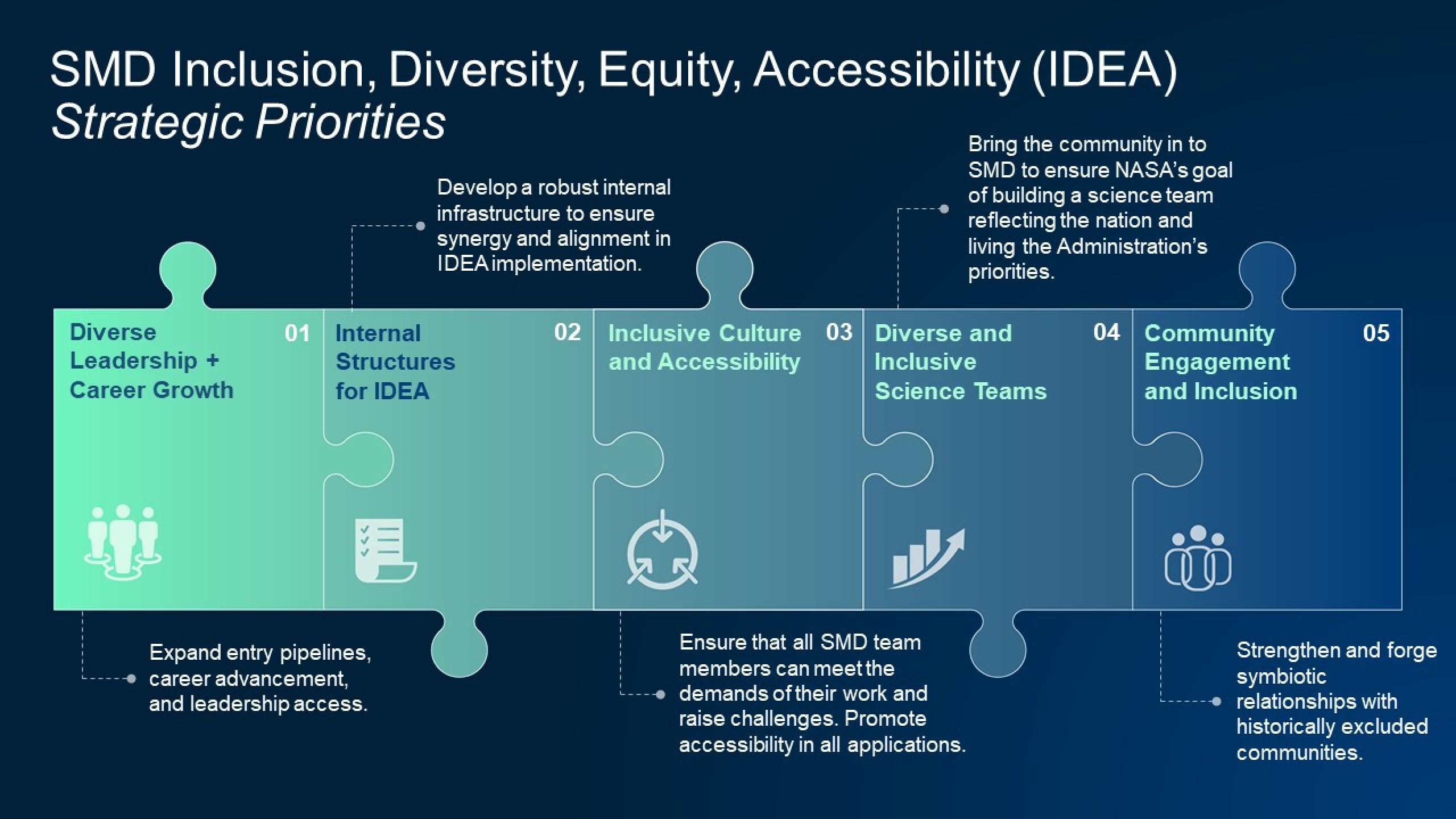
At NASA you are also involved in IDEA, Inclusion Diversity Equity and Accessibility. There is no doubt that Italy still needs to improve a lot on this. If you had an important role among the decision-makers in Italy on this issue, what would you do?
Educating teachers, parents, in order to start changing perspective on things from the young generations.
Diversity, Equity, Inclusion and Accessibility are not only the right things to do, but are what makes work, and in my particular case science, better; for the benefit of all humanity!
Different approaches and views into very hard problems, brings a richness of perspective, and a higher chance of being able to solve them!
In your work you look at the stars with sophisticated tools. But if instead of the stars I ask you to look at Italy, and if instead of innovative telescopes I ask you to use your heart first, and then your mind, what’s the outcome?
Italy is my family, friends, sea, sun, mountain, culture, beauty! We have the most biodiversity of the world; places so particular that all the world is attracted to it. We have our style, our way of living, our irony (in particular the romans), and our allegria, that is difficult to find in any other of the places I’ve lived so far.
Please tell us one thing where Italy is better than the US, and another one on the contrary where the US are better than Italy
Italy: food, thinking out of the box, flexibility. US: meritocracy, order, speed in execution
What has to happen to make you permanently, or at least for a while, take the reverse route of what you have been doing, and cross the Atlantic again, leaving Maryland and landing in Italy?
A job of responsibility, in the field I love (Astrophysics, Space) proportional to the level I’ve reached. In Italy if you are under 40, you are considered ‘young’. Here, responsibilities are given to people well before that age. At 32 years old I was leading the science side of my first mission concept.
I want to see more of this in Italy. I want to see more women professors, more women in the executive position of important universities and astronomical research centers, and more (of what Italy considers) “young” people having stronger responsibilities. The energies, passion, drive, and brilliant ideas of the young are what make the US great and at the forefront of science and technology - and hence what can make also Italy better!
I believe the experience I acquired here would provide so much to Italy. I would like more possibilities for collaboration and exchanges; and, why not, in the future, I do not exclude the idea of a return to Italy under these conditions. What I am building now here and what is giving me back the work experience in this country, is currently so rewarding that at the moment I have no reentry plans, but I do not exclude it.
Sono sempre affascinato dai giovani – nell’accezione che ne diamo in Italia, ovvero con meno di 40 anni, più o meno – scienziati o innovatori italiani, spesso uomini e ancora più spesso donne, dei quali gli Stati Uniti riconoscono talento, passione e visione, premiandoli con meritatissimi ruoli di prestigio. Li considero una delle parti migliori del mio Paese, li ammiro e li ringrazio, e quando mi capita di avere l’onore e il piacere di intervistarne uno, o ancora meglio, una, mi sento fortunato, e vorrei che questo fosse trasmesso anche ai miei lettori.
L’ospite di oggi nella nostra rubrica di interviste è una di queste meravigliose connazionali, Gioia Rau: astrofisica presso il Goddard Space Flight Center della NASA e Faculty Research Assistant Professor presso la Catholic University of America. Direi che in questo caso al tradizionale Two Flags One Heart si può aggiungere anche One extraordinary Mind. Lo scorso dicembre il Corriere della Sera l’ha – giustamente - inclusa nelle 50 donne dell’anno, in un elenco che iniziava con la Regina Elisabetta. Ringrazio davvero Gioia per condividere con noi la sua storia, e per permettere all’Italia di fare una magnifica figura negli Stati Uniti, ancora una volta.
Gioia, parlami del tuo amore e della tua passione per l'universo, nata in Italia guardando le stelle con il suo telescopio giocattolo…
Il mio amore per l'Universo è nato quando ero molto giovane. Ero una ragazzina curiosa che veniva dalla periferia di Roma, appassionata di tante cose e amante della scienza e della natura! Mi chiedevo sempre: "Perché è così? Come funziona? Che cos'è?" Ma qualcosa dell'Universo mi affascinava tantissimo!
Mi piaceva osservare il cielo, perdermi nelle sue profondità, conoscere tutti i suoi oggetti mistici: dalle potenti galassie ai buchi neri e al nostro sistema solare, e porre agli adulti domande come: "Cosa c'è là fuori? Quanti anni ha l'Universo? Come si è formato? Come funziona? ". Volevo davvero sapere cosa c'era "là fuori" e capire come funzionava l'universo.
Questo non significa che non avessi altre passioni! Ero davvero interessata a molte cose diverse e anche adesso ho molti hobby e interessi (il tempo per quelli, è un'altra storia...). Ma qualcosa dello spazio mi affascinava particolarmente. Così coltivavo il mio sogno e la mia passione e, avida di conoscenza, chiedevo libri di astronomia come regalo di compleanno; agli scout facevo la specialità di astronomia; a scuola convincevo la mia maestra a portarci al planetario di Roma (all'epoca molto vecchio) e a farci una lezione di astronomia; a casa guardavo i lanci dello Space Shuttle con mio padre. Erano gli anni '90, e trasmettere su una TV catodica un lancio in diretta non era così facile…
Per me era una passione da seguire, ed ero estremamente determinata a seguire i miei sogni fin da piccola.
È vero che il tuo rapporto con gli Stati Uniti è iniziato all'età di 10 anni, quando hai scritto all'Agenzia Aerospaziale Americana per chiedere di poter partecipare a un campo estivo da loro organizzato, ma aperto solo ai cittadini statunitensi?
È una storia vera. Ma, più che una relazione, quello era un sogno per me a quell'età. Ero così affascinata dalla NASA e dalle sue attività che decisi che la NASA era il posto in cui volevo lavorare e che mi sarei impegnata duramente per seguire il mio sogno e realizzarlo. Così, durante la scuola elementare, ho preso carta e penna e ho scritto una lettera alla NASA, dicendo che volevo diventare una astrofisica e studiare l'universo! In effetti, vidi che c'era un campo estivo per bambini, e a quel tempo le cose erano molto diverse da adesso, quindi era aperto solo ai cittadini statunitensi.
Ebbene, indovinate un po': la NASA mi rispose, mi inviò degli adesivi molto belli e mi scrisse: "studia e lavora sodo, e un giorno arriverai qui!". Ed è proprio quello che ho fatto. 20 anni dopo, eccomi qui. Conservo molto questo e gli altri miei ricordi spaziali legati all'infanzia. Nei momenti difficili, mi ricordo che la resilienza, la grinta e il duro lavoro sono gli ingredienti essenziali per realizzare i sogni, ovunque si cominci nella vita.
Quando sei arrivata negli Stati Uniti?
Sono arrivata nel 2017, appena un anno dopo la scomparsa di mio padre; ma "il viaggio" che mi ha portato qui è una storia lunga.
Nel corso degli anni ho continuato a coltivare la mia passione per lo spazio e l'astronomia. Durante il liceo, che per me è stato il Liceo Classico, ho colto tutte le opportunità per approfondire le mie ricerche su argomenti legati all'astronomia; dal punto di vista scientifico ma anche letterario.
Inoltre, probabilmente ero l'unica ad amare la matematica e le scienze nella mia classe (il Liceo Classico notoriamente non approfondisce le materie scientifiche). Quindi, all'università non ho avuto dubbi: volevo studiare fisica - anche se amavo anche la filosofia, ed è facile vedere il collegamento!
Studiare Fisica non è stato affatto facile: in Italia, tutti gli esami sono prima scritti, e SOLO SE si supera l'esame scritto, si è ammessi all'esame orale. Con il mio background di classicista, i primi anni sono stati impegnativi; tutti gli esami e le lezioni erano davvero difficili, soprattutto perché venivo da un "liceo classico". Tuttavia, ho perseverato. Alla fine, sono stata una dei pochissimi della mia classe universitaria a laurearsi in tempo - cosa molto difficile nel sistema universitario italiano! - e "cum laude".
La mia passione per l'astronomia era (ed è) così forte che durante l’università ho sentito il bisogno di condividerla. Volevo accendere la scintilla in altre persone e mostrare loro la bellezza dell'Universo. Così, durante il terzo anno di università, ho fatto domanda per un corso di divulgazione scientifica al Planetario di Roma e sono stata selezionata. Da allora, la mia passione per la comunicazione scientifica si è alimentata. Da allora, ho organizzato, invitato e partecipato a decine di eventi di divulgazione!
Durante l'ultimo anno di università, il quinto, ho ottenuto una borsa di studio per sviluppare la mia tesi di laurea magistrale all'estero, perché ho ottenuto il più alto GPA (Grade Point Average) tra tutti gli studenti iscritti alle facoltà scientifiche (Fisica, Matematica, Biologia, Chimica, Scienze Naturali). Si trattava di una borsa di studio estremamente competitiva da ottenere (solo quattro borse di studio, e oltre 10.000 studenti!) Grazie a questa borsa di studio, ho sviluppato la mia tesi di master al Caltech e al JPL. Questo è stato il primo momento di risveglio per me, in cui ho veramente scoperto la ricchezza che mi ha portato conoscere un'altra cultura, un altro modo di lavorare e di vivere, altre persone lontane da casa, in un altro Paese.
Con queste premesse, quando sono tornata in Italia per laurearmi, non ho avuto dubbi: volevo lasciare la mia "piccola realtà", allontanarmi dalla mia comfort zone e conseguire il dottorato all'estero. Così ho fatto domanda, ho fatto un colloquio e ho ricevuto tre offerte di dottorato. Tra queste, ho scelto di conseguire il dottorato all'Università di Vienna. Vienna mi ha offerto molto, compresa l'opportunità di imparare il tedesco (e non vi nascondo quanto sia stato difficile!), e incoraggio vivamente tutti gli studenti a studiare all'estero: crescerete immensamente non solo professionalmente nel vostro campo, ma anche personalmente! E l'opportunità di conoscere un'altra cultura e di imparare dalle differenze e dalle sfide che incontrerete è inestimabile.
Dopo aver completato il dottorato, ho svolto un postdoc e sono stata visiting scientist presso l'Head Quarter dell'European Southern Observatory (ESO) in Germania; nel frattempo, ho ideato da zero progetti per continuare i miei studi e ho fatto domanda per borse di studio per proseguire la mia ricerca. Ne ho ottenute tre: Austria, Parigi (Francia) e NASA; e così ho scelto di venire a lavorare al Goddard Space Flight Center della NASA.
Qual è il tuo ruolo alla NASA?
Sono una scienziata ricercatrice. In quanto tale, lavoro su una moltitudine di progetti che vanno dalle stelle fredde evolute (cioè Giganti Rosse e Supergiganti Rosse), agli esopianeti e ai concetti di missione in fase di sviluppo. Utilizzo tecniche di intelligenza artificiale, i modelli computazionali più avanzati e i dati provenienti dai più potenti telescopi terrestri e spaziali per osservare e modellare stelle ed esopianeti. Sono anche a capo della parte scientifica di diversi concetti di missione in fase di sviluppo presso la NASA Goddard, una parte del mio lavoro che amo.
Un'altra parte del mio lavoro che mi piace particolarmente è la supervisione di postdoc, dottorandi e studenti universitari. Insegno anche astrofisica all'università.
Ti chiediamo di farci capire qualcosa di più sul suo lavoro attuale. Quali sono le applicazioni pratiche di cui potremo beneficiare, direttamente o indirettamente, grazie a ciò che tu studi e analizzi oggi?
Ha mai sentito la frase: "siamo tutti fatti di polvere di stelle"? Se no, non è mia, ma del famoso astrofisico del XX secolo Carl Sagan. La maggior parte degli elementi del nostro corpo si è formata nelle stelle nel corso di miliardi di anni e di molteplici vite stellari. Solo una piccola parte dell'idrogeno (che costituisce circa il 9,5% del nostro corpo) e del litio, che il nostro corpo contiene in piccolissime tracce, ha avuto origine dal Big Bang, insieme all'elio. Ma tutti gli altri elementi più pesanti della tavola periodica, come il calcio delle nostre ossa, il ferro del nostro sangue e l'oro delle nostre fedi, sono stati letteralmente creati all'interno delle stelle durante un processo chiamato nucleosintesi stellare. E questi elementi sono arrivati sulla Terra al momento della formazione del sistema solare. Affascinante, vero?
Permettimi di aggiungere qualche altro vantaggio su come la NASA e il nostro lavoro siano utili al mondo. Sto usando algoritmi e modelli di intelligenza artificiale molto potenti per scoprire esopianeti in diversi tipi di dati. Questi modelli possono essere applicati ad altri problemi della società, con grande beneficio per tutti. Inoltre, tutte le tecnologie che stiamo sviluppando durante l'ideazione e la realizzazione dei concetti di missione in fase di sviluppo alla NASA vanno direttamente a beneficio della società. Per esempio, questo sito del Programma di trasferimento tecnologico della NASA descrive come le tecnologie NASA sviluppate per lo Spazio vadano a beneficio di tutti noi.
Questi sono solo alcuni esempi del perché è importante studiare lo spazio. Potrei continuare a lungo!
Oltre a tutto questo, vorrei sottolineare come, di per sé, acquisire nuove conoscenze sull'Universo e sul nostro posto in esso sia un enorme valore aggiunto per la società. Come ci ha insegnato Dante: "Fatti non foste per viver come bruti, ma per seguir virtute e canoscenza"! Questo è uno dei valori con cui vivo la mia vita!
Pensi che avere un dna italiano, essere nata e cresciuta in Italia, ti abbia aiutato a coltivare il tuo talento e la tua passione?
Il DNA italiano mi ha sicuramente dato la fortuna di essere nata e cresciuta in un Paese ricco di cultura, arte e bellezza. Come ho già detto, ho frequentato il Liceo Classico, che mi ha dato una prospettiva e un punto di vista diversi su molte cose, approfondendo la mia capacità di comprensione, vedendo il mondo "sulla spalla dei giganti" e affinando il mio pensiero critico.
Inoltre, l'università italiana fornisce una formazione teorica profondamente arricchente, complementare al modo molto pratico di lavorare americano, per il quale il nostro background è molto apprezzato.
La mia passione per l'Universo, la grinta e la resilienza hanno fatto il resto.
Come viene visto il mondo della ricerca italiana, da una comunità di grande eccellenza come la NASA?
L'Italia ha molte eccellenze, ma non possiamo paragonare le mele con le arance. La NASA ha un budget di un miliardo di dollari, incomparabile con quello delle università o dei centri di ricerca astronomica italiani. Stiamo parlando di due scale molto diverse. Anche la mentalità è molto diversa.
Lavorare qui alla NASA mi ha dato molto: numerose competenze, lavorare in team anche molto grandi (il Goddard Space Flight Center della NASA ospita 10.000 tra scienziati e ingegneri); e soprattutto mi ha insegnato un modo di lavorare profondamente diverso da quello delle realtà che ho conosciuto prima. Ovvero un modus lavorandi estremamente dinamico, basato sulla fiducia, sulla conoscenza e sul merito fortemente premiante. Se impegnati e bravi, i giovani vengono valorizzati e non penalizzati solo per il fatto di essere giovani. Inoltre, il concetto di giovane qui è molto diverso da quello italiano. Il "giovane" italiano è fino a 40 anni. Qui a 18 anni si è già considerati adulti.
Ma ancora, la NASA è enorme rispetto ai laboratori nazionali italiani. E già di per sé contiene tante culture diverse, il che rappresenta un enorme arricchimento personale e aiuta a vedere e ripensare la cultura italiana in modo diverso (non male o bene, solo con altri occhi e prospettive).
Inoltre, gli Stati Uniti in generale, NASA compresa, si concentrano molto sullo sviluppo personale - più che negli standard europei. Questo è un aspetto che apprezzo molto di questa cultura.
Devo aggiungere che ho lasciato l'Italia 12 anni fa, e quindi molte cose potrebbero essere cambiate - spero in meglio!
Alla NASA ti occupi anche di IDEA, Inclusion Diversity Equity and Accessibility. Non c'è dubbio che l'Italia debba ancora migliorare molto su questo fronte. Se tu avessi un ruolo importante tra i decisori in Italia su questo tema, cosa faresti?
Educare gli insegnanti e i genitori, per iniziare a cambiare la prospettiva delle cose da parte delle giovani generazioni.
Diversità, equità, inclusione e accessibilità non sono solo le cose giuste da fare, ma sono ciò che rende il lavoro, e nel mio caso specifico la scienza, migliore; per il bene di tutta l'umanità!
Approcci e punti di vista diversi su problemi molto difficili portano una ricchezza di prospettive e una maggiore possibilità di risolverli!
Nel tuo lavoro, tu guardi le stelle con strumenti sofisticati. Ma se invece delle stelle ti chiedo di guardare l'Italia, e se invece di telescopi innovativi ti chiedo di usare prima il cuore e poi la mente, qual è il risultato?
L'Italia è la mia famiglia, gli amici, il mare, il sole, la montagna, la cultura, la bellezza! Abbiamo la maggiore biodiversità del mondo; luoghi così particolari che tutto il mondo ne è attratto. Abbiamo il nostro stile, il nostro modo di vivere, la nostra ironia (in particolare quella dei romani) e la nostra allegria, che è difficile da trovare in qualsiasi altro posto in cui ho vissuto finora.
Mi dici una cosa in cui l'Italia è migliore degli Stati Uniti, e un'altra al contrario in cui gli Stati Uniti sono migliori dell'Italia?
Italia: cibo, pensare fuori dagli schemi, flessibilità. Stati Uniti: meritocrazia, ordine, velocità di esecuzione.
Cosa deve succedere per farti fare definitivamente, o almeno per un po', il percorso inverso a quello che hai fatto finora, e attraversare di nuovo l'Atlantico, partendo dal Maryland e approdando in Italia?
Un lavoro di responsabilità, nel campo che amo (Astrofisica, Spazio) proporzionato al livello che ho raggiunto. In Italia se hai meno di 40 anni sei considerato "giovane". Qui le responsabilità vengono date a persone ben prima di quell'età. A 32 anni ero a capo della parte scientifica della mia prima missione.
Voglio vedere di più in Italia. Voglio vedere più donne professoresse, più donne nelle posizioni dirigenziali di importanti università e centri di ricerca astronomica, e più persone (di quelle che l'Italia considera) "giovani" con maggiori responsabilità. Le energie, la passione, lo slancio e le idee brillanti dei giovani sono ciò che rende gli Stati Uniti grandi e all'avanguardia nella scienza e nella tecnologia - e quindi ciò che può rendere migliore anche l'Italia!
Credo che l'esperienza acquisita qui possa dare molto all'Italia. Vorrei maggiori possibilità di collaborazione e di scambio; e, perché no, in futuro non escludo l'idea di un ritorno in Italia a queste condizioni. Quello che sto costruendo qui e che mi sta restituendo l'esperienza lavorativa in questo Paese, è attualmente così gratificante che al momento non ho progetti di rientro, ma non lo escludo.