
At We the Italians, we have always been deeply grateful to the American military, and we always will be. Our gratitude comes from personal, military, economic, and cultural reasons. The Italian city that welcomes the largest number of American citizens – 12,000, many of whom are service members – is Vicenza. This year marks the 70th anniversary of the American presence in Vicenza, and we are proud to do our part in showing our appreciation.
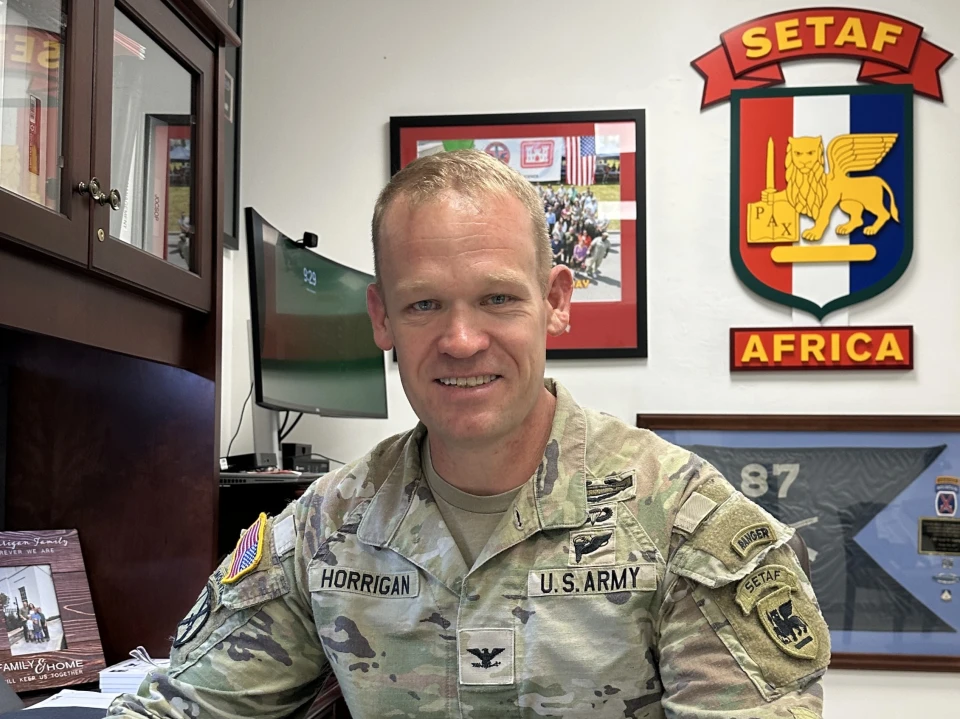
Thanks to the wonderful Anna Ciccotti, outstanding Public Affairs Officer at US Army Italy Garrison, and to the Vicenza team for the photos (Tony Abruscato, Paolo Bovo, Rick Scavetta), we are pleased to share with our readers an interview with Colonel Scott W. Horrigan, Chief of Staff of the U.S. Army Southern European Task Force, Africa (SETAF-AF), and former commander of the US Army Italy Garrison in Vicenza. Thank you for your service, Colonel, and through you, thanks to all the American service members who have helped defend our country.
Welcome on We the Italians, Colonel. To begin, I’d like to ask which U.S. State you’re from, and how your military career has developed over the years.
Yeah, what state I'm from, that's a tough question. I've been all over. I was born in Ohio, but I've lived in Florida and in California for a short time, but I would call home the Midwest region.
Growing up, I ended up settling down in Iowa. I graduated high school there. I went to college and that's where I joined the officer program and found my way into the Army.
I'm an infantry officer, and that's always what I wanted to be. I grew up in infantry formations, serving in great historic divisions like the 10th Mountain Division and the 25th Infantry Division in Hawaii.
I got some great opportunities to work for some incredible folks. I spent a lot of my time, as a lot of fellow soldiers my age did, in Afghanistan and Iraq. In fact, there was probably a time in my life where I had spent more time deployed than I had with my wife. That's the tough part about being an American soldier, at least at my age, where you went through 2001 to 2020 just on a constant rotation. So the opportunity to come here to Italy and serve as the installation commander and then as the chief of staff of SETAF are absolute highs in my career track.
You are the Chief of Staff of SETAF (U.S. Army Southern European Task Force) in Vicenza. This October marks an important anniversary: SETAF was established exactly 70 years ago, in 1955. Could you please share with our readers the history of this American command in Italy?
Our 70th birthday here in Vicenza will be an important milestone.
If we think about 1955, it is a really long time ago. The mission of SETAF-AF was extremely important then just as it is now. Back in 1955, you can imagine Cold War era, what the U.S. Army, more importantly what NATO needed was deterrence options against a threat.
SETAF at that time was a deterrent and a protective force to NATO's southern flank. And while that mission has evolved over the decades with the end of the Cold War, SETAF still remains very important to the U.S. Army and to NATO.
About 2008, SETAF became SETAF-AF, the Africa piece of it, to amplify the fact that this headquarters is isn't just Southern Europe, it is also Africa and the shared challenges that the US with its European partners have that can come from the Africa, whether it's migration, terrorism, all those types of challenges.
Vicenza is not a new place for you - you previously served here as Commander of U.S. Army Garrison Italy. Can you tell us what that experience was like for you?
When I found out I was going to be the garrison commander, it was like finding out I just won the lottery, both me and my family.
Any US family or soldier that comes here to Italy, the chances are Italy was their number one choice. Because it's such in high demand. Everybody wants the experience of coming and living in Italy for a few years. Everybody feels very proud for that opportunity, whether you're a young 19-year-old soldier or you're old and married and with kids and a guy like me.
I loved being a garrison commander. My job was to wake up every single day and think about how to create a better community, not just an American community because what I never wanted was an installation of four walls and barbed wire that separated the American community from the Italian community.
What I wanted was a cohesive community between the American population and the Italian population in which there was an exchange. Not just the opportunity to work on the base, but everything from utilities to our bank accounts, to our sports and our kids. Everything comes on and off the installation. It is a very kind of back and forth relationship.
My job as the garrison commander was to find ways to do that because I knew we would be better off if the Italian community felt welcomed on the base and we would certainly be better off if Americans were welcomed into the Vicenza community.
Have many Italian Americans served under your command? Do you remember one in particular?
I'll name one, it's easy. It's Sonia Paoloni, who is my director of strategic planning in the garrison. She grew up in Pennsylvania, in the Philadelphia area, but her parents were from here in Italy, and they came back to Florida. So she knows the language. She knows the culture.
She is one of the best examples of of an Italian American who returns here, loves Italy, probably never wants to leave, but she's given that gift to her husband who is not Italian American, and she shares her roots with everybody around this continent, and it's just really truly exceptional. We have a lot of examples like that here in this installation.
Vicenza is the Italian city with the highest number of American residents. How well is this large American community integrated into the city and local life?
This is not the only reason why I love Vicenza, but it's definitely one of them. The other reason is the city, which is beautiful. Vicenza has a population of roughly 110.000, 12.000 of those people living here are Americans.
Living in Italy is different than anywhere you'll live in the United States. Most of our people don't know the language. They don't know the culture. They don't understand that dinner starts at 8 p.m. They don't understand it'll take three hours to get through dinner.
So, how do you how do you come here as an American and thrive in Italy is really an important question. The garrison does a lot of different things to help acclimate the American community as soon as they arrive: more than just Italian language classes, we have built tools to help introduce them, for instance, to the small communities. You know, those small towns of only a few thousand people, they're famous for that one Sagra a year, and everybody knows them for that reason.
The Community Alliance Plan (a partnership plan that brings together local municipalities and US military units assigned to Vicenza) is a big program that we've shepherded over the last couple of years. And we've partnered units with communities. And so the commander partners with the mayor and together they think about how to bring the American community into the Italian community for those type of great shared events.
I have personally been to more festivals and sagras than I can count, especially in this part of the year because we're entering that season. My favorite is the one in Grisignano, because my kids can go and it's just super fun.
We feel a lot of warmth from the Italian community just being allowed to come into their events and not be isolated here. We don’t want the American base to be isolated, we want a shared experience. And I want a young Italian kid who graduates high school here in Vicenza to be proud of the fact that there were Americans in his city. And I want the American soldier to be proud that they got to know an Italian and experience the Italian way of life.
In Vicenza, the U.S. Army operates within three Italian military installations. The garrison that hosts U.S. Army Italy is named after Major Carlo Ederle. The one that hosts SETAF is named after Lieutenant Renato Del Din, and the Longare installation after Alpine Corporal Major Matteo Miotto. What lessons do these Italian heroes offer to U.S. soldiers?
I think it's absolutely fantastic that we recognize our Italian comrades who have fallen sometimes in conflicts like Matteo Miotto supporting the U.S. mission in Afghanistan. And then to think about Renato del Din and the sacrifice he made in World War II and his heroism and the courage that he displayed, that is inspirational for a soldier.
I think as a soldier, I don't just look at American heroes to find inspiration. I can absolutely look at our partners across Europe and the heroes they have. So I'm proud to live and work on places named after del Din and Miotto. And I'm also proud to visit bases named after American heroes like William O'Darby who served here near Lake Garda with the 10th Mountain Division.
I think it's great that we remember them and take the opportunity to make sure those bases are named after great Italian heroes who through our partnership were so important to get us to where we are today.
What are the things you and your family appreciate most about Vicenza and about Italy?
I think I've definitely been forever changed by the wine and the cuisine. But more than just the obvious of that, my boys and I hike almost every single weekend, and we go up, whether it's as far as the Dolomites, or out to a small community close by about 15 minutes away named Monte Viale, where we hiked the small ridge lines of that area. And whether you walk by a piazza, and you get to see a nice little old church that a community is still using or whether you're getting to see the view associated with that, that's pretty special. Those aren't opportunities you can find everywhere in the world. So I am never bored here in Italy.
In your view, what is the future of relations between Italy and the United States? And how might the U.S. military presence in Vicenza evolve in the years ahead?
When you look back on the Italian and the American shared history, I don't believe there's any chance that the American army departs Italy. It's just too strong of a friendship. It's too many shared interests between NATO, national security, and heritage and cultural sharing that we do. That relationship will always be strong.
The missions may change. The threats to our collective security may adapt and those will necessitate change. But presence here in Italy will always, in my mind, exist. If not because of our shared history, certainly because of our commitment to NATO. So I don't know how we're going to evolve: I do know that the threats are evolving. We will always have a role in Africa for the US army. Maybe we will also expand our potential portfolio of missions here in Europe to support NATO on the eastern flank. So I don't see SETAF, the 173rd Airborne Brigade or any of our other units here going anywhere else. There's just too much shared history that we have.
Is there anything I haven’t asked you that you would like to share with our readers?
Well, one of my favorite events of the year is meeting with our retired service members who have retired here in Italy. And they have done it for a whole bunch of reasons. Maybe they married an Italian, but often it's because they love Italy so much. And they will do some sort of long-term visa stay, and they will retire, they will buy a home, and they will just continue to stay here in Italy forever. Because they love to do that more than return to wherever they were in the US.
That's how I think important Italy is when people just want to stay here and they are looking for those opportunities. That's pretty unique. You don't see that in other places around the world where the US Army exists. And I think that also says something about the Italian American friendship that has existed for so many decades.