
In 2026, We the Italians celebrates “Two Anniversaries, One Heart” – the 250th anniversary of the United States and the 80th anniversary of the Italian Republic. This article is part of the “Happy Birthday USA: Italy’s Role in America’s Greatness” project, in which we tell the stories of 18 well-known figures of Italian heritage who helped make the United States great.
---
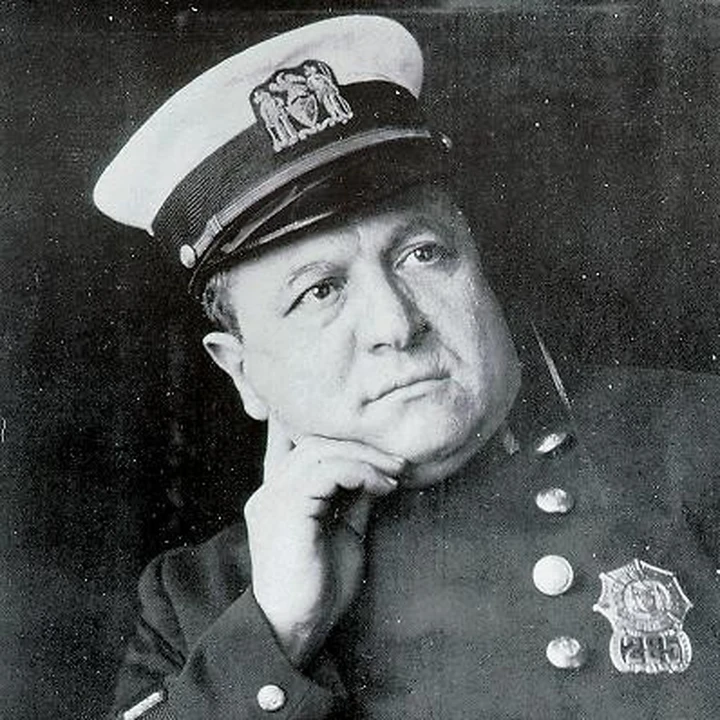
Joe Petrosino, the Italian American who defied the mafia
When people ask me to tell the story of my uncle, Giuseppe “Joe” Petrosino, I always smile a little bitterly. People expect a Hollywood story, the legend of an infallible detective, or the cold biography found in history books. But to me, Joe is not a character on a page. He is my own flesh and blood. I did not learn his story from books – I breathed it in at home, listening by the fireplace to my grandfather Michele, Joe’s younger brother and a tailor in Brooklyn whose shop was across from the detective’s home. Later, my mother Gilda became the guardian of those memories.
My grandfather told me about a real boy, born in Padula, near Salerno, on August 30, 1860. Giuseppe was 13 when he arrived in the United States with his family in 1873. They were part of the great story of Italian immigration – a story of sacrifice, hope, hard work, and dignity.
In New York, Joe quickly discovered what it meant to be Italian in an America where our people were often viewed with suspicion. He suffered when he saw our community – men and women working from dawn to dusk – discriminated against because of a small minority of criminals.
For him, fighting crime also meant defending the good name of Italian Americans.
On October 10, 1883, at 23, Joe joined the New York Police Department, becoming one of the first Italians on the city’s police force. Nobody gave him special treatment. He was short, spoke with an immigrant’s accent, and belonged to a community that enjoyed few privileges. Yet he made his way in a world where Italian police officers were extremely rare.
My grandfather always emphasized one thing: in America, Joe earned everything he achieved.
There were no databases, cell phones, surveillance cameras, or sophisticated investigative tools. Joe essentially had two weapons – an unwavering dedication to his work and a natural instinct that allowed him to read the streets, understand people, and anticipate criminals’ moves. He spoke Italian and understood its dialects, but more importantly, he understood immigrants, their fears, and the wall of silence that often prevented victims from coming forward.
In 1895, he was promoted to detective sergeant. He became one of New York’s best-known police officers and developed a relationship of mutual respect with Theodore Roosevelt, who had served as a New York City Police Commissioner before becoming President of the United States.
When the so-called “Black Hand” began terrorizing Italian communities through threatening letters, extortion, kidnappings, bombings, and murder, Joe realized conventional methods were not enough.
That realization led to the famous Italian Squad, a special unit largely composed of Italian and Italian American officers who could infiltrate criminal circles and earn the trust of victims. Petrosino took command of the squad in 1905, and in 1906 he was promoted to lieutenant – at the time, the highest rank achieved by an Italian American in a U.S. police force.
But the most painful memory my grandfather passed down to me concerned Joe’s loneliness.
Joe spoke plainly and disliked compromise. He understood that arresting the man who planted a bomb or mailed an extortion letter was not enough. The entire network of fear, protection, and complicity that allowed criminals to prosper had to be broken.
He knew he was fighting more than one enemy – crime on one side, corruption and collusion on the other.
There is one image engraved in my heart. My grandfather Michele often repeated it with tears in his eyes: “Imagine Uncle Joe walking into a field where beautiful creatures were growing, pulling out the weeds so those creatures could grow healthy and strong. How is it possible that someone should have to lose his life just for pulling out the weeds?”
The weed was the Mafia.
The beautiful creatures were us Italians – decent people who simply wanted to work, raise families, become part of American society, and remain proud of their roots.
By 1909, Joe realized that arresting criminals in New York was not enough. Many had criminal records in Italy unknown to American authorities. Those records had to be obtained so criminals who had concealed their past could be deported. The investigations involved approximately 1,000 Italian criminals and former convicts.
Joe left for Italy. The mission was supposed to remain absolutely secret.
It did not.
The American press revealed its existence and published information that endangered his life. Joe continued anyway. He arrived in Sicily knowing that someone might already be waiting for him.
On the evening of March 12, 1909, in Piazza Marina in Palermo, four gunshots ended his life.
He was 48 years old. He became the first – and remains to this day the only – NYPD officer killed in the line of duty outside the United States.
Our family has never carried only the pain of a man murdered by the Mafia. There has also been the pain of knowing how alone Joe was during his final battle. A mission meant to remain secret had become public knowledge, exposing a man who had devoted his life to serving others.
When his body returned to New York, the city came to a standstill. On April 12, 1909, approximately 200,000–250,000 people gathered along the route of his funeral procession. Citizens, police officers, children, associations, and ordinary immigrants came to say goodbye.
For the son of immigrants from Padula who had arrived without privilege, that enormous crowd was perhaps the greatest possible response to those who had tried to reduce Italians in America to a stereotype of criminality.
Joe had fought so America could see the other Italians – the honest ones.
For more than fifty years, carrying forward the name of Giuseppe Petrosino has been more than preserving family history for me. It is an honor and a moral responsibility.
When I visit schools, I do not tell young people the story of a superhero. I tell them about an Italian immigrant who became an American without ever ceasing to love the land he came from. I tell them about a man who understood that defending the rule of law also meant defending the dignity of his community.
Joe never returned from his final mission. But he proved that being Italian in America did not mean lowering your head before the Mafia, fear, or prejudice. It meant having the courage to fight them.
The rule of law is not an abstract phrase to be repeated at conferences. It is a daily choice – deciding which side to stand on when remaining silent would be easier and refusing to look the other way when doing so would be more convenient.
That is what my grandfather Michele entrusted to me when he told me about his brother. That is what my mother Gilda preserved. And that is what I try to pass on today.
Because as long as we continue telling the story of Giuseppe “Joe” Petrosino, we will remember an Italian American who, by fighting the Mafia, defended the honor of millions of honest Italians.
And Uncle Joe, through our voices, will continue pulling the weeds from that field.