In 2026, We the Italians celebrates “Two Anniversaries, One Heart” – the 250th anniversary of the United States and the 80th anniversary of the Italian Republic. This article is part of the “Happy Birthday USA: Unsung Italian Heroes” project, in which we share how, in every corner of the United States, an Italian has made a positive impact on their local community.
---
Iron joints and an Italian heart. Luigi Carbonetti, the savior of South Dakota’s railroads
In the early 1900s, the great Black Hills gold rush was radically reshaping the economic and geographic landscape of South Dakota. The discovery of rich deposits in iconic boomtowns like Lead and Deadwood demanded an unprecedented infrastructure expansion: hauling tons of ore and connecting isolated mountain communities to national markets required daring rail lines capable of scaling sheer rock faces and spanning deep gorges. Set against this backdrop of towering, unforgiving wilderness, the exceptional skill and quiet heroism of Luigi "Louis" Carbonetti left an indelible mark, saving lives and securing the state's economic future.
Emigrating from Liguria with centuries-old expertise, Carbonetti embodied the excellence of Italy's master shipwrights and naval carpenters. In his homeland, woodworking was an exact science, refined over generations in maritime shipyards to withstand the relentless strain of the open sea and the structural pressures on massive hulls. When Louis settled in rural South Dakota, he immediately recognized that those same geometric and framing techniques could solve the complex engineering challenges of the American frontier.
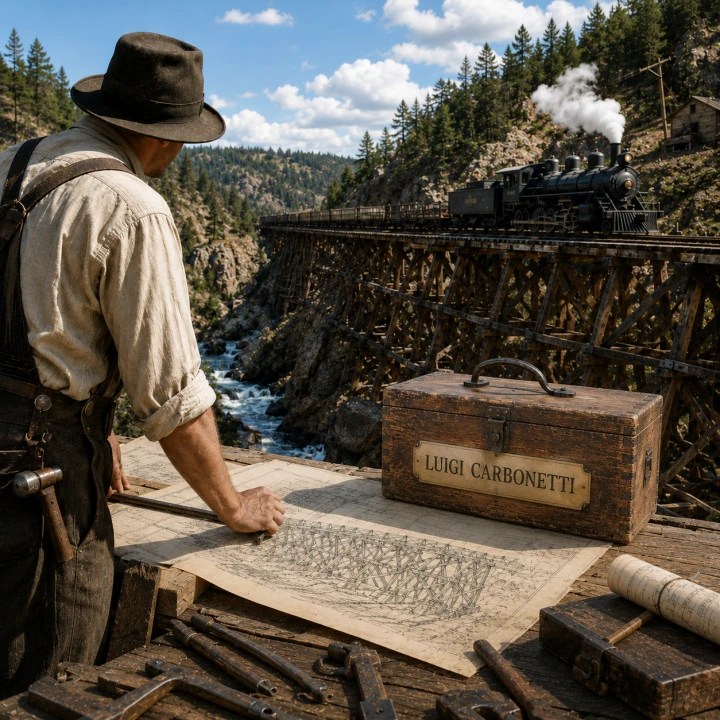
The primary hurdle railroad builders faced in the Black Hills was the fragility of wooden trestle bridges. Hastily erected with untreated timber, these trestles were under constant threat from violent spring runoff caused by snowmelt, as well as the relentless wear and tear of heavy freight trains. This is where Carbonetti’s ingenuity proved decisive. Drawing directly from Ligurian shipbuilding, he introduced a revolutionary bracing system for the joints and spans. Working with local Black Hills ponderosa pine, he applied master craftsmanship to modify the interlocking joints, allowing the bridges to flex under heavy loads without breaking.
The defining test of his impact came during a catastrophic seasonal flood. With a vital railroad trestle on the verge of collapse under the onslaught of raging waters and debris, Louis risked his life without hesitation. In the pouring rain, he directed a crew of laborers to secure emergency tie rods and structural shores using his unique method. The bridge held, saving dozens of railroad workers and preventing a complete shutdown of gold shipments and vital supply lines.
Luigi "Louis" Carbonetti was far more than a frontier laborer; he was a true builder of the modern era. Through grit and determination, he proved that the practical ingenuity and fine craftsmanship of his Italian heritage could provide the structural backbone for South Dakota's boom, turning fragile timber trails into the durable, secure infrastructure that fueled the growth of a rising nation.
Nel 2026 We the Italians celebra Two Anniversaries One Heart, i 250 anni degli Stati Uniti e gli 80 anni della Reubblica Italiana. Questo articolo fa parte del progetto Happy Birthday USA: The Unsung Italian Heroes, in cui raccontiamo perchè in ogni angolo degli Stati Uniti qualcuno italiano ha lasciato un impatto positivo per il singolo territorio.
---
Incastri d'acciaio e cuore italiano. Luigi Carbonetti, il salvatore delle ferrovie del Sud Dakota
Agli inizi del Novecento, la grande corsa all’oro nelle Black Hills stava trasformando radicalmente il volto economico e geografico del Sud Dakota. La scoperta di giacimenti preziosi in città iconiche come Lead e Deadwood richiedeva un’espansione infrastrutturale senza precedenti: per trasportare tonnellate di minerale e collegare le comunità montane isolate con i mercati nazionali, era necessario costruire linee ferroviarie audaci, capaci di arrampicarsi su pareti rocciose e superare gole profonde. In questo scenario dominato da una natura imponente e spietata, l’eccezionalità e l’eroismo silenzioso di Luigi "Louis" Carbonetti hanno lasciato un’impronta indelebile, salvando vite umane e garantendo il futuro economico dello Stato.
Emigrato dalla Liguria portando con sé un bagaglio di competenze secolari, Carbonetti incarnava l’eccellenza della grande tradizione dei maestri d’ascia e dei carpentieri navali italiani. Nella sua terra d’origine, l’arte di lavorare il legno era una scienza esatta, affinata per secoli nei cantieri marittimi per resistere alle formidabili sollecitazioni del mare e alle pressioni strutturali dei grandi scafi. Quando Louis si stabilì nel Sud Dakota rurale, comprese immediatamente che quelle stesse tecniche geometriche e costruttive potevano essere applicate con successo per risolvere le complesse sfide ingegneristiche della frontiera americana.
Il problema principale che i costruttori della ferrovia dovevano affrontare nelle Black Hills era la fragilità dei ponti in legno (i celebri trestles). Progettati in fretta e furia con legname non trattato, questi ponti subivano la costante minaccia delle violente piene primaverili causate dal disgelo e l’usura dovuta al passaggio continuo di convogli carichi di materiali pesanti. Fu qui che l’ingegno italiano di Carbonetti si rivelò decisivo. Louis introdusse un sistema rivoluzionario di rinforzo dei giunti e delle arcate, mutuato direttamente dalla carpenteria navale ligure. Utilizzando il pino delle Black Hills, lo lavorò con maestria artigianale, modificando gli incastri affinché la struttura distribuisse il peso in modo flessibile ma indistruttibile.
Il momento culminante del suo impatto straordinario avvenne durante una spaventosa alluvione stagionale. Mentre un ponte ferroviario cruciale per l’economia della regione rischiava il crollo imminente sotto la furia delle acque e dei detriti, Louis non esitò a rischiare la vita. Sotto una pioggia battente, coordinò una squadra di operai applicando tiranti d’emergenza e puntelli strutturali secondo il suo metodo. Il ponte resistette, salvando la vita a decine di ferrovieri e operai ed evitando il blocco totale dei rifornimenti e del commercio dell'oro.
Luigi "Louis" Carbonetti non è stato semplicemente un operaio della frontiera, ma un vero pioniere della modernità. Attraverso la sua determinazione, ha dimostrato come il genio pratico e l'alto artigianato legati alle sue origini italiane potessero dare stabilità materiale ai sogni di crescita del Sud Dakota, trasformando un fragile sentiero di legno in un’infrastruttura sicura, duratura e fondamentale per la nascita di una nuova nazione.