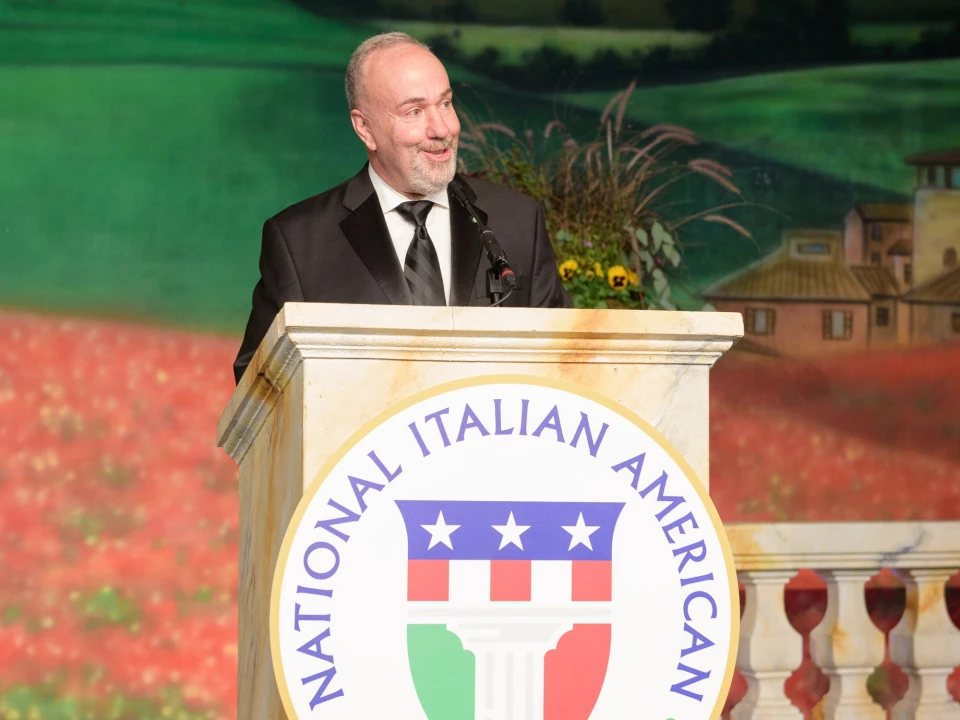
Adnkronos interviewed National Italian American Foundation President Robert Allegrini about the 2026 midterm elections, highlighting a community whose influence extends beyond congressional seat counts. His assessment emphasizes integration, independent thinking and cooperation across party lines.
The Italian American Congressional Delegation could decrease from 36 to 32 members when the new Congress convenes in January, although the interview describes that estimate as conditional on unresolved results and membership criteria. For Allegrini, the picture remains encouraging: Italian Americans participate throughout American public life and bring diverse perspectives to both major parties.
He stressed that the community does not vote as a single bloc. Shared ancestry can instead provide common ground for collaboration on issues affecting Italian Americans and relations with Italy.
One example, Allegrini said, involved a letter to President Donald Trump concerning pasta tariffs. Signed by 14 lawmakers – 7 Democrats and 7 Republicans – the initiative demonstrated the delegation’s capacity for bipartisan action. He credited that cooperation with helping secure the tariffs’ removal.
Allegrini highlighted the election of a governor with Italian roots in Oklahoma, noting that the surname Mazzei evokes Filippo Mazzei’s historic contribution to the friendship between Italy and the United States.
That emphasis on civic participation reflects a tradition reaching back more than five decades. NIAF began in 1975, when 19 Italian Americans gathered in Washington, D.C., to develop a national forum for their community. Its first congressional tribute dinner, held in 1976, honored 29 Italian American members of the 94th Congress.
Today, the foundation’s government affairs work connects lawmakers, Italian diplomatic representatives and public policy professionals. The congressional delegation includes members of both chambers and both parties, providing a setting for dialogue.
NIAF also invests in the next generation through its Congressional Fellowship, which introduces participants to legislative work and the operations of congressional offices. This educational approach connects heritage with opportunities to serve.
Seen in that context, Allegrini’s message is one of confidence. Italian American achievement continues through public service, institutional relationships and the ability to work together. A changing delegation offers another opportunity to sustain that legacy while encouraging new voices to participate in American civic life.