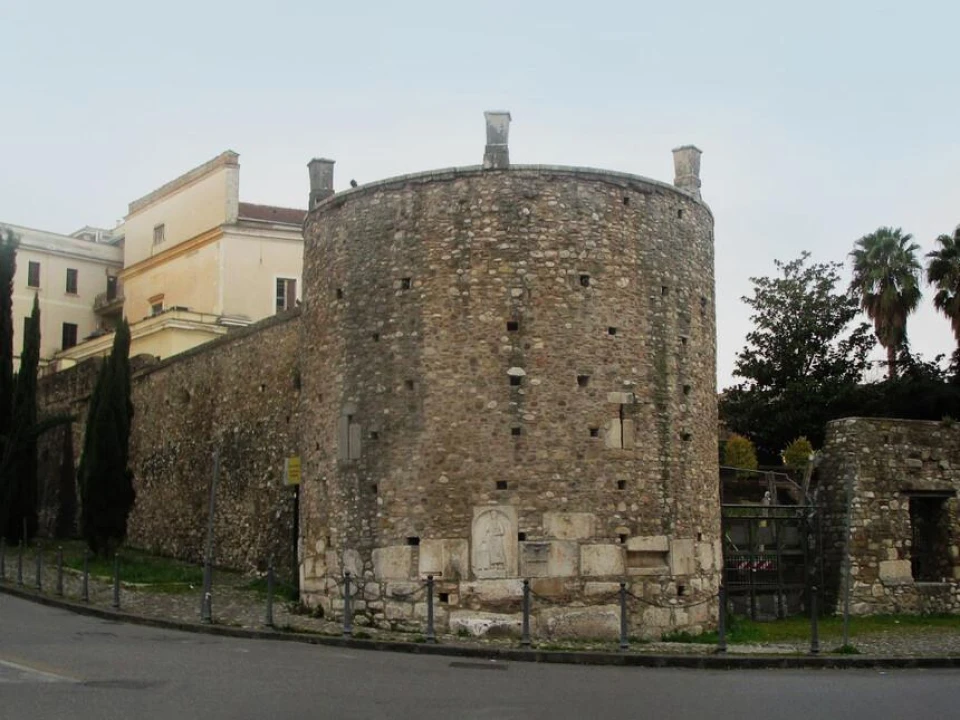

In the heart of Campania, the city of Benevento preserves the memory of a remarkable chapter in Italian history. For centuries, it was one of the most important political and cultural centers of Lombard Italy, a powerful territory that helped shape the medieval identity of the Italian peninsula. While the Lombards are often associated with northern Italy, their influence extended far into the south, where Benevento developed into a center of government, religion, and artistic achievement.
The Lombards were a Germanic people who entered Italy in 568, led by King Alboin. Their arrival transformed the political geography of a peninsula previously dominated by the Byzantine Empire. Over the following decades, Lombard rulers established territories throughout Italy, including the Duchy of Benevento, traditionally associated with the military leader Zotto around 571.
Unlike the northern Lombard kingdom, which was conquered by Charlemagne in 774, Benevento survived and continued to exercise considerable political influence. Its geographical position, between the Apennines and the routes connecting Rome, Naples, and southern Italy, made it strategically important.
One of the most influential figures in its history was Arechis II, who ruled Benevento from 758 to 787. After the collapse of the northern Lombard kingdom, he adopted the title of prince, reinforcing the political autonomy and prestige of his territory. Under his leadership, Benevento became a sophisticated court where Lombard traditions interacted with Roman, Byzantine, and Christian culture.
This cultural encounter produced some of the most distinctive artistic achievements of early medieval Italy. The most celebrated example is the Church of Santa Sofia, built during the eighth century under Arechis II.
Santa Sofia is remarkable for its unusual architectural plan, which combines a central hexagonal arrangement with an outer structure of considerable complexity. Its columns, arches, and surviving frescoes reveal a creative interpretation of different Mediterranean traditions. Rather than simply imitating earlier buildings, Lombard architects developed an original architectural language.
In 2011, Santa Sofia became part of the UNESCO World Heritage serial property Longobards in Italy: Places of Power (568–774 A.D.). The designation recognizes the extraordinary cultural contribution of the Lombards to European civilization and connects Benevento with six other significant Lombard sites across Italy.
The city's importance extended beyond architecture. Benevento became an influential center of manuscript production, religious scholarship, and musical culture. The distinctive Beneventan script, developed in southern Italy, was used for centuries in monasteries and ecclesiastical institutions. Beneventan chant also represents an important chapter in the history of Western sacred music, preserving musical traditions that developed alongside, and sometimes independently of, Gregorian chant.
The Lombard principality was not isolated from the wider Mediterranean world. Its rulers maintained complex relationships with the papacy, the Byzantine Empire, neighboring southern Italian territories, and eventually the emerging powers of the medieval south. Trade, diplomacy, warfare, and religious institutions all contributed to the city's evolving identity.
During the ninth century, internal conflicts led to the division of the original principality, with Salerno emerging as a separate Lombard political center in 849. Benevento nevertheless remained an important regional capital until it passed under papal control in the eleventh century.
Today, the city's streets reveal layers of history extending from Roman antiquity to the Middle Ages and beyond. The Arch of Trajan recalls Benevento's importance under the Roman Empire, while Santa Sofia and other medieval monuments testify to the transformation brought by Lombard rule.
The history of Benevento demonstrates that medieval Italy was never a single, uniform political or cultural world. It was a mosaic of territories whose different traditions contributed to the richness of Italian civilization. Benevento's Lombard heritage remains an exceptional example of how cultural encounters can generate enduring artistic, political, and intellectual achievements.