
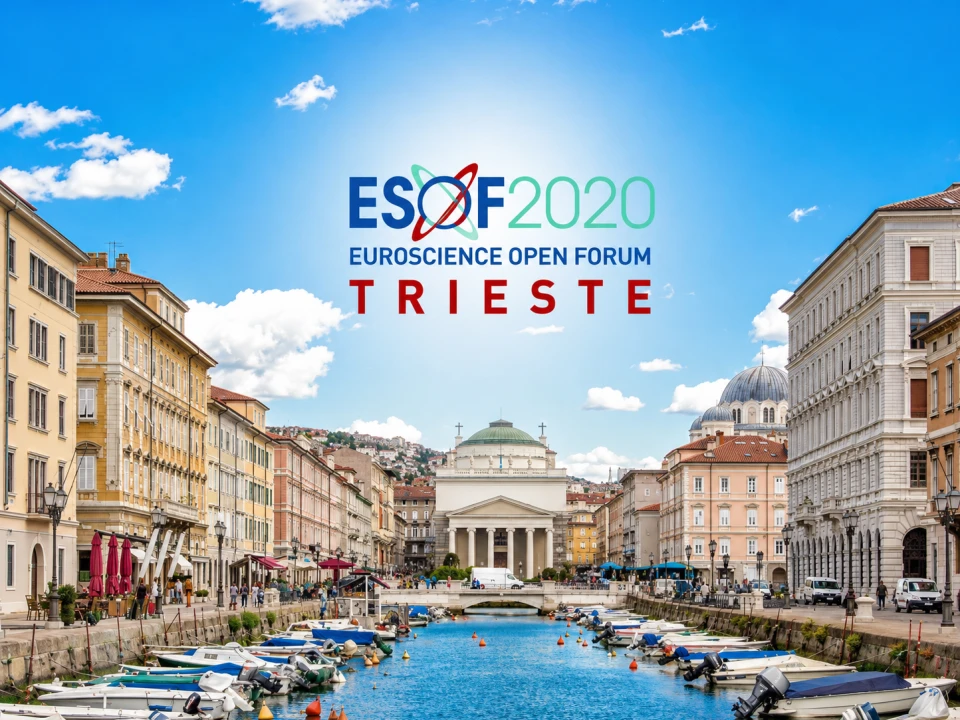

When people think of Trieste, they often picture elegant Habsburg architecture, powerful Bora winds, historic cafés, and one of the Mediterranean’s most beautiful waterfronts. Yet this northeastern Italian city holds another distinction that is even more remarkable.
Trieste has the highest concentration of researchers per capita in Europe, making it one of the world's most extraordinary centers for scientific research and innovation. In a city of just over 200,000 residents, science is not confined to university laboratories - it is woven into everyday life.
The numbers are striking. According to widely cited figures, Trieste is home to approximately 37 researchers for every 1,000 inhabitants, more than double the average for the European Union and far above the Italian national average. This exceptional density means that scientists are an integral part of the local community. In an ordinary apartment building, it is entirely possible to have physicists, mathematicians, biologists, or engineers living next door. Few cities anywhere in the world can claim such a concentration of scientific talent.
This achievement did not happen by chance. It is the result of decades of strategic investment in research and international cooperation that transformed Trieste into what is often called the "Trieste System" - a network of universities, laboratories, international organizations, and innovation centers working closely together. Today, the city hosts around 30 national and international scientific institutions, creating one of Europe's richest research ecosystems.
Among its most prestigious institutions is the Abdus Salam International Centre for Theoretical Physics (ICTP), founded in 1964 under a partnership involving Italy, UNESCO, and the International Atomic Energy Agency. The ICTP has become a global reference point for theoretical physics and mathematics, welcoming scientists from every continent while promoting scientific collaboration with developing countries. Over the decades, research conducted at the center has contributed to advances ranging from particle physics to climate science and quantum technologies.
Equally important is SISSA, the International School for Advanced Studies, one of Italy's leading graduate institutions specializing in mathematics, physics, neuroscience, and data science. Despite its relatively small size, SISSA consistently ranks among Europe's most respected research schools and attracts doctoral students and scholars from around the world.
Trieste is also home to Elettra Sincrotrone, one of Europe's premier synchrotron radiation facilities. Its particle accelerator generates extremely intense beams of light that allow researchers to investigate everything from advanced materials and pharmaceuticals to cultural heritage artifacts and nanotechnology. Every year, scientists from dozens of countries travel to Trieste to use its cutting-edge research infrastructure.
Another pillar of the city's scientific identity is AREA Science Park, Italy's largest multidisciplinary science and technology park. Established in 1978, it brings together research laboratories, startups, innovative companies, and technology transfer initiatives, creating an environment where fundamental science and industrial innovation reinforce one another.
Trieste's scientific vocation has earned international recognition. In 2020, the city was designated the European City of Science, acknowledging decades of excellence in research, higher education, and international collaboration. More recently, new initiatives in artificial intelligence and data science have continued to strengthen its position as one of Europe's leading innovation hubs.
What makes Trieste truly unique is the way science has become part of the city's identity. This is not simply a place with excellent laboratories - it is a community where discovery, education, and international cooperation shape everyday life. Alongside its literary cafés, historic port, and breathtaking Adriatic coastline, Trieste stands as compelling evidence that Italy remains at the forefront of scientific thought. It is a city where curiosity is a defining characteristic, proving that one of Europe's greatest centers of knowledge is found not in a sprawling metropolis, but in a beautiful Italian city on the Adriatic Sea.