
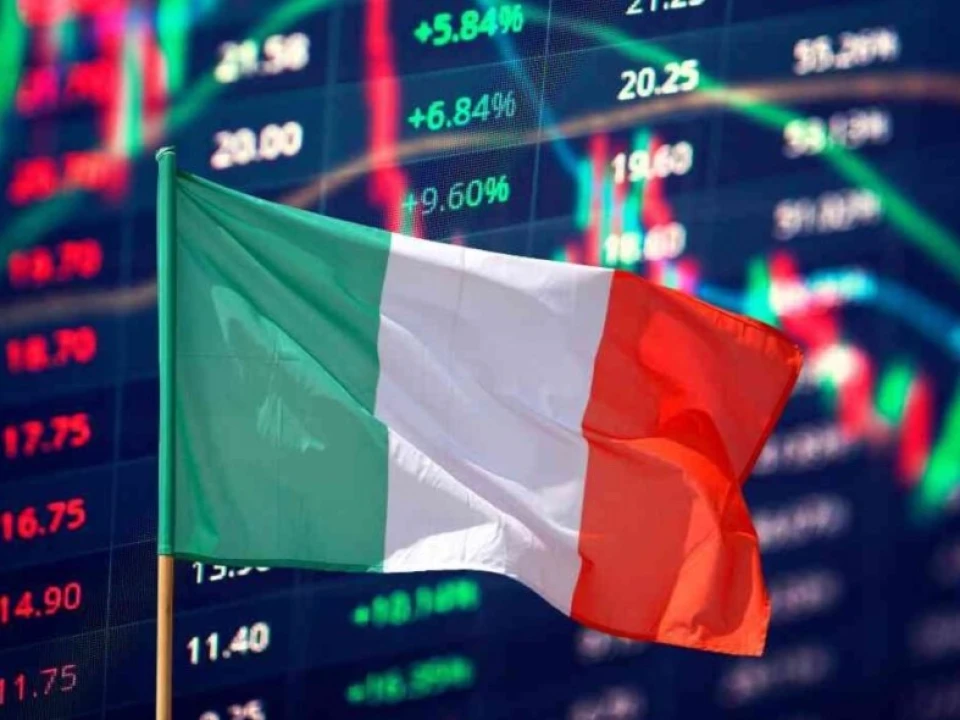

When Americans think of Italy, design, food, and fashion immediately come to mind. But behind the scenes, in the heart of Milan and Siena, a high-stakes financial drama is unfolding, one that could have come straight out of a Tom Wolfe novel.
Three historic names – Assicurazioni Generali, Mediobanca, and Monte dei Paschi di Siena – are now at the center of a power struggle that could reshape Italian capitalism.
To grasp the weight of this battle, it’s enough to recall who they are. Generali, the “Lion of Trieste,” is Italy’s largest insurance company, a symbol of reliability and strength. Mediobanca, born in the postwar years, was for decades the “salotto buono,” the cozy parlor where the destinies of Italy’s industrial giants, from FIAT to Pirelli to Olivetti, were decided. Monte dei Paschi di Siena, the world’s oldest bank, founded in 1472, has witnessed popes, emperors, wars, and crises, surviving everything, even state bailouts in recent years.
Today, these three players are intertwined in a contest of survival and conquest.
This year, fearing a takeover bid from Monte Paschi, Mediobanca tried to play offense. It drafted a plan to acquire Banca Generali, the private banking arm of the Lion of Trieste. The goal was to grow larger and stronger, making itself harder to swallow. To do so, Mediobanca was even ready to sell part of its historic stake in Generali, a move many read as a break with old alliances.
But in August, shareholders rejected the plan. Powerful families like the Del Vecchio and Caltagirone clans, silent protagonists of Italian capitalism, voted against it or abstained. Mediobanca’s defenses crumbled, and the field opened for Monte Paschi.
The Siena-based bank successfully completed its takeover bid, securing 62.3% of Mediobanca’s capital and seizing control. The deal, sweetened with extra cash along the way, paved the road to a possible full merger of the two institutions. For participating shareholders, payment is set for September 15, while from September 16–22 the offer will reopen to allow MPS to edge closer to the two-thirds threshold needed for extraordinary resolutions.
For Italian Americans and others who look at Italy as the land of their roots, this is not just a matter of stock exchanges or banks. What’s at stake is who controls the savings of Italian families, who finances the small and medium-sized businesses that bring Made in Italy to life overseas, from Tuscan wine to Milanese handbags, from Emilia’s engines to Turin’s design. If Mediobanca falls under Monte Paschi’s control, Italy’s banking system will face a new giant, stronger yes, but also more concentrated. And Generali will be forced to rethink its strategies, with ripple effects that could be felt across the Atlantic.
The game now enters phase two: governance and integration. In Milan, a board reshuffle is expected along with the resignation of CEO Alberto Nagel, as MPS looks to quickly set the team and industrial course of the new group (tax credits are also on the table). Regulators and markets are watching closely: S&P has placed Mediobanca on negative CreditWatch due to short-term execution risks, while noting that in the medium term synergies and a stronger profile could emerge.
One thing is clear: Italian capitalism, so often described as static and resistant to change, is moving quickly. And as always in Italy, it’s not just about numbers: it’s about families, power balances, and centuries-old stories. From Mediobanca’s “salotto buono” to Trieste’s Lion to the world’s oldest bank, Italian finance is writing a new chapter. A chapter that inevitably concerns those who, from overseas, follow their ancestral homeland with pride and passion.
A parallel with the United States
For an American reader, some comparisons may help. Mediobanca, with its role as the “salotto buono,” can be compared to Goldman Sachs, not in size, but in its historical influence on big industrial decisions. Generali, with its insurance muscle and international presence, resembles AIG or MetLife, global giants managing risks and assets. Monte dei Paschi di Siena, despite its past crises, remains unique: think of it as a JPMorgan with five centuries of history, surviving revolutions, world wars, and epochal transformations.
And just as in the U.S. the Treasury Department or the Federal Reserve keep a close eye on major bank mergers, mindful of system stability, so too in Italy the government is following this saga. Because this is not just a battle between shareholders: it’s about the solidity of household savings, the financing of businesses, and, ultimately, a slice of the nation’s economic sovereignty.
Consequences for Italy–U.S. relations
It should not be forgotten that both Generali and Mediobanca count American investors among their shareholders, pension funds and asset managers interested in Italian stability. Moreover, many Made in Italy companies that export to the United States, from luxury goods to food and wine, depend on financing from institutions like Mediobanca or MPS. Any shift in Italy’s banking balance of power could therefore ripple into economic relations with the U.S., creating new opportunities but also new uncertainties.
In the end, this is not just an Italian story, it’s a tale of global finance, linking savers in Siena and Trieste with investors in New York and Boston, a reminder of how deeply the destinies of both sides of the Atlantic remain intertwined.
Practical box – What does it all mean?
Takeover bid (OPA): When a bank or company offers to buy another company’s shares at a set price for all shareholders. It’s the most direct way to “conquer” a business.
Mediobanca: For decades, the behind-the-scenes director of Italian finance, the table around which strategic decisions were made.
Generali: Italy’s flagship insurer, with clients worldwide and a history intertwined with the country’s destiny.
Monte dei Paschi di Siena: With over 550 years of life, the oldest bank still active. Scarred by crises, but now attempting a comeback as a key player.
Timeline of the saga
- 1472: Monte dei Paschi is founded in Siena, the world’s oldest active bank.
- 1831: Assicurazioni Generali is established in Trieste, destined to become Europe’s “Lion” of insurance.
- 1946: Mediobanca is created, driving Italy’s postwar industrial rebuilding.
- April 2025: Mediobanca announces plan to acquire Banca Generali to defend against MPS.
- August 21, 2025: Shareholders reject the Banca Generali plan; Mediobanca’s defense collapses.
- September 8, 2025: MPS takeover of Mediobanca closes with 62–62.3% acceptance; MPS gains control.
- September 11, 2025: S&P places Mediobanca on negative CreditWatch after the takeover success.
- September 15, 2025: Shareholders who participated receive payment.
- September 16–22, 2025: Offer reopens as MPS pushes for the two-thirds threshold.