
In a world where food production increasingly emphasizes speed, efficiency, and standardization, one Italian specialty continues to follow a radically different philosophy. Aceto Balsamico Tradizionale di Modena is produced through a process that cannot be rushed, accelerated, or easily replicated. Its most important ingredient is not simply grapes, but time itself.
This extraordinary product comes from the province of Modena, in Emilia-Romagna, where generations of families have transformed cooked grape must into a complex, aromatic condiment through natural fermentation, slow oxidation, and prolonged aging in wooden barrels.
Unlike many products commonly sold as balsamic vinegar, the traditional version is governed by strict production rules and protected by the European Union's Protected Designation of Origin (PDO) certification. Its identity is inseparable from its geographical origins, production methods, and centuries-old cultural heritage.
The basic ingredient is surprisingly simple: grape must obtained from varieties traditionally cultivated in the Modena area, including Lambrusco, Trebbiano, Ancellotta, and other authorized grapes.
After harvesting, the grapes are pressed, and the must is slowly cooked in open vessels. This process concentrates the natural sugars and initiates the transformation that will eventually produce balsamic vinegar.
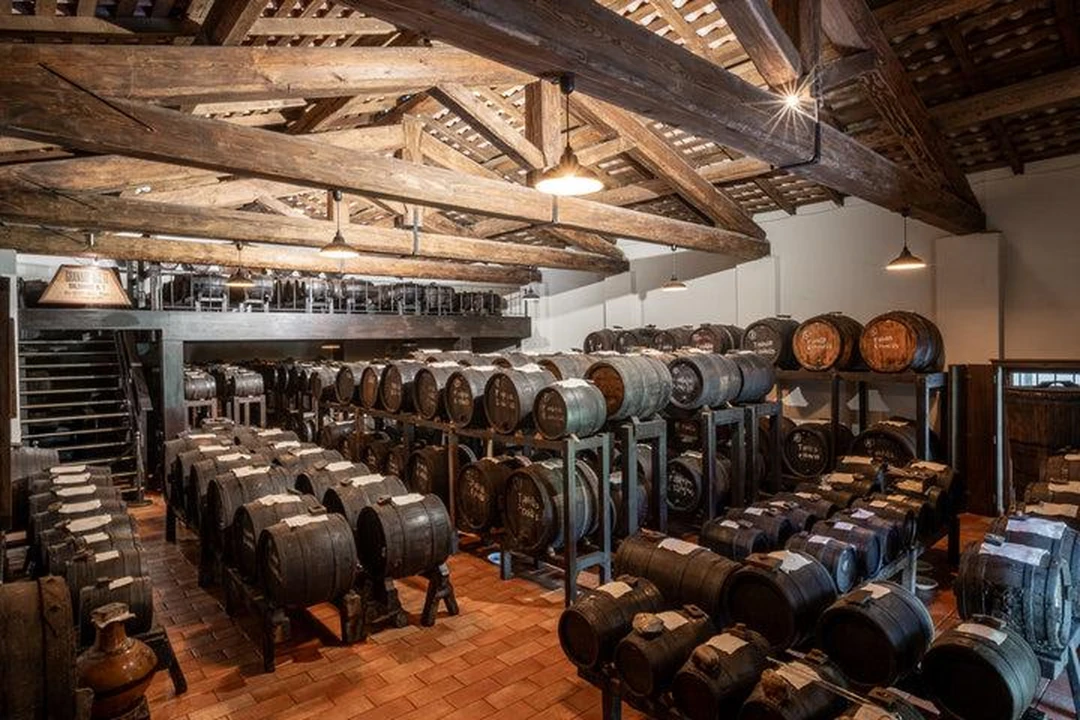
The cooked must is then placed in a series of wooden barrels known as a batteria. These barrels, traditionally arranged from larger to smaller capacities, are often made from different woods, including oak, chestnut, cherry, mulberry, and juniper.
Each wood can contribute particular aromatic characteristics, creating a distinctive relationship between the liquid and its container.
The barrels are usually kept in attics, where seasonal temperature variations play an important role. Hot summers encourage evaporation and concentration, while colder winters influence the slow biological and chemical processes responsible for the condiment's evolution.
Every year, producers carefully transfer small quantities of liquid between barrels in a practice known as travasi e rincalzi. The smallest barrel is replenished from the next larger one, continuing through the series, while the largest receives additional cooked must.
This system means that traditional balsamic vinegar is not simply left undisturbed for a fixed number of years. Instead, it develops through a dynamic process involving different stages of maturation and the accumulated knowledge of the producer.
Under PDO regulations, Aceto Balsamico Tradizionale di Modena must undergo a minimum aging period of 12 years. The Extravecchio designation is reserved for products aged for at least 25 years.
These periods reflect the extraordinary patience required to achieve the characteristic balance of sweetness, acidity, density, and aromatic complexity.
The finished product is evaluated through a formal certification process that includes analytical and sensory examinations. Only vinegar meeting the required standards can be bottled in the distinctive 100-milliliter glass container designed by Italian automotive designer Giorgetto Giugiaro.
This connection between gastronomy and industrial design is another expression of Modena's remarkable creative identity, a territory internationally celebrated for both exceptional food and high-performance automobiles.
The condiment itself is used differently from ordinary vinegar. Rather than serving primarily as an ingredient in salad dressings, it is often applied in small quantities to enhance particular dishes.
A few drops can enrich Parmigiano Reggiano, risotto, roasted meats, or fresh fruit. Its complexity also makes it suitable for tasting on its own, allowing the different aromatic notes to emerge gradually.
But the cultural importance of traditional balsamic vinegar extends beyond gastronomy.
Historically, families in Modena maintained their own batteries of barrels, sometimes passing them from one generation to another. A new battery could be established to celebrate a child's birth, becoming a living family possession that matured alongside its owner.
Knowledge was transmitted through observation, experience, and personal relationships rather than industrial formulas.
Today, traditional balsamic vinegar represents a valuable part of Italy's agricultural and artisanal heritage. Its production supports specialized skills, local grape cultivation, and a distinctive economy rooted in territorial identity.
It also offers an important lesson about the meaning of quality in Italian food culture. Excellence does not always depend on elaborate ingredients or complicated recipes. Sometimes it emerges from the careful transformation of something remarkably simple.
In Modena, grapes, wood, climate, and human expertise combine to create a product that embodies the continuity between past and present.
Every drop contains years of work, generations of knowledge, and the unmistakable character of its homeland.
Aceto Balsamico Tradizionale di Modena is therefore more than a condiment. It is one of Italy's most eloquent demonstrations that time, when guided by tradition and craftsmanship, can become an extraordinary ingredient.