

On the slopes of Monte Amiata, a once volcanic peak rising between Tuscany and Lazio, chestnut trees dominate the landscape like silent guardians of history. For centuries these groves have shaped the lives, diet, and traditions of local communities. More than just food, the chestnut has been a lifeline, a cultural symbol, and now a protected product that links the past to the present.
The tree thrives between 350 and 1,000 meters above sea level, covering the mountain in dense woods. Villages dotting the slopes have long relied on the harvest. In the past, chestnuts were called “the bread of the poor” – a reliable source of nourishment when wheat was scarce or too costly. Families gathered the nuts, dried them, ground them into flour, and transformed them into polenta, soups, and cakes. Every recipe carried the memory of survival and ingenuity.
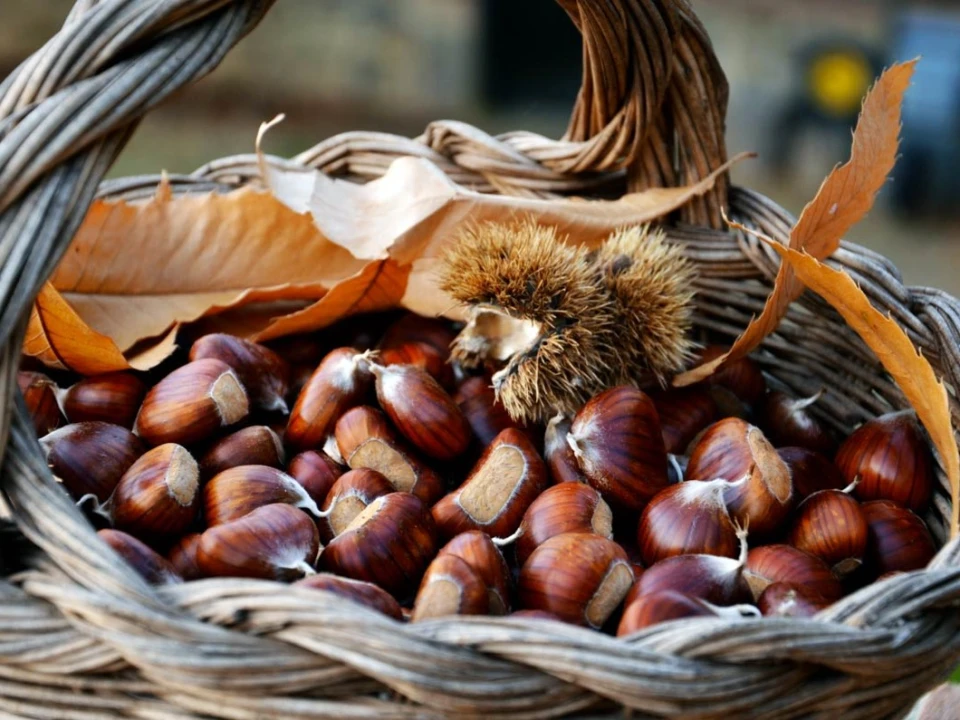
Chestnut cultivation here follows the rhythm of the seasons. In spring, the woods awaken with fresh leaves and blossoms. Summer brings shade to hikers and animals. Autumn is the climax – the harvest season. Families and visitors take to the groves with baskets, bending to pick shiny brown fruits from the ground. The work is physical, but the atmosphere is festive. Conversations echo under the trees, children race to fill their baskets, and the scent of roasted chestnuts drifts from village squares.
The nut itself has distinct qualities. The Monte Amiata chestnut has a glossy shell, a sweet and delicate flavor, and a firm texture. Several varieties are grown, each with small differences in size and taste, but all share a balance that makes them versatile in the kitchen. Roasted, they warm chilly evenings. Boiled, they become soft and comforting. Ground into flour, they turn into the base for rustic breads and desserts. One of the best-known sweets is castagnaccio – a flat cake enriched with raisins, pine nuts, and rosemary – that carries the flavor of tradition.
Within the official protected designation, three main varieties stand out. The Cecio is small and round, known for its sweetness and suitability for roasting. The Marrone is larger, with an elegant shape and delicate taste that makes it perfect for confectionery and fine pastries. The Bastarda Rossa, with its reddish shell and slightly more robust flavor, lends itself to hearty cooking and flour production. Together, these three types represent the diversity of the mountain’s chestnut heritage, each bringing a unique note to the local culinary repertoire.
Over time, the chestnut earned recognition not only for its cultural value but also for its quality. Local producers secured an official geographical indication, guaranteeing that the chestnuts sold under the name truly come from Monte Amiata’s groves. This status protects growers, reassures consumers, and preserves the link between product and land. It also highlights the careful cultivation methods – pruning, cleaning the woods, and maintaining biodiversity – that sustain the trees year after year.
The landscape itself reflects this bond. Walking through the chestnut forests feels like stepping into an open-air museum. Some trees are centuries old, their twisted trunks and sprawling branches bearing witness to generations of farmers. Moss, lichens, and ferns thrive in the humid soil, while mushrooms appear in autumn alongside the fallen nuts. The forests are more than farmland – they are ecosystems where human stewardship and natural cycles meet.
Festivals celebrate this heritage. Each October, villages around Monte Amiata host chestnut fairs, drawing crowds to taste roasted nuts, soups, cakes, and liqueurs. Stalls line the streets with baskets of freshly picked fruit, artisans display wood carvings, and musicians play folk songs. The festivals are as much about community as about food – neighbors gather, visitors join in, and the mountain’s identity is reaffirmed.
Rules guide the harvest to keep the balance intact. Collecting is usually allowed only on certain days and within specific areas, ensuring that the resource is not overexploited. Private groves remain protected, while communal lands invite participation under fair conditions. These measures reflect centuries of local wisdom – the recognition that the forest provides generously only if treated with respect.
For locals, the chestnut remains a symbol of resilience. It tells of hard winters survived with little more than dried nuts and flour. It recalls the work of entire families who spent weeks in the woods gathering and drying the crop. It embodies a culture of simplicity, sharing, and gratitude for nature’s gifts. Even as modern diets and economies have changed, the chestnut holds its place on tables, in stories, and in seasonal rituals.
For visitors, the experience is more than tasting a delicacy – it is entering a living tradition. Walking the trails among the groves, joining a harvest outing, or attending a village festival connects people to the mountain’s rhythm. Every roasted nut carries the warmth of firesides and the echo of centuries. Every cake made with chestnut flour tells of resourcefulness and continuity.
Monte Amiata’s chestnut is therefore not just an ingredient but a cultural landmark. It links the volcanic soil to the resilience of farming families, the cycle of seasons to the persistence of tradition. It is proof that food can be both sustenance and story, nourishment and identity.
The mountain continues to watch over its forests, and the forests continue to feed both body and spirit. To taste a chestnut from Monte Amiata is to take part in that story – one that began long ago and, with care, will endure for generations to come.