

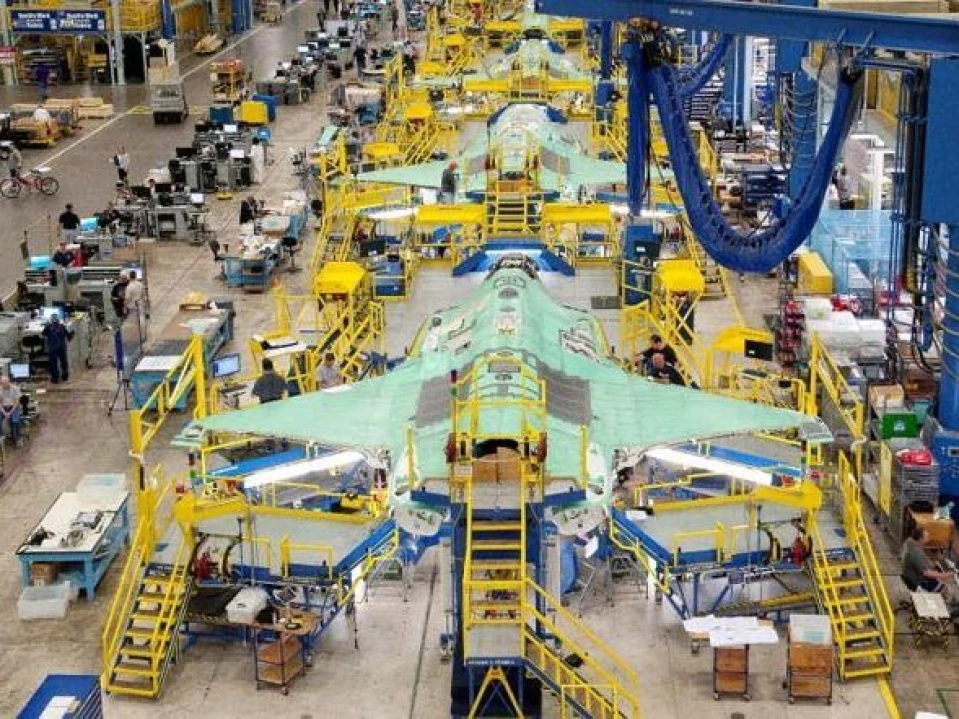

When people think of Puglia, they often picture crystal-clear seas, centuries-old olive groves, historic towns, and a thriving tourism industry. Yet for more than half a century, this region in southern Italy has also been one of Europe’s leading aerospace hubs. Today, the Puglia Aerospace District stands as one of Italy’s most important centers of technological innovation, bringing together major corporations, highly specialized small and medium-sized enterprises, universities, research centers, and public institutions. With more than 100 companies, over 8,000 employees, and annual revenues exceeding €1.5 billion, the sector accounts for more than 10% of Italy’s aerospace industry.
The roots of Puglia’s aerospace sector stretch back to the years following World War II. The presence of strategic military air bases and aviation infrastructure encouraged the establishment of aeronautical activities throughout the region. Over time, national and international companies recognized Puglia’s potential and invested in production facilities, engineering centers, and research operations. What began as a manufacturing base gradually evolved into a highly sophisticated ecosystem capable of generating innovation, advanced technologies, and world-class expertise.
A decisive milestone came with the creation of the Aerospace Technology District (DTA), headquartered in Brindisi. Established in 2009, the DTA was designed to strengthen collaboration among businesses, universities, and research institutions while promoting innovation, technology transfer, and advanced training programs. Today, it is widely regarded as one of Italy’s most dynamic aerospace clusters.
The geography of Puglia’s aerospace industry extends across a corridor linking Bari, Modugno, Mola di Bari, Monopoli, Brindisi, Grottaglie, and Taranto. Each location plays a distinctive role within the broader ecosystem. Bari hosts important research and development activities, while Brindisi serves as the operational center of the DTA and numerous experimental initiatives. Grottaglie has gained international recognition for advanced aircraft manufacturing and for its airport, which is increasingly involved in aerospace-related projects. Mola di Bari is home to one of Italy’s most significant space technology companies.
One of the district’s defining characteristics is the close integration between industry, academia, and public research. The ecosystem includes the University of Bari, the Polytechnic University of Bari, and the University of Salento, as well as research organizations such as ENEA and the National Research Council (CNR). This network allows scientific discoveries to be rapidly transformed into industrial applications, fostering patents, startup companies, and highly specialized professional skills.
Puglia’s aerospace industry is also notable for its technological diversity. Local companies operate in civil and military aviation, satellite development, space systems, composite materials, advanced electronics, Earth observation technologies, and unmanned aerial vehicles. In recent years, the district has invested heavily in UAS (Unmanned Aircraft Systems), U-space services, and drone-related technologies, sectors expected to play an increasingly important role in the global aerospace market.
Among the most prominent companies operating in the region are Leonardo, Avio Aero, and Sitael. The latter, headquartered in Mola di Bari, has emerged as one of Italy’s leading players in the space economy, developing satellites, propulsion systems, and advanced space technologies. Alongside these large corporations, a network of highly specialized small and medium-sized enterprises contributes to the district’s competitiveness. One notable example is Blackshape, based in Monopoli, which produces high-performance carbon-fiber aircraft and has gained international recognition in the aviation sector.
The numbers confirm the strength of the industry. In recent years, aerospace exports from Puglia have experienced significant growth. The sector has consistently outperformed national averages, demonstrating the ability of local companies to compete successfully in international markets. This export-driven growth reflects both the quality of the technologies developed in the region and the increasing global demand for aerospace products and services.
Another key strength of the district is its ability to attract and retain talent. More than 500 researchers work within the aerospace ecosystem, supported by laboratories, advanced training programs, and partnerships with international institutions. These opportunities have helped reduce the traditional brain drain from southern Italy, creating new career paths for engineers, physicists, mathematicians, data scientists, and software developers.
The future outlook appears particularly promising. The rapid expansion of the global space economy, the growing demand for satellite services, advances in Earth observation technologies, and the emergence of advanced air mobility are creating unprecedented opportunities. Puglia aims to position itself as a European laboratory for aerospace innovation, leveraging its strategic location in the Mediterranean and its established network of industrial and scientific expertise.
The district is increasingly involved in projects related to sustainable aviation, next-generation propulsion systems, smart mobility, and digital aerospace technologies. These developments align closely with broader European objectives aimed at reducing emissions, improving connectivity, and strengthening technological sovereignty.
What truly makes the Puglia Aerospace District unique is its ability to combine manufacturing excellence, scientific research, and technological innovation within a single integrated ecosystem. Like the most successful industrial districts in Italy, its strength lies not only in individual companies but also in the collaborative network that connects businesses, universities, researchers, and public institutions.
This combination of expertise, vision, and cooperation has transformed Puglia from a peripheral region of southern Europe into one of the leading players in the continent’s aerospace landscape. As the world increasingly looks toward space, advanced mobility, and cutting-edge technologies, the Puglia Aerospace District stands as a powerful example of how innovation can drive economic growth and create high-value opportunities.
It is a success story rooted in southern Italy but with global reach – proof that the future of aerospace is being shaped not only in traditional industrial centers, but also along the shores of the Mediterranean, where Puglia continues to push Italy toward the stars.