

Lombardia is rarely the first Italian region that comes to mind when people think about street food. Its culinary reputation is built around risotto alla milanese, ossobuco, cotoletta, pizzoccheri and elaborate dishes served at the table. Yet from the streets of Milan to Alpine festivals and small-town markets, Lombardia has a rich tradition of food designed to be eaten quickly, informally and often with your hands.
Milan provides the most cosmopolitan version of this tradition. One of its modern street-food symbols is the panzerotto – a folded pocket of dough, usually filled with tomato and mozzarella and fried until golden. The dish has southern Italian origins, particularly in Puglia, but decades of migration transformed it into part of Milan's everyday food culture. Today, grabbing a hot panzerotto in the city center is as authentically Milanese an experience as ordering a risotto.
Another Milanese classic is the michetta. This small, hollow, star-shaped bread roll became one of the city's most recognizable breads during the 20th century. Its light interior makes it ideal for sandwiches filled with salumi, cheese, vegetables or other ingredients. Before international fast food conquered European cities, a stuffed michetta was already Lombardia's answer to an inexpensive lunch on the move.
Travel north, however, and Lombard street food becomes unmistakably Alpine.
In Valtellina, one of the great local specialties is sciatt. The name means "toads" in the local dialect, a humorous reference to their irregular appearance. These small fritters are made with buckwheat flour and contain a heart of melted local cheese, traditionally Valtellina Casera. Served piping hot, they combine a crisp exterior with an intensely creamy center. Although sciatt can appear as an appetizer in restaurants, they are perfectly suited to festivals, fairs and outdoor events.
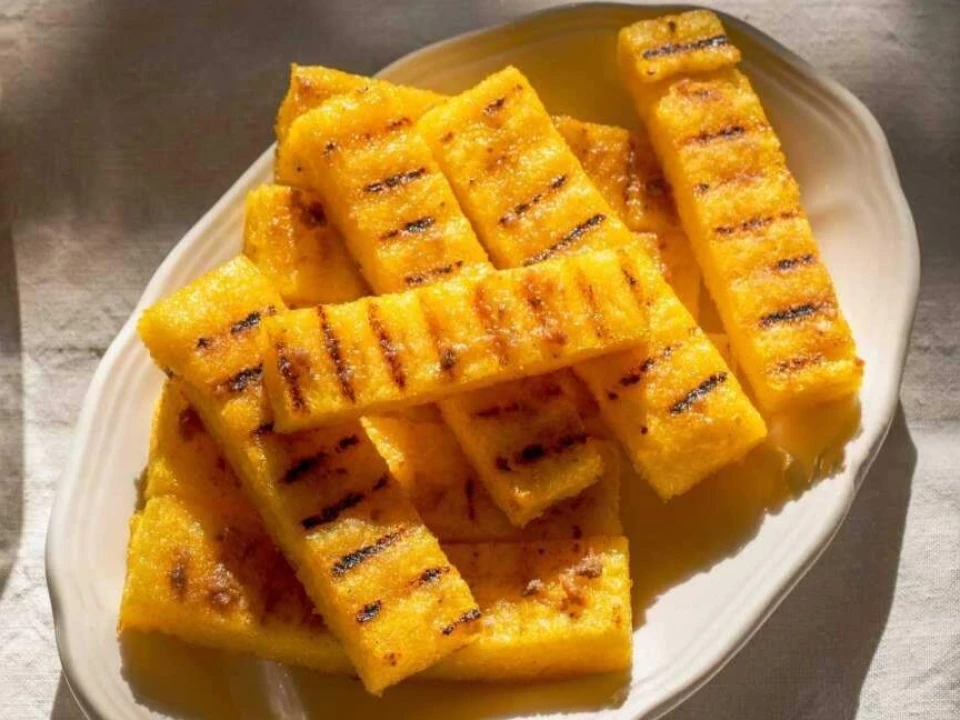
Polenta provides another thread connecting Lombardia's provinces. For centuries it was a fundamental food for rural and mountain communities. Today, portions of grilled or fried polenta can become simple street food, accompanied by cheese, mushrooms, sausage or local cured meats. In Bergamo and Brescia, polenta is much more than a side dish – it is part of regional identity.
Bergamo also offers an unexpected sweet contribution. Polenta e osei, despite its name, is not the traditional savory dish of polenta and birds. The modern pastry version is a small dome-shaped cake whose yellow marzipan exterior resembles polenta. Inside are layers of sponge cake, chocolate, butter cream and hazelnut flavors. Small versions make an unmistakably Bergamasque treat to enjoy while walking through the historic streets of Città Alta.
Further east, Brescia and the Lake Garda area bring cured meats, cheeses and bakery traditions into the street-food landscape. Local salami, formaggi and breads turn market stalls into miniature showcases of Lombard agriculture. Around Mantova, meanwhile, the region's culinary personality changes again. Here the influence of the Po Valley produces richer flavors, with pumpkin, pork, fried dough and the famous sbrisolona – the crumbly almond cake that is deliberately broken into pieces rather than neatly sliced.
Cremona contributes another portable icon: torrone. The city's association with nougat dates back centuries, and the combination of honey, sugar, egg whites and nuts has become inseparable from Cremona's identity. Torrone is perhaps the ultimate historic travel food – compact, durable and easy to share.
What makes Lombardia's street food particularly interesting is its diversity. This is Italy's most populous region, with roughly 10 million residents, stretching from the Alps to the Po River and encompassing huge differences in landscape, history and economy. There is no single Lombard street-food tradition because there has never been a single Lombard kitchen.
Instead, there are mountain fritters, city sandwiches, fried dough, cheeses, salumi, pastries and sweets. Some recipes were born from poverty, others from migration, farming or urban life. Together they reveal a Lombardia that is warmer and more informal than its international image might suggest.
And perhaps that is the best way to discover the region: not only seated before a plate of risotto in an elegant Milan restaurant, but standing in a piazza with a hot sciatt, a stuffed michetta or a piece of torrone in your hand.