
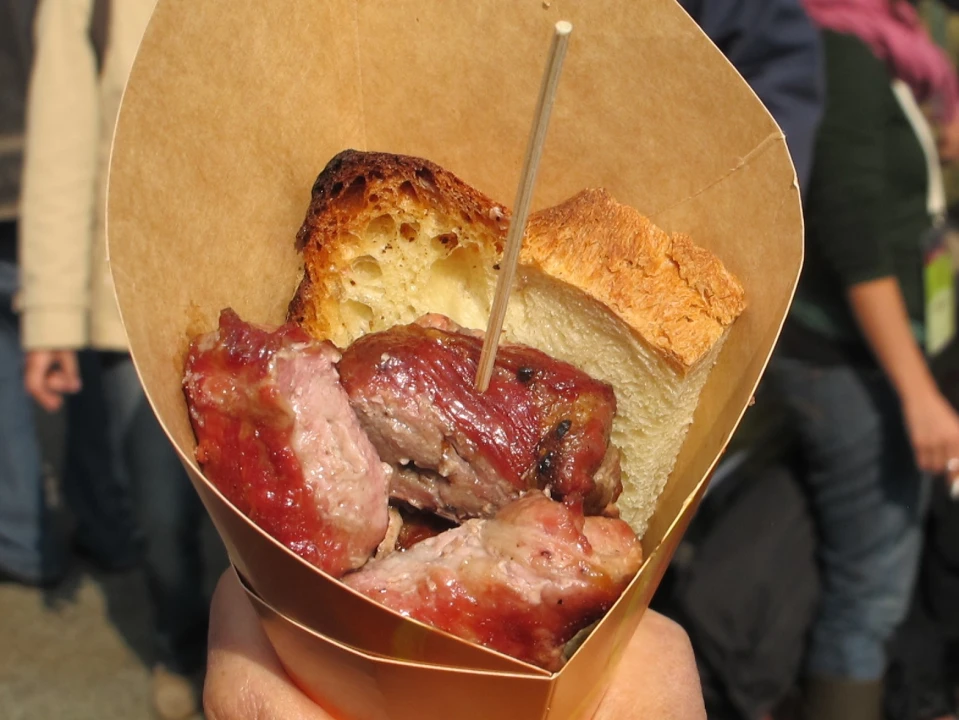

In the heart of southern Italy, where the Valle d’Itria rolls out its whitewashed towns and the Murgia dei Trulli rises with its unique conical houses, a small but mighty dish has captured both local loyalty and visitor fascination: the bombetta pugliese. This is no ordinary cut of meat. It’s a bite-sized pork roll - usually made from capocollo (coppa), the prized cut from the upper neck of the pig - filled with local cheese, seasoned simply with salt and pepper, and grilled to perfection. Compact and plump, each one fits easily into the palm of your hand, but its flavor delivers an explosion that more than lives up to the name “bombetta,” or “little bomb.”
Traditionally, bombette are prepared in the fornelli of Puglia - special butcher shop ovens where customers can buy meat and have it cooked on the spot. In many towns, these small grills or wood-fired ovens stand just steps away from the butcher’s counter, turning raw cuts into sizzling meals in minutes. In the past, locals would stop in for a quick bite - what we now call “street food,” long before the term became trendy.
Bombette’s story begins in the 1970s and ’80s, when resourceful butchers looked for ways to use thin leftover slices of meat. Instead of letting them go to waste, they rolled them around cubes of aged cheese, sprinkled them with pepper, maybe added parsley, and skewered them for the grill. The result was irresistible - juicy inside, slightly crisp outside, and full of savory aroma.
Although pork is now the signature choice, early versions sometimes used veal or even horse meat, especially in rural areas. The filling has also evolved: while the classic calls for canestrato pugliese, a sheep’s milk cheese aged for months in cool caves or cellars, many cooks now use caciocavallo or other regional varieties. Regardless of the cheese, the key is its ability to soften and release flavor without completely melting away.
One of bombette’s charms is its size. Each one measures no more than about two inches long, making it perfect for eating in one or two bites. Too big, and the texture changes; too small, and it loses the juicy center that makes it special. Their rounded shape is not just aesthetic - it helps the meat cook evenly while keeping the filling snug inside.
While home cooks may throw bombette on a backyard grill, purists insist the fornello method is unmatched. Here, skewers are placed vertically rather than horizontally over coals. This means the fat trickles down slowly, basting the bombette beneath it instead of dripping directly onto the fire. The result is a cleaner taste and a juicier bite. The aroma that fills a Pugliese butcher shop during cooking is enough to make anyone hungry, even before the first bite.
Outdoor grilling has its own charm, especially during summer gatherings. Over hot embers, bombette develop a crisp edge and smoky note that pairs beautifully with fresh bread. Many locals enjoy tucking them into a crusty roll, letting the cheese and pork juices soak into the bread for an indulgent street-food sandwich.
Although small in size, bombette have a big cultural footprint in Puglia. Entire festivals are dedicated to them, with stalls lined up in town squares, sizzling skewers filling the air with irresistible scents. Skilled grill masters work with almost theatrical flair, turning skewers and calling out to customers in a mix of sales pitch and local pride. These events are more than food fairs - they’re celebrations of community, tradition, and the enduring bond between butcher and customer.
The dish’s exact birthplace is a friendly point of debate, but one city - Martina Franca - has embraced the title of “home of the bombetta.” Whether or not it was truly first, the town has made the recipe a signature, and travelers can find bombette on menus in restaurants, at street stands, and, most authentically, at fornelli still run by families who’ve perfected the technique over decades.
Though the original remains the benchmark - pork capocollo, canestrato cheese, salt, pepper - modern interpretations are everywhere. Some add strips of pancetta for extra richness, others tuck in sun-dried tomatoes, onions, or a pinch of chili flakes. A few swap in smoked scamorza for a deeper flavor or blend cheeses for a unique melt. Creative fillings might even include truffle shavings or herbs from the family garden.
The unspoken rule, however, is that the ingredients must be of high quality. A bombetta is too simple a dish to hide flaws - good pork, aged cheese, and fresh seasoning make all the difference. When done right, the meat stays tender, the cheese softens without spilling out, and the whole thing delivers a balanced bite that’s both rich and clean.
The beauty of bombette lies not just in taste but in timing. Straight off the grill, they’re too hot to bite into without caution. Patience pays off: wait just long enough for the juices to settle, then take that first mouthful. The combination of savory pork, creamy cheese, and subtle spice is satisfying in a way that feels both rustic and refined.
Today, bombette are more than a quick snack - they’ve become a culinary symbol of Puglia. They tell a story of resourcefulness, tradition, and pride in local flavors.