

On the Tyrrhenian coast of Calabria, overlooking the Strait of Messina, the town of Bagnara Calabra preserves a confectionery tradition that has become one of the region's most distinctive gastronomic treasures. Torrone di Bagnara is an exceptional Italian nougat made from carefully selected ingredients and prepared through a process that combines technical precision, patient cooking, and generations of artisanal knowledge.
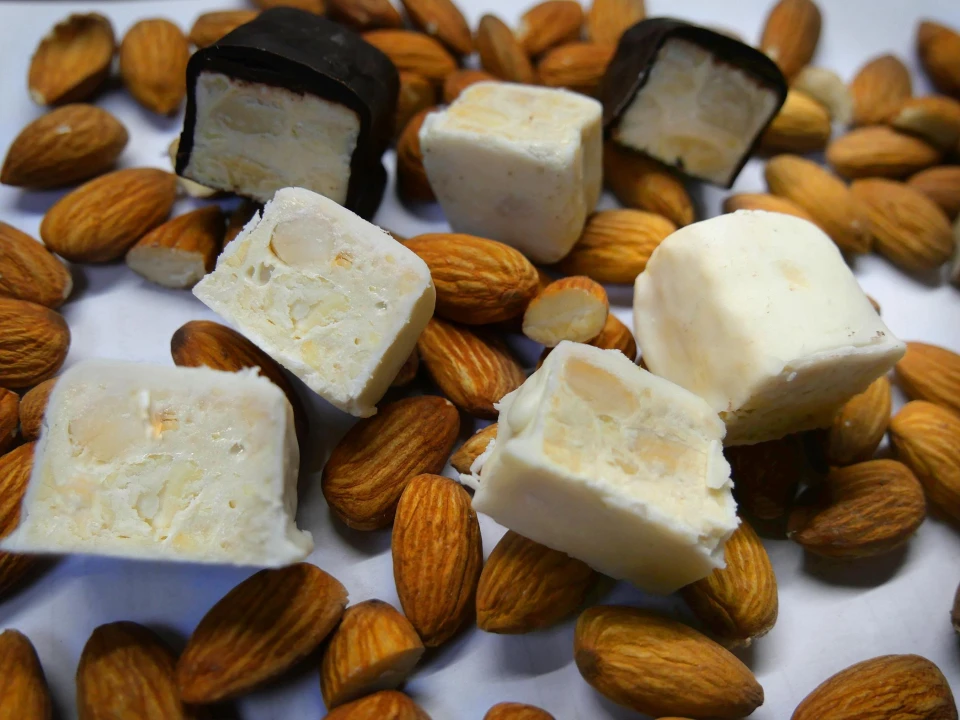
Unlike the soft nougat commonly associated with some other Italian regions, Torrone di Bagnara is characterized by a firm, crunchy texture and a rich, toasted flavor. Its distinctive personality comes from the careful cooking of sugar and honey, the use of almonds or hazelnuts, and a traditional process that creates an intense caramelized aroma.
The product's history is closely connected to the development of confectionery craftsmanship in Bagnara Calabra. Local tradition associates its origins with the eighteenth century, when skilled confectioners began refining recipes that would eventually become central to the town's identity.
During the nineteenth century, torrone production gained increasing recognition, helped by local businesses that specialized in preparing and selling the sweet.
Bagnara's geographical position encouraged commercial exchanges across southern Italy, particularly with nearby Sicily. These connections contributed to the circulation of ingredients, techniques, and confectionery traditions.
Over time, local producers developed a recognizable style that distinguished their torrone from other varieties.
One of its defining characteristics is the production method. Sugar and honey are heated and cooked until they reach the desired consistency and develop their characteristic flavors. Toasted nuts are then incorporated into the mixture, which is shaped and allowed to cool.
The process requires considerable experience. Temperature, timing, and the balance between ingredients influence the finished product's texture, aroma, and appearance.
Even small variations can affect the final result, making the confectioner's judgment an essential part of production.
Two traditional varieties are particularly important.
The first, known as Martiniana, is generally covered with granulated sugar and has a characteristic caramelized surface. Its crunchy texture and intense sweetness make it one of the most recognizable expressions of the local tradition.
The second, Torrefatto glassato, features a coating made with cocoa-based glaze. The combination of toasted nuts, caramelized sugar, and cocoa creates a richer flavor profile while preserving the distinctive crunch of the underlying torrone.
These two varieties represent different interpretations of the same confectionery heritage.
In 2014, Torrone di Bagnara received Protected Geographical Indication status from the European Union. The PGI recognition protects the product's name and establishes requirements concerning its ingredients, preparation, and geographical origin.
This recognition is particularly significant for a traditional food produced within a relatively small territory.
It helps distinguish authentic Torrone di Bagnara from generic nougat products and supports the preservation of specialized local craftsmanship.
The PGI specifications recognize the Martiniana and Torrefatto glassato varieties, reinforcing the importance of traditional production methods.
Although torrone is strongly associated with Christmas celebrations in Italy, Bagnara's confectionery tradition extends beyond the holiday season.
The sweet is enjoyed as a regional specialty and purchased by visitors looking for an authentic expression of Calabria's culinary heritage.
Its production also contributes to the local economy, supporting confectionery workshops, specialized businesses, and commercial activities connected with regional gastronomy.
The ingredients themselves reflect a broader Mediterranean culinary culture. Almonds, hazelnuts, honey, sugar, and cocoa have played important roles in southern Italian confectionery for generations.
What makes Torrone di Bagnara distinctive is not the novelty of these ingredients but the particular way they are combined and transformed.
The result is a sweet whose identity depends on technique as much as taste.
Today, producers face the challenge of preserving traditional knowledge while responding to modern requirements for food safety, packaging, and distribution.
The continued popularity of Torrone di Bagnara demonstrates the value of regional specialties whose reputation has grown through craftsmanship rather than industrial standardization.
For Calabria, this crunchy confection represents a delicious connection between local history and contemporary gastronomic culture.
Every piece carries the flavors of toasted nuts, caramelized sugar, and a tradition that has helped make Bagnara Calabra an important destination on Italy's map of artisanal sweets.