
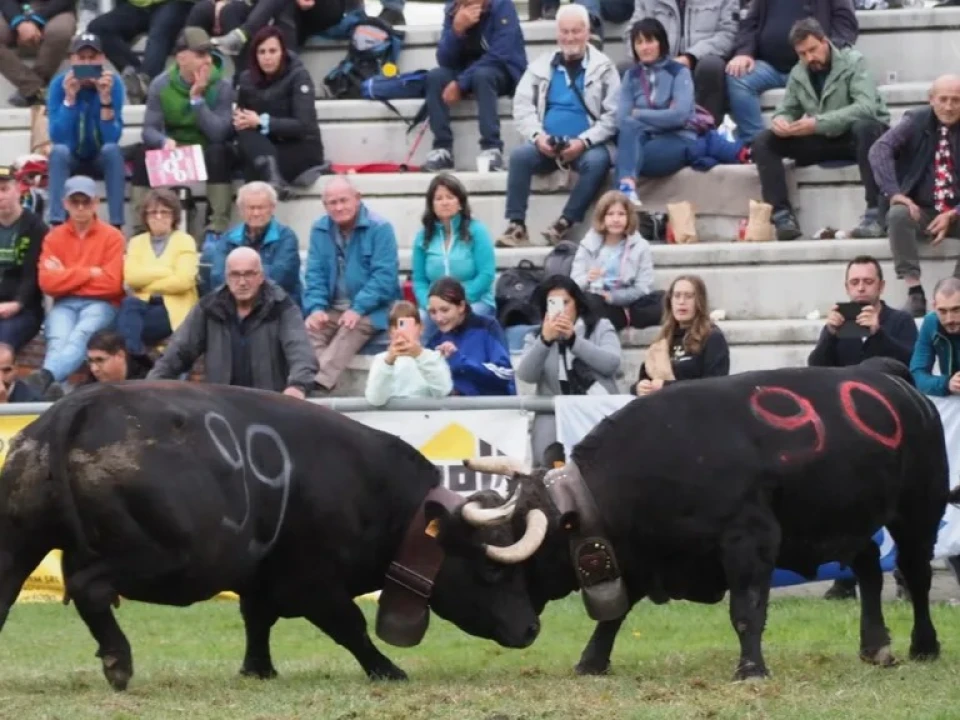

Every autumn, the Valle d’Aosta transforms into a theater for one of its most iconic traditions - a spectacle where strength and aristocratic heritage meet in the form of cow contests. The event culminates in the final showdown at the local arena, where some 150 to 160 cows from across the region compete for the revered title of Reina des Reines, Queen of the Queens. This year, 159 bovines entered into the contest, each representing the proud tradition of alpine cattle‑rearing in this mountainous region.
The format is straightforward yet deeply rooted in local custom. The cows, primarily of the Valdostana Pezzata Nera and Pezzata Rossa breeds - but also the Hérens breed from the Swiss Valais - are naturally inclined to establish dominance within a herd. The contest simply gives them a venue to do it in the open - without injury, yet with all the drama of competition. Early each contest day the animals are weighed, and are sorted into three weight classes: up to about 520 kg, 521–570 kg, and 571 kg and above. In autumn rounds, these limits may shift upward by 10 kg or more. Once sorted, the animals are paired at random and then fight one‑on‑one, pushing with their horns until one yields - either by backing down or being forced off his or her feet. The winner advances, elimination style, until a champion emerges.
The event has its roots in alpine peasant culture, where strong horned cows would naturally fight to assert dominance within the herd. Over time, these informal displays of bovine strength transformed into organized contests, still preserving the key elements of respect for the animals, local identity, and community involvement. The modern regional contest dates back more than six decades in its current form, and today draws thousands of spectators, breeders, and tourists alike.
Preliminary rounds take place throughout the spring and summer across different towns and valleys within the region - places like Montjovet, Verrayes, La Salle and others host elimination events. Then in October the grand finale happens at the arena in Croix‑Noire, near Aosta, where the best cows of each class meet to fight for the top prize. In recent years the finale has also included other categories - such as junior calves or first‑time mothers - to widen participation and showcase future stock.
For visitors the experience is uniquely Alpine. Arriving at the arena you’ll hear the lowing of cattle, see the colored collars and headdresses of the animals, sense the quiet tension as two queens face off in the ring, and feel the cheer of the crowd when one pushes the other’s horns aside. The result is not only a contest of strength but a celebration of rural tradition, mountain life and regional pride.
If you plan to attend, arriving early is wise - especially for finalsweekend - since seating fills quickly and ticket lines form. Dress for changing mountain weather, even in October: sun, wind, and sudden showers are all possible. And whether you’re an agriculture enthusiast, folklorist, or simply curious traveler, the Batailles de Reines offer a vivid glimpse into how Alpine communities maintain living traditions that honour both animal husbandry and collective identity.
In sum, the Batailles de Reines are more than a novelty fight among cows - they are a window into the culture and landscape of the Valle d’Aosta, showing how the region blends nature, heritage and festivity in a uniquely bovine spectacle.