The theme of 'italianness' is very important for us of We the Italians, and, of course, for our readers: a community of people living in the U.S. who can be, depending on the case, either born in Italy, or in the States. However, the community we are talking about is even bigger, as it also includes other readers from Italy who are interested in the relationship between the two: Italy and the United States.
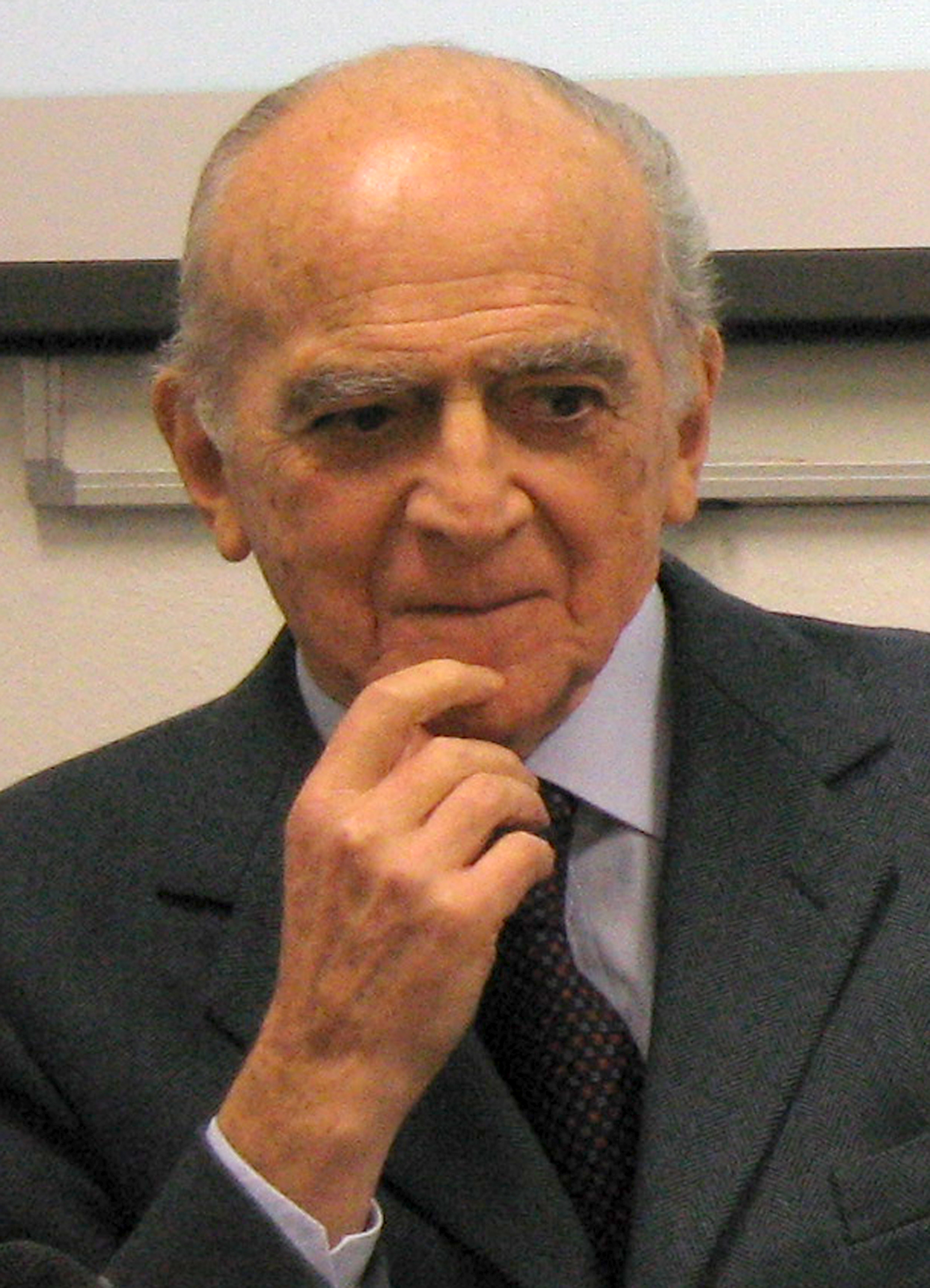
According to a charismatic Italian person, the idea of "italianità" (essere italiano) should be overcome, revised, in order to introduce the new, more appropriate theory of what he calls "italicità" (essere italico)'. On one hand, it is a rather interesting and innovative concept, but, on the other, it sounds a bit challenging, provocative. The charismatic thinker we are talking about is President Piero Bassetti, who we are glad to have here for our new interview.
President Bassetti, in your book "Svegliamoci Italici! Manifesto per un futuro glocal" you talk about a community of people who has overcome the concept of 'Italian(s)' and has gone over it, beyond. Please tell us something about it?
Our idea originates from the association I am President of: "Globus et Locus", which focuses on the concept of "glocal" (global+local) and "glocalization", which is mainly about the new power of technology of eliminating the idea of space and time, and which has changed the concept set during the Peace of Westphalia (1648), concerning the notion of what is national and international.
We should be aware we live in a world in which the concepts of "global" and "local" have changed. For instance, in Italy the idea of "local" exclusively refers to what happens and lives within the borders of the country: Italy. On the contrary, we think that the community of the potential "italici" is wider, and includes not only those living in Italy, but it goes much over, beyond.
In fact, as I state in my book, the "italici" are not only Italian citizens or Italians living abroad; "italici" are also those living in the Ticino (Switzerland), in Dalmatia, the Republic of San Marino, the Italian Americans and those living in North and South America, Australia; and, to go on, also the Italian-speakers, those having or not having any Italian descendant, but who decided to have an Italian lifestyle which shares the way of being Italian. We are talking about more than 250 million people: a community that transcends from the mere concept of italianness and goes beyond.
This is my idea: according to the way the world has changed, we should try to find some political strategies (like the idea of "civilization" by Huntington) in order to aggregate all the 250 million people belonging to this new idea of "italicità".
The aggregation I am talking about does not refer to the passport, the language, or the blood, but it rather refers to a sentiment, a feeling of belonging.
It is a concept which goes much beyond the Italian Republic (only united 150 years ago) and which is linked to other grandiose historical moments, such as the Roman Empire, (the) Renaissance... This whole idea lies on a common sense of belonging to a series of values and characteristics we consider typical of the "italicità".
In "Svegliamoci italici! Manifesto per un futuro glocal" I affirm that the idea beyond "italicità" consists of: "sharing values, manners, behaviors but also a way of moving, do business, eat, feel, live art, fashion, design, taste, beauty, and pleasure: a unique way of being a "community", which has shown the capability of being "Italian" and "Italic" in different circumstances, and, especially, on a global scale".
It is for this reason that I insist there are several ways of being Italic.
For instance, the Italian Americans are basically Americans with Italian origins, some of whom also have the Italian passport. But there are also some other cases in which for example a wife of an Italian-American – who usually speaks English – has a son who is half Italian and half American, and that now, as a third generation, may supposedly speak Italian. Then we can also have the friend of an Italic family who has discovered abroad an Italian way of eating (which is not the way we cook in Italy, because New York spaghetti are different than Naples spaghetti).
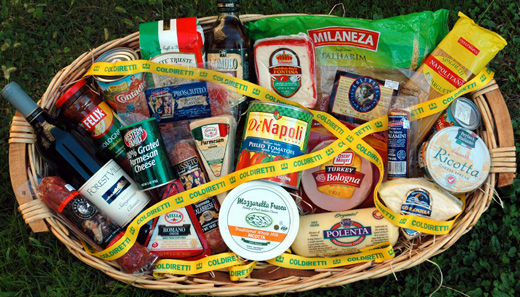
All these examples are described in my book. For instance, the Italian cuisine is not necessarily the same around the world: there is the Venezuelan pizza, the Indian pizza, the Italian pizza... They are all different, but they are all pizzas. In my book there is a story of a pizza, which is important for me.
I was returning from an experience at the Cornell University, and on board of the Vulcania, I was sitting with two "paisà", two Italian Americans.
When they found out I was Italian, one of the two shyly asked me: "how do you say 'pizza' in Italian?" It took me a while before I realized that in his mind 'pizza' was an American invention, and that, maybe, he did not even know it came from another country: Italy. In his mind, 'pizza' sounded "American". Well, it is true that pizzas are made in many different ways, but a pizza is a pizza. This reminds me of a day in Naples. I found some pizza makers to whom I asked: "what do you think about the pizzas made in Venezuela, which are clearly very different from yours?" "It's fine," they replied "in this way," they explained, "when the Venezuelans come here, to Naples, they realize the Neapolitan pizza is better!"
You launched the www.italicos.com website, which is dedicated to the italics speaking Spanish. How should it be translated for the English speakers?
This is a little problem, as 'italics' in English can recall the font, the writing style. However, we thought it can work anyways, as the Italics, I mean the font, has a personality, a character that the Gothic or any other style do not have. The cursive is light, rounded, and it has a good-looking sense that reminds us of our values, the ones of the Italics, I mean.
Recently, you stated that the 'Italian sounding', the phenomenon of imitating Italian products, stating they come from Italy is not being recognized as a problem, but, rather, as an advantage, an opportunity. What do you exactly mean?
It is a mere marketing strategy. If, for example, we have 10,000 Parmesans wheels, it will be much easier to then sell 2,000 Parmigiano Reggiano versions: if the market is bigger, it will be easier to affirm the quality of the product. However, in order to do so, we need to avoid frauds, which is not only a matter of the "Made in Italy". If, in fact, this was the case, "Barilla" would not be Italian, as most of the wheat used for the pasta is not even Italian.
In a speech, the President Mattarella stated: "With an effective expression, Piero Bassetti has recently defined the way we live and the way we are - along with the will to take advantage of our (good) products - as the aspiration to become "italics", basically people affected by the "Italian sounding". A great number in the world – much more than the few natives – which is thought to reach the 300 million people." Therefore, consider "Italian" (or, better, Italic) all the things recalling a sense of italianness helps the country and, of course, its image.
This phenomenon of proposing non-Italian products as such is not a problem, but, rather, an opportunity. However, this trend should be controlled, and no fraudulent symbols should be used. For this reason, we introduce a new category: instead of the "Made in Italy", the "Made by Italics", because the pizza is not only made by Italians; in Milan, for instance, it is mostly made by Egyptians or Turkish.
If we can convince people that while they are eating cheese (either Parmigiano Reggiano or Parmesan) this belongs to the Italic world, then we can also state that 300 million people are eating Italic cheese, cheese at the Italian way.
Then Charles Caleb Colton's statement "Imitation is the sincerest form of flattery" is true...
No doubt. Those who are contrary to imitation are those who make the original, and of course the same who get the highest revenue from their brand. However, on the structural, political, and quantitative level imitation represents the highest supporter. I usually look at the concept of Commonwealth as a source of inspiration, an idea the Americans know very well.
The relationship between the States and Italy is very strong. Since you studied and you have family in the US, what do you think of this relationship?
If you refer to the old international approach, the relationship is good, very good: because of the presence of many Italians, and hence of italiannes. The States share many cultural and historical things with Italy, many.
There are many historical data which not only refer to the Italian emigration, but also to a previous history; for instance, in Latin America we had Italians who joined Bolivar's board, and also other Italians among the Founding Fathers of the United States of America.
I also think at the "italicità" in the States now. Look at people like Cuomo or De Blasio... when I studied at Cornell University in 1951, it was not like this: many Italians from Italy did not even know where Milan, Rome or the Vatican were. Today is not like this. Apart from being in the most important decisional mechanisms of the States, here there is the highest demand of "italicità", no comparison.
I always mention Francis Ford Coppola's interview for the RAI, the Italian public television. Someone asked him: "when you do your movies, do you think that to be Italian is a merit or not?" and he replied: "yes, my last name is Coppola, my father was Italian and he transferred onto me the sensitivity of the film-maker; however I do my movies because my mother was from New York, and she taught me about Hollywood. Basically, I count for two." This idea is gradually being accepted in the States: we are something that is being added, assimilated. America can, among all, seek power, and it is for this reason that it is hungry of beauty: ours.
Some of your books were translated and are now available also in the States, what are they?
"Svegliamoci italici!" has been translated in Spanish and distributed in South America. Regarding the English version, we are working with a prestigious publishing house, which should publish in the States. Concerning my previous essays, I have some articles published in the U.S., such as "Italic Lessons", a series of interviews that appeared on the newspaper "America Oggi"; and "Italici. An Encounter with Piero Bassetti", an American version of "Italici. Il possibile futuro di una community globale", written with Niccolò D'Acquino. There are also some papers I wrote for some important conferences I held at the Catholic University of America, Washington, and other universities, especially in Philadelphia.
In 1970 you became the first President of Lombardia, leader of the Italian economy. The idea of regional belonging is important for the Italian Americans. What is your idea about the Italian regions today, 46 years after their creation?
The intuition behind being leader in a regionalized country, Italy in this case, was fair, and started what I mentioned above: in a less international world, gradually becoming glocal, the problems related to localism were and are important. In the world we live, in which we belong to more and more systems, we all need to feel part of a global and a local context, transcending from a national state.
However, I was the one who in 1975 denounced the potential failure of the regional system, as I believed - and still do - that we did not really understand what "Region" meant. They were not supposed to be a simple division of the State, but rather an intelligent vision of the many political genius loci in Italy that could then be managed in a wiser, more modern way. However, what is at risk is not the regional, but rather the institutions which are called to interpret it. Lombardy was in part safe, as it strength made it transcend from the regional institution to which is today codified.
You are also President of the Fondazione Giannino Bassetti, which works in the field of scientific innovation. What responsibility does Italy have in this area? Apart from being responsible, are we also innovators?
The scientific-technological challenge is absolutely global, and it is fundamental in this epoch. Unfortunately, today we grow and innovate irresponsibly, mostly looking at profits and incomes.
Who is in charge of the innovation today? To make an example: for the Atomic bomb we knew the responsible, it was the President of the United States. Today we are introducing new bombs, such as medicine; we are proposing something that is very advanced, and we are doing it irresponsibly.
Maybe it lies on this point the reason why in many countries they state that the Italian culture is more sensitive than others in treating problems like these: such as in loving relationships and in life.
Il tema dell'italianità è molto importante per We the Italians e ovviamente per i nostri lettori: una comunità di persone che vivono negli Stati Uniti siano essi nati in Italia oppure lì, e in aggiunta altri che vivono in Italia ma sono interessati al rapporto con l'America.
C'è una personalità di grande rilievo e saggezza che da tempo ha esposto una teoria per cui il concetto di "italianità" va superato, per introdurre quello – differente – di "italicità". E' una tesi interessante e innovativa, per certi versi provocatoria ma certamente affascinante. Siamo molto grati al Presidente Piero Bassetti per essere il protagonista di questa nostra nuova intervista.
Presidente Bassetti, nel suo libro "Svegliamoci italici! Manifesto per un futuro glocal" lei parla di una comunità di persone che supera il concetto di Italiani e va molto oltre. Ci può riassumere il suo pensiero?
Il nostro discorso parte dalla filosofia dell'associazione che presiedo, "Globus et Locus", cioè dal concetto di "glocal" (global + local) e di "glocalizzazione", che è in gran parte dovuta alla tecnologia che ha azzerando tempo e spazio, ha radicalmente cambiato il rapporto fra ciò che è internazionale e ciò che è nazionale, stabilito nel XVII secolo con la Pace di Westfalia.
Dobbiamo prepararci ad un mondo in cui sono diversi da prima sia il concetto di "globale" che il concetto di "locale". Nel mondo internazionale di oggi, e nel caso dell'Italia, ciò che è locale è lo stato nazione Italia: cioè l'Italia è definita dalle frontiere dello stato. Noi partiamo invece dal presupposto che la comunità dei "potenzialmente italici" va molto oltre quella degli italiani che vivono nella Repubblica Italiana.
Come affermo nel mio libro, gli italici, infatti, non sono soltanto i cittadini italiani in Italia e fuori. Sono anche i ticinesi, i dalmati e i loro discendenti, i sammarinesi, gli italoamericani, quelli delle due Americhe e dell'Australia, nonché gli italofoni e tutti coloro che, magari senza avere alcuna parentela o ascendenza italiana, hanno tuttavia abbracciato valori, stili di vita e modelli condivisi nel nostro paese. Volendo fare una stima, parliamo di oltre duecentocinquanta milioni di persone.
Io parlo di una comunità di persone che trascende il concetto di italianità e va oltre.
Il mio pensiero è questo: in relazione a come è cambiato il mondo, noi dovremmo riuscire ad aggregare in qualche forma di politicità (ad esempio la forma della civilization di cui parlava Huntington) gli stimati 250 milioni di italici, che fanno riferimento al nuovo concetto di italicità.
Il criterio per definire gli italici che si potrebbero aggregare non è quello del passaporto, non è solo quello della lingua, né solo quello del sangue, ma il criterio è quello del sentiment e del comune sentire.
E' un concetto che va molto oltre la Repubblica Italiana (un episodio di appena 150 anni fa) e si riaggancia a fenomeni storici come l'Impero Romano o il Rinascimento, e propone come riferimento il comune sentimento di appartenenza ad un sistema di valori che noi consideriamo propri dell'italicità.
In "Svegliamoci italici! Manifesto per un futuro glocal" affermo, infatti, che l'italicità è "una condivisione dal basso di valori, di atteggiamenti e di comportamenti; un modo di spostarsi, di fare business, di mangiare, di sentire, di vivere l'arte, la moda, il design, il gusto, la bellezza, il piacere: una modalità del tutto particolare e irriducibile di essere comunità nei diversi ambienti in cui l'italicità si è integrata in tutto il globo mostrando la sua capacità di rappresentare il mondo."
È per questo motivo che esistono diversi modi di essere italici.
Ad esempio, gli italoamericani sono indubbiamente Americani di origine italiana, alcuni dei quali hanno anche il passaporto italiano. Ma poi, ad esempio, c'è la moglie di un italoamericano che già parla inglese abitualmente e ha generato un figlio che è metà italiano e metà americano e che adesso, nelle terze generazioni, magari parla l'italiano. Poi chissà, c'è l'amico della famiglia di italici che ha scoperto la loro maniera di mangiare (che non è quella degli italiani, perché gli spaghetti di New York non sono gli spaghetti di Napoli).
Tutto questo discorso è descritto nel mio libro. Ad esempio, la cucina italiana non necessariamente ispira o esporta un piatto che sarà uguale in tutto il mondo: c'è la pizza venezuelana, quella indiana e quella italiana: sono tutte diverse, ma sono tutte pizze. Nel mio libro c'è un racconto, che riguarda proprio la pizza, per me fondamentale.
Stavo tornando in Italia dalla mia esperienza alla Cornell University e a bordo del Vulcania condividevo la cabina con due classici paisà.
Uno di questi, saputo che ero italiano, mi chiese timidamente: "ma come si dice pizza in italiano"? Ho molto riflettuto su questa domanda: per lui la pizza era un prodotto americano di cui vagamente sapeva che forse aveva origini altrove. Quindi credeva che la parola pizza fosse una parola inglese. Ora, la pizza può essere diversa a seconda di dove è cucinata in giro per il mondo o di quali ingredienti ha: ma è sempre pizza. Tanto è vero che quando sono andato a Napoli mi è capito di affrontare questo discorso con dei napoletani e di chiedere loro: "cosa pensate del fatto che anche in Venezuela fanno la pizza, molto diversa dalla vostra?", loro mi hanno risposto "va benissimo perché così quando i venezuelani vengono a Napoli, si accorgono che la pizza napoletana è più buona".
Lei ha lanciato il sito www.italicos.com che è dedicato agli italici di lingua spagnola. Come si dovrebbe tradurre per gli italici di lingua inglese?
E' un po' un problema, perché il termine "italics" in inglese fa riferimento allo stile tipografico del corsivo. Nonostante questo, abbiamo deciso di adottare questo termine, anche perché, se ci pensiamo, si potrebbe dire che il corsivo "italics" ha una sua personalità, comporta un sistema di valori che sia il gotico che gli altri caratteri non hanno. Il corsivo ha quella leggerezza, quella rotondità e quella esteticità che fanno un po' parte del nostro sistema di valori, dei valori italici appunto.
Di recente lei ha sostenuto che l'Italian sounding, ovvero il fenomeno dei prodotti che si propongono come italiani anche se non lo sono, non è un problema, ma piuttosto un'opportunità. Anche su questo, le chiediamo di aiutarci a comprendere meglio la sua idea
E' un banale ragionamento di marketing. È molto più facile vendere 2000 forme di Parmigiano Reggiano se nel mondo ce ne sono 10 mila di Parmesans. Se il mercato è grande, è più facile affermare la nostra qualità, purchè questa sia difesa dalle frodi. Se dovessimo limitarci solo al Made in Italy, il paradosso sarebbe che anche la pasta Barilla non sarebbe considerabile Made in Italy, dal momento che molto del grano usato per produrre la pasta non è italiano.
Lo stesso Presidente della Repubblica Mattarella, in suo discorso ufficiale, ha avuto occasione di dire: "Con una espressione efficace, Piero Bassetti ha recentemente definito questa attenzione al nostro modo di vivere e di essere, questo desiderio di potersi giovare dei nostri prodotti, come l'aspirazione a divenire "italici". Coloro, cioè, che sono contaminati dall'Italian sounding. Un numero enorme di persone nel mondo - ben oltre le persone di origine italiana - che è stato stimato in almeno 300 milioni". Catturare in una categoria più ampia dell'italianità tutto ciò che è suscettibile di essere assimilato per la presenza dell'italicità nel mondo giova alla Repubblica Italiana.
Il fenomeno dei prodotti che si propongono come assonanti ai prodotti italiani, non è un problema, è ma un'opportunità, purché non appoggino questa assonanza a simboli fraudolenti. Noi introduciamo una nuova categoria: anziché Made in Italy, il "Made by Italics". Perché la pizza non è fatta solo da italiani: a Milano è fatta quasi ovunque dai turchi o da egiziani.
Se riusciamo a convincere la gente a mangiare il formaggio grattugiato e riusciamo a dire che quel formaggio (sia Parmigiano reggiano o Parmesan) è riconducibile al mondo italico, allora possiamo dire che ci sono 300 milioni di persone che mangiano il formaggio all'italiana!
Quindi "L'imitazione è la forma più sincera di adulazione", come diceva Charles Caleb Colton?
Su questo non c'è dubbio. I contrari all'imitazione sono i titolari del prodotto originale che ovviamente traggono ricavi dalla vendita del loro marchio: ma sul piano strutturale, valoriale e politico, essere imitati è il massimo del riconoscimento. Io mi ispiro al concetto di Commonwealth, che gli americani conoscono bene.
Il rapporto che la lega agli Stati Uniti è molto forte: ci ha studiato, e un pezzo della sua famiglia è ora in America. Cosa pensa degli Stati Uniti e del loro rapporto con l'Italia?
Se me lo chiede riferendosi al vecchio approccio internazionale, il rapporto tra Italia e Stati Uniti è certamente molto buono: gli USA hanno tanti interessi in comune con l'Italia, non solo culturali ma anche storici, anche per la presenza dell'italianità. Io ho vissuto la liberazione, e quando arrivavano i soldati americani, faceva effetto che tra i "liberatori" ce ne fossero alcuni che parlavano italiano.
Ci sono dei dati storici che non sono costruiti solo sulla nostra grande emigrazione ma sono anche precedenti; ad esempio nell'America Latina noi avevamo italiani nella giunta di Bolivar e anche nella storia degli Stati Uniti c'era una presenza italiana tra i Padri Fondatori.
Penso alla forza attuale dell'italicità negli USA, basti pensare a nomi come Cuomo e De Blasio ... quando studiavo a Cornell University nel '51 non era così: moltissimi dell'Italia non sapevano neanche dov'era Milano, a stento sapevano che c'era Roma e il Vaticano. Oggi non è più così. Il punto non è solo che noi siamo presenti nei meccanismi decisionali americani più importanti: il punto è che in America c'è domanda di italicità più che altrove, perché l'italicità è più che altrove complementare alla società americana.
Io cito sempre l'esempio dell'intervista a Francis Ford Coppola in RAI, la televisione pubblica italiana. Gli è stato chiesto: "quando fa i suoi film, lei pensa che essere italiano sia un suo merito, oppure no?". E lui ha risposto: "si, mi chiamo Coppola, mio padre era italiano e mi ha trasferito la sensibilità da cineasta; però i miei film li faccio così perché mia madre, di New York, mi ha insegnato Hollywood. Io valgo due". Questo discorso secondo me inizia ad essere accettato negli USA: noi siamo qualcosa che si aggiunge. L'America può perseguire soprattutto la potenza, ed è proprio per questo ha fame anche di bellezza: la nostra.
Alcuni dei suoi libri sono stati tradotti e disponibili anche in America, quali sono?
"Svegliamoci italici!" è già stato tradotto in spagnolo e distribuito in America Latina. Per quanto riguarda la versione in inglese, stiamo lavorando con una casa editrice prestigiosa ai fini della pubblicazione negli Stati Uniti. Quanto ai miei saggi precedenti, in America ne sono usciti alcuni: "Italic Lessons", una raccolta di interviste che erano apparse sul quotidiano "America Oggi"; "Italici. An Encounter with Piero Bassetti", edizione americana di "Italici. Il possibile futuro di una community globale", scritto assieme a Niccolò D'Aquino; vi sono alcune mie relazioni leggibili negli atti di alcuni convegni importanti, tenuti sia alla Catholic University of America di Washington che in altre università, soprattutto a Philadelphia.
Nel 1970 Lei è stato il primo Presidente della Regione Lombardia, la locomotiva dell'economia italiana. L'appartenenza regionale è fondamentale per gli italoamericani. Qual è il suo bilancio sulle istituzioni regionali, a 46 anni dalla loro nascita?
L'intuizione che stava dietro all'essere il leader del regionalismo italiano fu sicuramente giusta e anticipava quanto detto sopra: in un mondo non più internazionale ma glocal, i problemi del localismo erano e sono importanti. In un sistema di pluri-appartenenze, tutti noi sentiamo un gran bisogno di ancorarci tanto al livello globale, quanto a livello locale, trascendendo quello dello stato nazionale.
Però è toccato proprio a me, già nel 1975, denunciare il rischio di fallimento delle istituzioni regionali perché ritenevo e ancora oggi ritengo che non si fosse compreso il vero senso del concetto di Regione, che non avrebbe dovuto essere quello di una semplice cessione di poteri dallo stato, bensì l'intelligente coltivazione dei vari genius loci politici esistenti in Italia, da utilizzare per potere stare in maniera più adeguata in un mondo moderno. Ma ciò che rischia di fallire non è il livello regionale, semmai le istituzioni che sono chiamate a interpretarlo. La Lombardia si è in parte salvata perché la sua forza le ha consentito di trascendere i limiti dell'istituzione regionale, al quale oggi è codificata.
Lei presiede anche la Fondazione Giannino Bassetti, che si occupa di responsabilità nell'innovazione scientifica. Che parte ha l'Italia in questo ambito: siamo responsabili, oltre ad essere innovatori?
Anche la sfida scientifico-tecnologica è assolutamente globale, ed è fondamentale per la nostra epoca. Purtroppo oggi si innova quasi sempre irresponsabilmente, per inseguire acriticamente il profitto.
Di chi è, oggi, la responsabilità dell'innovazione? Per fare un esempio: per la bomba atomica il responsabile si conosceva, era il Presidente degli Stati Uniti. Oggi stiamo introducendo altre "bombe", come la medicina di precisione, proponendo qualcosa di molto avanzato: e tutto questo lo facciamo irresponsabilmente.
Sta forse qui la ragione per la quale da molte parti si dice che la cultura italiana è più attenta di altre a problematiche che vanno gestite responsabilmente: per esempio i rapporti affettivi e la vita stessa.