

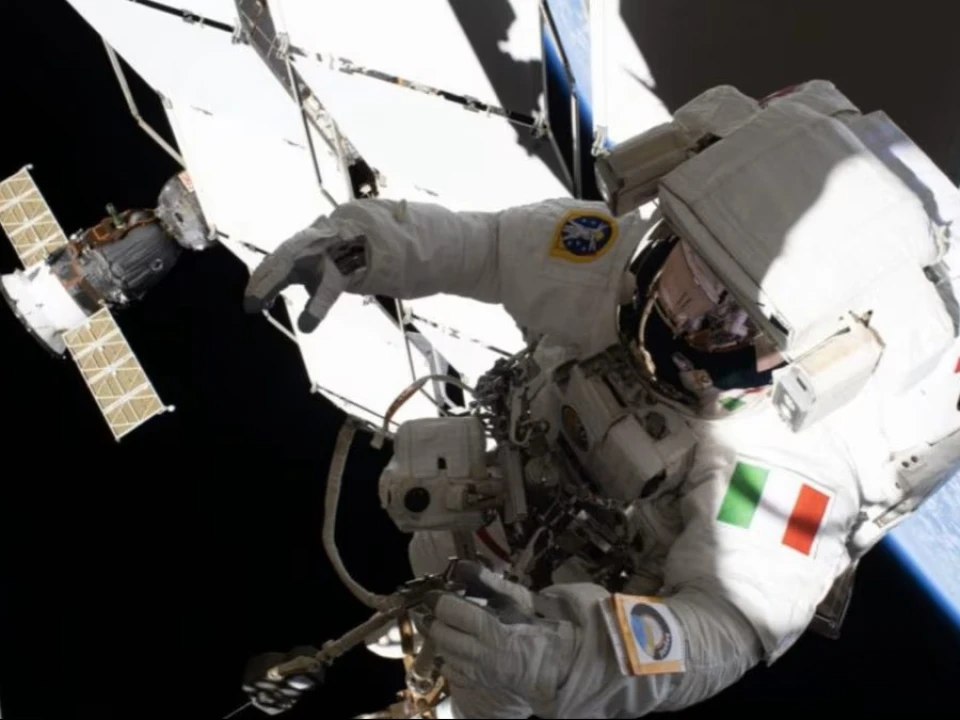
A new phase in space exploration is emerging as Italy and the United States strengthen their strategic partnership through a major agreement tied to NASA’s Artemis program. The Italy–USA agreement represents a decisive move toward building a long-term human presence on the Moon, with Italian industry playing a leading role.
Under the deal, Italy will design and produce advanced habitation systems for future lunar missions. These modules – entirely made in Italy – will support astronauts living and working on the Moon, focusing on sustainability, safety, and scientific research. The Multi-Purpose Habitation module is expected to be operational in the early 2030s, with projections pointing to around 2033 as a key milestone.
This agreement confirms Italy as one of NASA’s top international partners in Artemis, a program worth tens of billions of dollars aimed at returning humans to the Moon more than 50 years after Apollo. The objective is not just exploration but continuity – creating a stable lunar infrastructure that could last decades and support a future space economy projected to exceed $100 billion by 2050.
One of the most symbolic outcomes is the confirmation that an Italian astronaut will walk on the Moon. According to Italian and European space officials, this historic moment could take place within the next 7–10 years, aligning with missions planned between the late 2020s and early 2030s.
The list of potential candidates already highlights Italy’s strong presence in the European astronaut corps. Among the most likely names are Samantha Cristoforetti and Luca Parmitano, both veterans of long-duration missions and key contributors to international space operations.
These astronauts represent decades of Italian investment in space technology and human spaceflight, reinforcing the country’s leadership within Europe and its growing role in transatlantic cooperation.
Beyond prestige, the agreement is expected to generate significant economic impact. Italian companies involved in aerospace, engineering, and advanced manufacturing could benefit from new contracts, boosting high-tech employment and innovation. The participation in lunar infrastructure also strengthens Italy’s position in the emerging space economy, where international collaboration is expected to drive over 60% of future growth.
In this context, the idea of a “Made in Italy” habitat on the Moon becomes more than a technological achievement. It symbolizes a strategic bridge between Italy and the United States and marks a turning point where Italian expertise, an Italy–USA agreement, and the presence of an Italian astronaut on the Moon all converge in shaping humanity’s next frontier.