Over these fifteen years of interviews, at We the Italians we have used hundreds of tags to label the content published on our website. By far the most frequently used tag is Food. Food and cuisine are always essential when describing Italy in the United States.
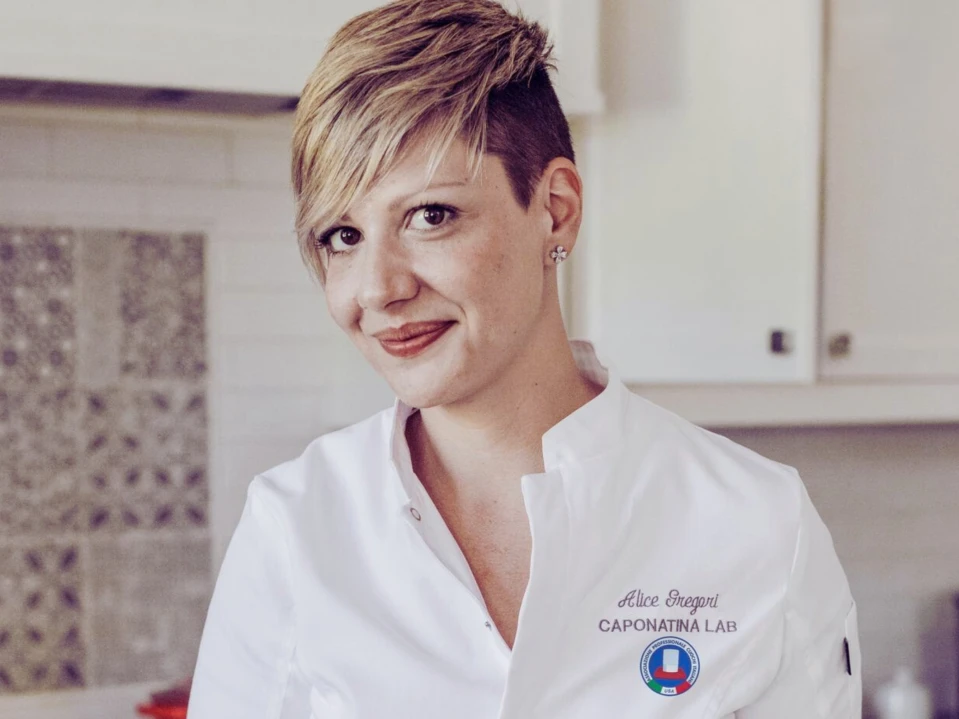
With this interview we are launching a new collaboration that we are very happy about: the one with the North America section of APCI – Associazione Professionale Cuochi Italiani. Representing all of them, we welcome Alice Gregori to We the Italians.
Dear Alice, tell us your story… where did you start out in Italy, and how, when, and where did you arrive in the United States?
I come from the area around Lake Idro, between Lombardy and Trentino, and I grew up surrounded by nature, between the mountains and rural life, where it was often the ingredients themselves that suggested what to cook. In my family, cooking was a daily act of care, and thanks to my parents, my grandmother, and my aunt, I spent a great deal of time in the kitchen. When I was eight years old, I wanted to prepare my first dinner for my mom and dad, and from that moment on I never stopped.
As a young woman, I worked for years in restaurants and trattorias, a job I was very passionate about, even though I later chose a different professional path. In 2020, in the middle of the pandemic, I moved to the United States following my husband – a major change that gave me the courage to finally dedicate myself to cooking as a profession, not just as a passion.
I started as a private chef, bringing Italian home cooking into American households. Today this journey has become Noi Due Farm – The Kitchen, located in my home and on my family’s small farm in Woodside, California. This dedicated, fully licensed kitchen space is where I now host private farm-to-table dinners, Italian cooking experiences, and agriturismo-style lunches inspired by seasonal ingredients, Italian regional traditions, and the pleasure of gathering around the table. We invite your readers to follow our Instagram account.
At the end of last year, Italian cuisine was recognized as intangible cultural heritage by UNESCO. What do you think about this? How would you describe this Italian excellence to the famous Martian who arrives on Earth?
I am very happy about this recognition, because it doesn’t only concern Italian cuisine as a collection of recipes, but the entire culture behind it: the relationship with ingredients, seasonality, the act of cooking for someone, and the value of sharing a table. At the same time, living and cooking abroad, I also feel an even greater responsibility to represent this tradition with respect and authenticity.
If I had to explain Italian cuisine to a Martian, I wouldn’t start with words but with a carefully set table. I would invite them to sit down, serve a simple appetizer and then a plate of fresh pasta with tomato and basil, topped with good Parmigiano Reggiano, and I would eat with them. At the end I would say, “There you go – now you understand.”
What is your favorite Italian dish? Is it the same dish you most enjoy cooking and eating, or are they different recipes?
My absolute favorite dish is the wild field herb soup that my mother prepares every spring. For me, it is more than just a dish – it is seasonality, memory, the scent of home and nature, it is my origin.
When I cook for others, on the other hand, I feel most at home with fresh pasta: tagliatelle, ravioli, tortelloni. I also really love risottos. And I always enjoy welcoming guests with small, indulgent aperitivi inspired by our traditions, but presented in a convivial and modern way.
Italian American cuisine is an evolution of the recipes Italian immigrants brought from Italy, arriving in a country where the ingredients were not even comparable to those in Italy. Can you help describe Italian American cuisine to Italians living in Italy who know little about it?
Italian American cuisine was born out of adaptation. Italian immigrants brought their recipes and their culinary memory to a country where the available ingredients were often very different. From that came a new cuisine that retains an Italian soul but evolved through local products, portions, and tastes.
I feel fortunate to live in California, where the quality of raw ingredients is extremely high. Within just a few miles I can find excellent local producers, in addition to the products from my small farm, and this allows me to recreate many traditional Italian recipes very effectively, using Californian ingredients in a sustainable way. However, there are important differences, especially with certain products. For example, ocean fish is very different from Mediterranean fish in terms of varieties, size, and flavor. This means that not all seafood dishes we know in Italy can be reproduced in the same way – and I believe this too is part of the natural evolution of a cuisine when it changes territory.
The quality and flavor of Italian products are unbeatable. Which ingredients do you prefer to use in your cooking?
There are Italian ingredients that I consider truly essential, because they are the foundation of our cuisine and make a real difference in the final result. Among my favorites are definitely high-quality flours, both for breadmaking and for pastries and fresh pasta, because structure and flavor start right there. Olive oil and salt – yes, salt! Then the great Italian cheeses: Parmigiano Reggiano, Grana Padano, Pecorino Romano, fiordilatte mozzarella – ingredients that are not just “add-ons” but true elements of a dish’s identity. That said, in my cooking I always try to combine Italian excellence with outstanding local, seasonal products from the place where I live. For me, quality is not only about geographic origin, but about respect for the ingredient, the season, and the people who produce it. Vegetables and cheeses are my favorite ingredients, and with them I can create varied, seasonal dishes.
Do you think original Italian products could offer a new arrangement for some Italian American dishes?
I think so, and in part it is already happening. When authentic Italian ingredients meet dishes that were born from Italian American evolution, a very interesting new balance can emerge. It’s not about “correcting” them, but about dialogue between tradition and migratory history. Many Italian American dishes were born as generous and creative adaptations, tied to the ingredients available at the time. Today, with greater access to original, high-quality Italian products, some of these dishes can be reinterpreted with greater precision of flavor and respect for the ingredients.
This interview also marks the beginning of a wonderful collaboration between We the Italians and the North America section of APCI – Associazione Professionale Cuochi Italiani. Please tell our readers about this remarkable association.
I am a relatively new member of the association, but from the very beginning I felt welcomed, supported, and part of a true professional community. APCI North America is growing rapidly and carries forward the work of Italian chefs abroad with seriousness, organization, and a strong spirit of collaboration. Events and initiatives are always organized with great professionalism and have a clear goal: to promote authentic Italian cuisine and those who represent it every day through their work. It is an association that protects not only cuisine as a gastronomic heritage, but also the dignity and competence of the professionals involved, creating networks, dialogue, and concrete opportunities for growth.
In questi quindici anni di interviste, su We the Italians abbiamo usato centinaia di tags, per contrassegnare i contenuti pubblicati sul nostro sito. La tag di gran lunga più usata è Food. Il cibo e la cucina sono sempre fondamentali nel descrivere l’Italia negli Stati Uniti.
Con questa intervista inauguriamo una nuova collaborazione, della quale siamo molto felici: quella con la sezione del Nord America di APCI - Associazione Professionale Cuochi Italiani. A rappresentare tutti loro, diamo il benvenuto su We the Italians ad Alice Gregori.
Cara Alice, raccontaci la tua storia… da dove sei partita in Italia, e come e quando e dove sei arrivata negli Stati Uniti?
Sono originaria della zona del Lago d’Idro, tra Lombardia e Trentino, e sono cresciuta nella natura, tra montagna e vita di campagna, dove spesso erano gli ingredienti a suggerire cosa cucinare. In famiglia la cucina era un gesto quotidiano di cura, e grazie ai miei genitori, alla nonna e a mia zia ho passato moltissimo tempo ai fornelli. A otto anni ho voluto preparare la mia prima cena per mamma e papa e da lì non ho più smesso.
Da ragazza ho lavorato per anni in ristoranti e trattorie, un lavoro che mi appassionava molto, anche se poi ho scelto un’altra strada professionale. Nel 2020 mi sono trasferita negli Stati Uniti, in piena pandemia, seguendo mio marito: un grande cambiamento che mi ha dato il coraggio di dedicarmi finalmente alla cucina come lavoro, non solo come passione.
Ho iniziato come private chef, portando nelle case americane la cucina italiana di casa. Oggi questo percorso è diventato Noi Due Farm – The Kitchen, situato nella mia casa e nella piccola azienda agricola di famiglia a Woodside, California. Questo spazio cucina dedicato e autorizzato è il luogo in cui oggi ospito cene private farm-to-table, esperienze di cucina italiana e pranzi in stile agriturismo, ispirati agli ingredienti stagionali, alle tradizioni regionali italiane e al piacere di ritrovarsi attorno alla tavola. Invitiamo i vostri lettori a seguire il nostro account Instagram.
Alla fine dello scorso anno la cucina italiana è stata riconosciuta patrimonio immateriale dell’umanità dall’UNESCO. Cosa ne pensi? Come descriveresti questa eccellenza italiana al famoso marziano che arriva sulla terra?
Sono molto felice di questo riconoscimento, perché non riguarda solo la cucina italiana come insieme di ricette, ma tutta la cultura che c’è dietro: il rapporto con gli ingredienti, la stagionalità, il gesto del cucinare per qualcuno, il valore della tavola condivisa. Allo stesso tempo, vivendo e cucinando all’estero, sento anche una responsabilità ancora più grande nel rappresentare questa tradizione con rispetto e verità.
Se dovessi spiegare la cucina italiana a un marziano, non inizierei con le parole ma con una tavola apparecchiata con cura. Lo inviterei a sedersi, gli servirei un antipasto semplice e poi un piatto di pasta, fresca, al pomodoro e basilico, con un buon Parmigiano Reggiano, e mangerei con lui. Alla fine gli direi: “Ecco, adesso hai capito.”
Qual è il tuo piatto preferito italiano? Coincide sia quello che preferisci cucinare con quello che preferisci mangiare, o sono due diverse ricette?
Il mio piatto preferito in assoluto è la zuppa di erbe selvatiche di campo che prepara mia mamma ogni primavera. Per me è più di un piatto: è stagione, memoria, profumo di casa e di natura, è la mia origine.
Quando cucino per gli altri, invece, mi sento particolarmente a casa con la pasta fresca: tagliatelle, ravioli, tortelloni. Amo anche molto i risotti. E mi piace sempre accogliere gli ospiti con piccoli aperitivi golosi, ispirati alle nostre tradizioni, ma pensati in forma conviviale e moderna.
La cucina italoamericana è un’evoluzione delle ricette che gli emigrati italiani portarono dall’Italia, arrivando in un Paese dove però gli ingredienti non erano nemmeno comparabili a quelli italiani… ci aiuti a descrivere la cucina italoamericana agli italiani che vivono in Italia e ne sanno poco?
La cucina italoamericana nasce dall’adattamento: gli emigrati italiani hanno portato le loro ricette e la loro memoria culinaria in un Paese dove spesso gli ingredienti disponibili erano molto diversi. Da lì è nata una cucina nuova, che mantiene l’anima italiana ma si è evoluta con prodotti, quantità e gusti locali.
Mi sento fortunata perché vivo in California, dove la qualità delle materie prime è altissima. Nel raggio di poche miglia posso trovare ottimi produttori locali, oltre ai prodotti della mia piccola fattoria, e questo mi permette di replicare molto bene molte ricette tradizionali italiane, usando ingredienti californiani e in modo sostenibile. Ci sono però differenze importanti, soprattutto su alcuni prodotti: per esempio il pesce dell’oceano è molto diverso da quello del Mediterraneo, per varietà, dimensioni e sapore. Questo significa che non tutti i piatti di mare che conosciamo in Italia si possono riprodurre allo stesso modo — e anche questo credo fa parte dell’evoluzione naturale di una cucina quando cambia territorio.
La qualità ed il sapore dei prodotti italiani sono imbattibili… tu quali ingredienti preferisci usare nella tua cucina?
Ci sono ingredienti italiani che considero davvero fondamentali, perché sono la base della nostra cucina e fanno una differenza reale nel risultato finale. Tra i miei preferiti ci sono sicuramente le farine di qualità, sia per la panificazione che per i dolci e la pasta fresca, perché la struttura e il sapore partono proprio da lì. L'olio d'oliva e il sale! Si il sale!! Poi i grandi formaggi italiani: Parmigiano Reggiano, Grana Padano, Pecorino Romano, mozzarella fiordilatte — ingredienti che non sono solo “aggiunte”, ma veri elementi di identità del piatto. Detto questo, nella mia cucina cerco sempre di unire l’eccellenza italiana con ottimi prodotti locali e stagionali del territorio in cui mi trovo. Per me la qualità non è solo origine geografica, ma rispetto della materia prima, della stagione e di chi la produce. Vegetali e formaggi sono i miei ingredienti preferiti con cui riesco a creare piatti diversi e stagionali.
Secondo te, i prodotti originali italiani riuscirebbero a proporre un nuovo arrangiamento per alcuni piatti italoamericani?
Credo di sì, e in parte sta già succedendo. Quando ingredienti italiani autentici incontrano piatti nati dall’evoluzione italoamericana, può nascere un nuovo equilibrio molto interessante. Non si tratta di “correggere”, ma di dialogare tra tradizione e storia migratoria. Molti piatti italoamericani sono nati come adattamenti generosi e creativi, legati agli ingredienti disponibili in quel momento. Oggi, con più accesso a prodotti italiani originali e di qualità, alcuni di questi piatti possono essere reinterpretati con maggiore precisione di sapore e rispetto della materia prima.
Questa intervista segna anche l’inizio di una bella collaborazione tra We the Italians e la sezione nordamericana dell’APCI - Associazione Professionale Cuochi Italiani. Ti chiediamo di raccontare bene questa meravigliosa associazione ai nostri lettori.
Sono un membro relativamente giovane dell’associazione, ma fin dal primo momento mi sono sentita accolta, sostenuta e parte di una vera comunità professionale. APCI Nord America sta crescendo molto e porta avanti il lavoro dei cuochi italiani all’estero con serietà, organizzazione e spirito di collaborazione. Gli eventi e le iniziative sono sempre curati con grande professionalità e hanno un obiettivo chiaro: valorizzare la cucina italiana autentica e chi la rappresenta ogni giorno con il proprio lavoro. È un’associazione che non tutela solo la cucina come patrimonio gastronomico, ma anche la dignità e la competenza dei professionisti coinvolti, creando rete, confronto e opportunità concrete di crescita.