The relationship between Italian food producers and the American market is entering a new phase, as differences over geographical indications become increasingly important in international trade. At the center of the discussion is a fundamental question: when does a food name identify a specific geographical origin, and when can it be used as a generic description?
The current American administration supports broader international recognition of what the United States considers common food names. These include Asiago, Gorgonzola, Parmesan, Provolone, Mortadella and several other products associated with Italy’s culinary tradition.
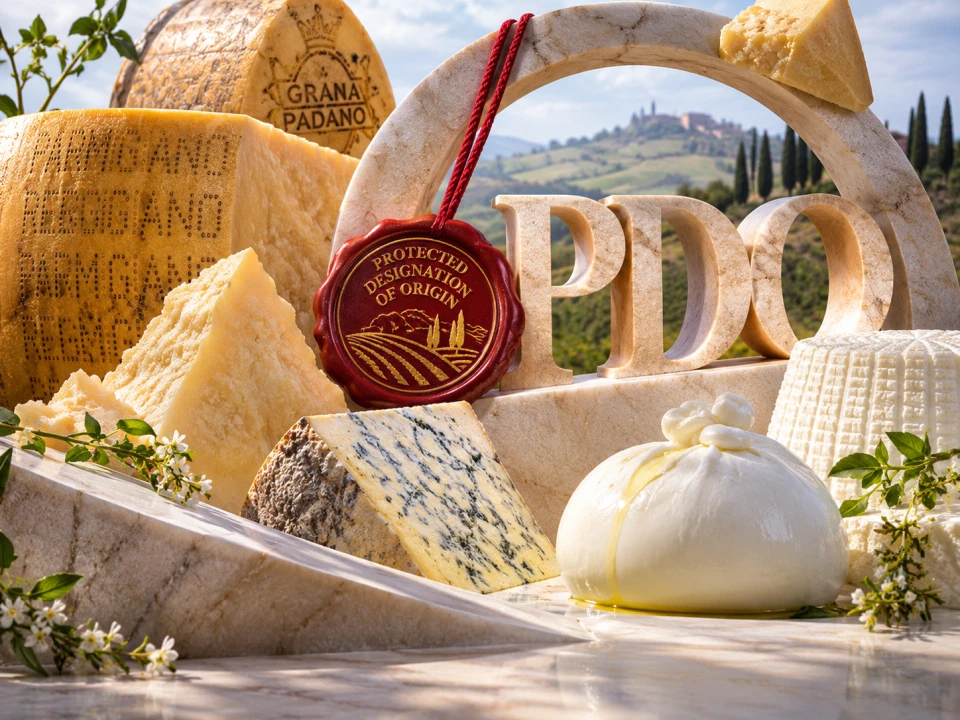
Under European Union regulations, Protected Designation of Origin (PDO) and Protected Geographical Indication (PGI) certifications connect products to specific territories, production methods and quality standards. The American system takes a different approach, protecting geographical indications primarily through trademark legislation while recognizing certain traditional food names as generic.
This distinction has existed for decades. However, provisions included in the proposed 2026 Farm Bill would strengthen the American position by explicitly identifying numerous food names as common terms and directing trade negotiators to defend their use in foreign markets.
For Italian producers, the implications extend beyond the American domestic market. If American manufacturers obtain broader recognition of these names through international trade agreements, Italian exporters could encounter additional competition in third-country markets where European geographical indications currently enjoy protection.
The economic stakes are considerable. Italy has nearly 900 registered geographical indications across food and wine, representing an important part of its agricultural identity and commercial competitiveness.
According to Italy’s agricultural research council, CREA, Italian agri-food exports reached more than €72 billion worldwide in 2025. The United States remained a major destination, purchasing approximately €7.55 billion in Italian food and agricultural products, despite a 4.2% decline compared with 2024.
The broader commercial relationship nevertheless demonstrated resilience. Total Italian merchandise exports to the United States reached approximately €69.6 billion in 2025, increasing 7.2% despite higher tariffs.
These figures demonstrate both the importance of the American market and the need to preserve the distinctive value of authentic Italian products.
American producers have legitimate commercial interests, particularly when certain food names have been used domestically for generations. Italian producers, meanwhile, have equally legitimate reasons to defend geographical identities developed through centuries of agricultural knowledge and recognized production standards.
The challenge is finding a balance between these approaches without unnecessarily restricting trade or creating confusion among consumers.
For Made in Italy businesses, the most effective response combines institutional negotiations with stronger communication about authenticity, traceability and product quality. Clear labeling, recognizable certification symbols and consumer education can help distinguish genuine Italian geographical specialties from products manufactured elsewhere.
The United States remains an essential partner for Italian agriculture, supported by longstanding commercial relationships and strong consumer appreciation for Italian cuisine.
Protecting geographical identity and encouraging competition need not be incompatible objectives. With constructive dialogue, transparent rules and greater consumer awareness, Italy and the United States can continue strengthening a food trade relationship that benefits producers, distributors and consumers on both sides of the Atlantic.