
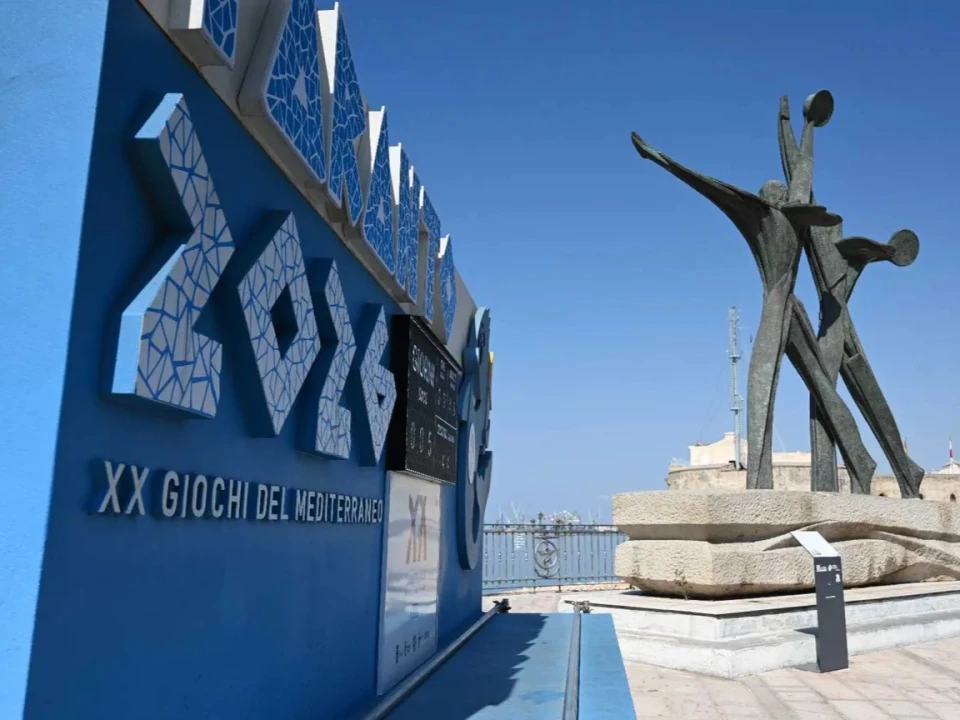
The Mediterranean Games are a major multisport event for countries connected to the Mediterranean region. First held in 1951, they bring together athletes from Europe, Africa, and the Middle East in an Olympic-style competition that combines elite sport with cultural exchange among neighboring nations.
This year, the 20th edition is taking place in Italy. Taranto 2026 runs from August 21 through September 3, with competition spread across Puglia. More than 4,000 athletes from 26 National Olympic Committees are expected to compete in 33 sports, including swimming, athletics, fencing, sailing, soccer, volleyball, water polo, canoeing, shooting, and martial arts.
The field includes Albania, Algeria, Andorra, Bosnia and Herzegovina, Croatia, Cyprus, Egypt, France, Greece, Italy, Kosovo, Lebanon, Libya, Malta, Monaco, Montenegro, Morocco, North Macedonia, Portugal, San Marino, Serbia, Slovenia, Spain, Syria, Tunisia, and Türkiye. The Games therefore represent more than a sporting contest: they create a meeting point for nations with different languages, histories, and political traditions that share the Mediterranean as a geographic and cultural space.
Italy is hosting the event with the largest delegation, 497 athletes, and has made an immediate impact on the medal table. Swimming has been the standout sport in the opening days. In the first session of finals, Italian swimmers won 13 medals – 3 gold, 8 silver, and 2 bronze. The following evening, they added another 13 medals, including 6 gold medals.
That means Italy collected 26 swimming medals across the first two final sessions, with 9 gold medals. Benedetta Pilato, Gabriele Mancini, and Antonietta Cesarano were among the first Italian champions of the Games. Costanza Cocconcelli added another gold in the women’s 50-meter backstroke, while Italy also won the mixed 4x100-meter medley relay in 3:45.66.
Italy’s success has extended beyond the pool. On August 23 alone, the Italian team earned 22 medals across the program, including 10 gold medals, and moved into first place in the overall standings. Six of those gold medals came from swimming, underlining the strength and depth of the host nation’s aquatic program.
For Taranto and southern Italy, the Games are also an opportunity to present the region on an international stage. The event combines competition, infrastructure, tourism, and civic pride, while placing Italian athletes in front of a home public. With more than a week of events still to come, Italy has established itself as the team to beat.