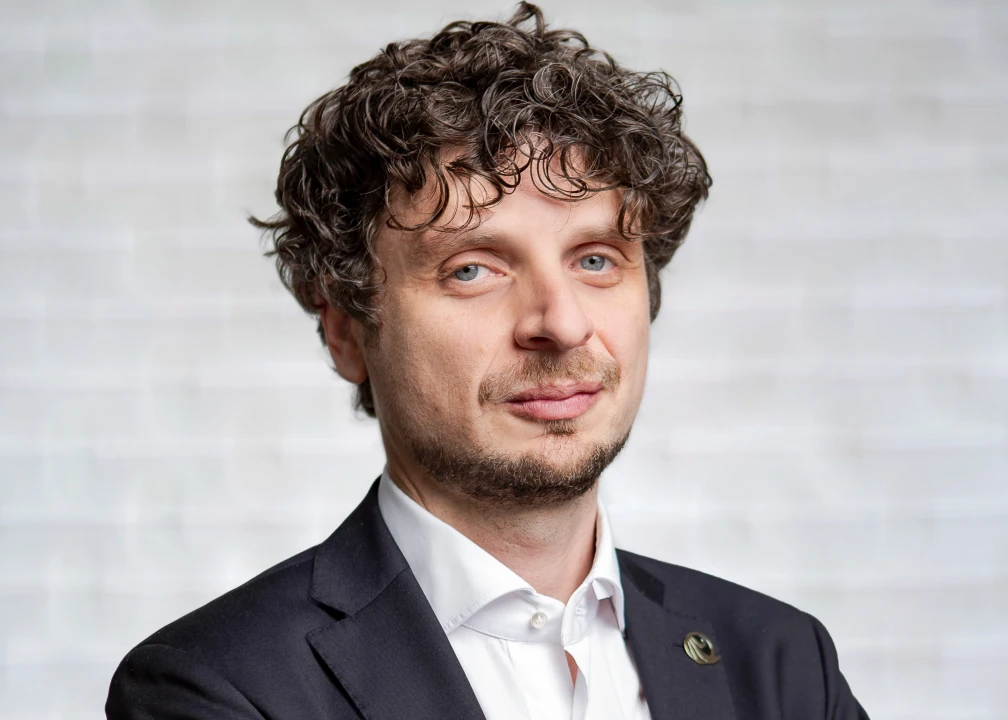
This interview is a little different from the others, because it concerns a project that was born from the collaboration between We the Italians and Zwan, a leading Reputation Assessment company in Italy. With Davide Ippolito, the protagonist of this interview, we decided to start the Italian American Reputation Lab, which will monitor the reputation of Italian Americans through constant activities and an annual report.
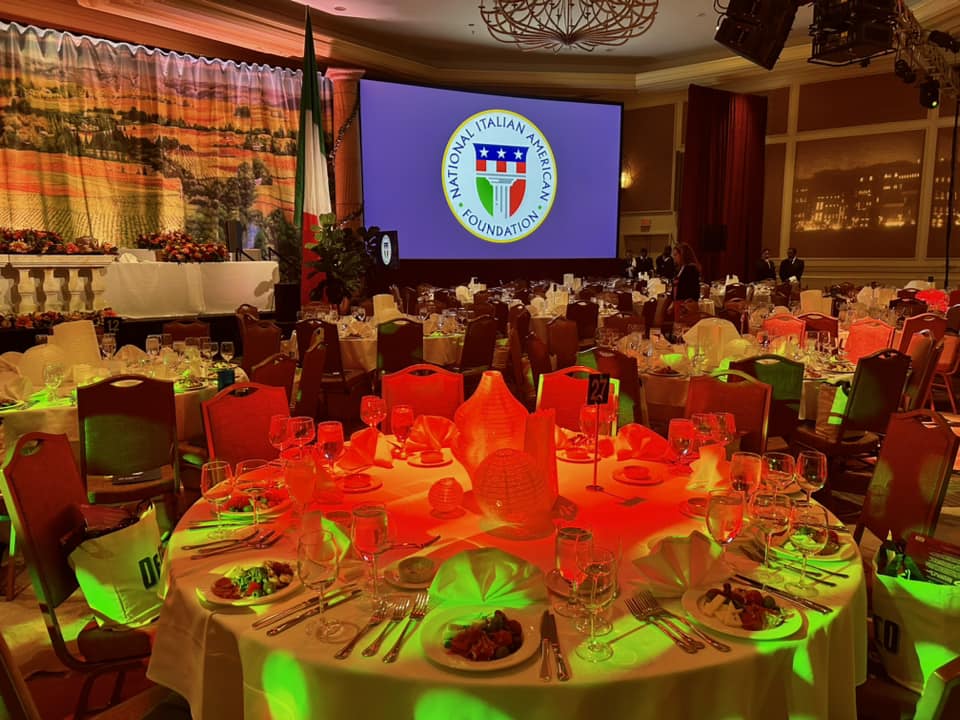
The 2022 report was recently presented during the NIAF Gala day in Washington DC and then in New York at the Columbus Citizens Foundation, finding on both occasions a great success with the public and great interest also from the institutions, first of all the Italian Ambassador to America Her Excellency Mariangela Zappia to whom I personally had the opportunity to describe it.
Davide, why is reputation important?
Let's start from a premise: it is definitely more correct to speak of Reputations, in the plural, because more dimensions combine to form it. The aspect that is essential to understand, however, is this: even if there is no objective and unique value of the reputation, the many elements that make up the reputational capital have a direct impact on the economic capital of the organizations and it is precisely in this, to respond to your question, which lies its importance.
Linking reputation and economy closely is nothing new: just think of the insurance system or bank scores which, precisely on the basis of our reputation as payers, allow us to have a higher or lower mortgage. But, especially since Finance decided to focus on the intangible assets of reputation, going beyond profit and evaluating the environmental, social and human capital impact of organizations, this has become the real capital of the third millennium.
A few months ago your method for quantifying a reputation value has been publicly patented by the Italian government. Tell us more about how it
A few years ago, when we decided to deal with reputation for the first time, we immediately noticed how all those who were interested in it were able to measure it only partially: there were those who looked only to the economic or accounting side, focusing on reputational indices on which the scoring systems are based, others analyzed exclusively the so-called Web Reputation, and so on. Our idea was to start from its multidimensionality and to take into consideration its 10 dimensions: 5 drivers, that is the vehicles through which the reputational judgment of an organization is formed - products and services, leadership & innovation, CSR, workplace & governance, performance - and 5 relevant stakeholders from a reputational point of view, namely consumers and customers, investors and financiers, employees and colleagues, companies and institutions, suppliers. For the purposes of our measurements, no subjective or merit judgments impact these dimensions, but only and exclusively recognized certifications. Our algorithm therefore aims to weigh those certificates that have an impact on reputational dimensions, to give an objective and different evaluation to the work of organizations or, as has sometimes happened, even of nations or communities.
I leave it to you to tell our readers how the idea of setting up the Italian American Reputation Lab came to mind to us
When we met for my vlog, InsiderZ, you talked to me about the issue related to the figure of Columbus in America, a controversy that I knew very little about. However, I immediately realized how, behind those discussions, there was a strong reputational theme, not so much linked to the historical figure, but rather to that Italian-American community that you, with We The Italians, have successfully touched for many years. It was then at the We The Italians Gala Dinner that our common idea took shape and was structured around this reasoning: the Italian American community has experienced a long and tortuous perceptual evolution in the United States. On the one hand, the reputational risks fueled by simplifications, stereotypes, criminal activities, prejudices crystallized by cinema successes; on the other, the precious work of the associations to overcome them. And now the community's reputation is still undermined to some extent by the attacks on Columbus. It is therefore necessary to monitor the reputation of Italian Americans both in the States and in Italy, from where it is hoped that support will arrive at the institutional level.
Who are the subjects to whom IARL addresses?
The Italian American Reputation Lab is aimed primarily at institutional and para-institutional subjects in search of indications, perhaps even in the market, on the reputation of the Italian American community and also of Italy in the United States, taking into account the complexity of the United States, with aggregate data or state by state, Web Reputation analysis, qualitative and quantitative surveys, etc. This generates a wealth of useful information also for the Italian regions and at the same time for associations such as NIAF that interface with them. Think, for example, of the Region of Honor 2022 which is Tuscany and which may have an interest in knowing what degree of popularity it enjoys in the various federal states. Perhaps in some states it is known and appreciated for a reason, in others it is not known at all, in others it is known for elements that are not really identifying and, thanks to IARL data, it is possible to structure a communication that meets the different needs.
We launched IARL and the 2022 Report at the NIAF Gala event in Washington and then at the Columbus Foundation in New York. The success achieved leads us to confirm that it will be an annual report ...
Absolutely yes, the starting point was that first report presented at the NIAF Gala, thanks also to President Robert Allegrini who evidently understood its potential, and then to the Columbus Foundation in New York. It is now a question of continuing to monitor the reputational trends of Italian Americans over the years, also analyzing their community initiatives and how they will be perceived. The goal is to have a Permanent Observatory on the Reputation of Italian Americans, thus being able to rely on increasingly detailed data and long-term monitoring of trends, which always allows for rationalization and looking at the events affecting reputation with the right perspective. For example, from the 2022 Report, it emerges that the controversies over Columbus, while making a lot of noise, have actually involved a very small niche as a percentage of the American public. All initiatives on that issue must then be monitored over time, so that they can bring effective benefits to the Italian American community.
A few questions about the contents of the 2022 Report: tell us about Italy's reputation in the US
Italy in the United States is perceived as fashion, design, beauty and this is a macroscopic fact that is also confirmed by our measurements and our multidimensional approach. The 2022 Report still does not give us an image of the evolution over time of the reputation of Italian citizens of the Old Continent in the States. It will then be very interesting, with the Permanent Observatory, to analyze how any news events involving the US and Italy together can influence the perception of Italians and Italy among Italian Americans and other US citizens at a given moment.
What do the data contained in the report on the reputation of Italian Americans in America say?
First of all, let's start with a positive and valuable fact that emerges from the Report. Over the past 30 years, the Reputation of Italian Americans has grown by 38.3%. The confirmation comes from several fronts: if we go, for example, to look at the related keywords on search engines to the Italian American community, compared to negative issues that previously aroused more interest such as the "mafia", today the search volumes have much more important intentions linked to the world of food (Italian sauce, Italian cooking, pizza), of work, with Italians increasingly considered “hard workers”, of the family. It is the evident recognition of a culture well rooted in the country at every level. There is also great interest - and it was reasonable to expect - for universally acclaimed celebrities, whose Italian-American heritage is highlighted, as in the emblematic cases of Lady Gaga and the Russo brothers.
And what data emerge on the reputation of Italian Americans in Italy?
The Italian Americans are experiencing a successful reputational season in Italy, mainly due to the investments that some Italian American businessmen have made at the highest levels of Italian football. The most striking case is that of Rocco Commisso, president of Fiorentina, but he is not the only one. The Italian-American capital returning to Italy, therefore, greatly increase the positive perception of a community that was seen as distant, elusive, almost smoky. Positive sentiment exceeded 32%, compared with a negative one below 7 percentage points. Even Columbus Day, an anniversary not celebrated in Italy and quite unknown until a few years ago, today is known to many and intrigues enough to generate nearly 3,000 monthly searches from our country.
Speaking of Columbus Day, each year the report will also analyze an aspect of Christopher Columbus's reputation: which data was the subject of the analysis this year, and what emerges?
The first and most evident figure to emerge is this: the United States is the country which has the greatest interest in Christopher Columbus in the world. On closer inspection, however, it is also immediately evident that most of the searches are related to Columbus Day. schools, rather than on the battles of the Native Americans and on the controversies related to the historical figure of Columbus. If we then look at the tag clouds, tools that weigh the importance of certain concepts in discussions on a topic, the word "indigenous" is actually often related to Columbus. However, a genuine polarization between negative sentiment, at 23%, and positive, at 22%, occurs only and exclusively on social media and blogs, while neutrality dominates on all other media, including TV and press. Another interesting aspect on which we wanted to focus a lot this year, was examining the voices and sources. In the networks, in fact, the so-called Top Influencers make much more noise than the general public. Thus we were able to notice that, while in the tag clouds of public opinion, the attitude towards Columbus is substantially neutral, it is the Top Influencers, those whose voice has a more important specific weight in terms of perception, to speak the most. often in their discussions on the subject of "genocide", "murder", "slaves". Only by reading these data in a critical way can errors of perspective be avoided. The impression is that, with the exploitation, we pass from a reputational risk for the figure of Columbus to the Italian-American community. And then the importance of constant reputational control and monitoring is even more evident.
Questa intervista è un po’ diversa dalle altre, perché riguarda un progetto che nasce dalla collaborazione tra We the Italians e Zwan, società leader in Italia nel Reputation Assessment. Con Davide Ippolito, il protagonista di questa intervista, abbiamo deciso di dare vita all’Italian American Reputation Lab, che monitorerà la reputazione degli italoamericani mediante attività costanti ed un rapporto annuale.
Il rapporto 2022 è stato presentato a nel corso della giornata del NIAF Gala a Washington DC e poi a New York presso la Columbus Citizens Foundation, riscontrando in entrambe le occasioni un grande successo di pubblico e grande interesse anche da parte delle istituzioni, prima tra tutte l’Ambasciatrice italiana in America Sua Eccellenza Mariangela Zappia alla quale ho avuto modo personalmente di descriverlo.
Davide, perché è importante la reputazione?
Partiamo da una premessa: è decisamente più corretto parlare di Reputazioni, al plurale, perché più dimensioni concorrono a formarla. L’aspetto che è fondamentale però capire è questo: anche se non esiste un valore oggettivo e unico della reputazione, i tanti elementi che formano il capitale reputazionale hanno una diretta ricaduta sul capitale economico delle organizzazioni ed è proprio in questo, per rispondere alla tua domanda, che risiede la sua importanza.
Legare strettamente reputazione ed economia non è affatto una novità: basti pensare al sistema delle assicurazioni o agli score bancari che, proprio sulla base della nostra reputazione come pagatori, ci permettono di avere un mutuo più alto o basso. Ma, soprattutto da quando la Finanza ha deciso di puntare sugli asset intangibili della reputazione, andando oltre il profitto e valutando l’impatto ambientale, sociale e del capitale umano delle organizzazioni, questa è diventata il vero capitale del terzo millennio.
Da qualche mese è pubblicamente riconosciuto dal governo italiano il vostro algoritmo, ovvero il vostro metodo per la quantificazione di un valore di reputazione. Spiegaci meglio come funziona e in cosa consiste questo metodo.
Qualche anno fa, quando abbiamo deciso di occuparci per la prima volta di reputazione, abbiamo subito notato come tutti coloro i quali se ne interessavano riuscivano a misurarla solo in maniera parziale: c’era chi guardava solo al lato economico o contabile, concentrandosi sugli indici reputazionali su cui si basano i sistemi di score, altri analizzavano esclusivamente la cosiddetta Web Reputation, e così via.
La nostra idea è stata quella di partire dalla sua multidimensionalità e di prendere in considerazione le sue 10 dimensioni: 5 driver, ovvero i veicoli attraverso cui si forma il giudizio reputazionale di un'organizzazione - prodotti e servizi, leadership & innovation, CSR, workplace & governance, performance - e 5 stakeholder rilevanti da un punto di vista reputazionale, vale a dire consumatori e clienti, investitori e finanziatori, dipendenti e colleghi, Società e istituzioni, fornitori.
Su queste dimensioni non impattano, ai fini delle nostre misurazioni, dei giudizi di merito o soggettivi, ma solo ed esclusivamente certificazioni riconosciute. Il nostro algoritmo quindi si pone l’obiettivo di pesare quei certificati che hanno una ricaduta sulle dimensioni reputazionali, per dare una valutazione oggettiva e diversa all’operato delle organizzazioni o, come avvenuto talvolta, addirittura di nazioni o comunità.
Lascio a te il compito di raccontare ai nostri lettori come ci è venuta in mente l’idea di costituire l’Italian American Reputation Lab
Quando ci siamo incontrati per il mio vlog, InsiderZ, mi hai parlato della questione legata alla figura di Colombo in America, una controversia di cui sapevo ahimè pochissimo. Subito però ho intuito come, dietro quelle discussioni, ci fosse un tema reputazionale forte, non tanto legato al personaggio storico, quanto piuttosto a quella comunità italoamericana che tu, con We The Italians, raggiungi con successo da tanti anni.
È stato poi al Gala Dinner di We The Italians che la nostra idea comune ha preso forma e si è strutturata attorno a questo ragionamento: la comunità italoamericana ha vissuto una lunga e tortuosa evoluzione percettiva negli Stati Uniti. Da una parte, i rischi reputazionali alimentati da semplificazioni, stereotipi, attività criminose, pregiudizi cristallizzati dai successi cinematografici; dall’altra, il prezioso lavoro delle associazioni per superarli. E ora la reputazione della comunità è ancora minata in qualche misura dagli attacchi a Colombo. È allora necessario monitorare la reputazione degli italoamericani sia negli States che in Italia, da dove ci si auspica arrivi un supporto a livello istituzionale.
Quali sono i soggetti ai quali si rivolge IARL?
L’Italian American Reputation Lab si rivolge innanzitutto ai soggetti istituzionali e para-istituzionali in cerca di indicazioni, magari anche di mercato, sulla reputazione della comunità italoamericana e anche dell’Italia negli Stati Uniti, tenendo conto della complessità statunitense, con dati aggregati o stato per stato, analisi di Web Reputation, indagini quali-quantitative, ecc. Si genera così un patrimonio di informazioni utili anche alle regioni italiane e contemporaneamente alle associazioni come NIAF che vi si interfacciano. Si pensi, ad esempio alla Regione d’Onore 2022 che è la Toscana e che potrebbe avere interesse a sapere di quale grado di popolarità gode nei diversi Stati federali. Magari in alcuni Stati la si conosce e apprezza per un motivo, in altri non la si conosce affatto, in altri ancora la si conosce per elementi che non sono davvero identitari e, grazie ai dati IARL, si può strutturare una comunicazione che venga incontro alle diverse esigenze.
Abbiamo lanciato IARL e il Rapporto 2022 nel corso dell’evento di Gala della NIAF a Washington e poi alla Columbus Foundation a New York. Il successo ottenuto ci spinge a confermare che sarà un rapporto annuale…
Assolutamente sì, il punto di partenza è stato quel primo report presentato al Galà del NIAF, grazie anche al presidente Robert Allegrini che evidentemente ne ha intuito le potenzialità, e poi alla Columbus Foundation a New York. Si tratta ora di continuare a monitorare negli anni i trend reputazionali degli italoamericani, analizzando anche le loro iniziative di comunità e il modo in cui verranno percepite.
L’obiettivo è avere un Osservatorio Permanente sulla Reputazione degli Italoamericani, potendo così contare su dati sempre più dettagliati e su un monitoraggio di lungo periodo dei trend, che permetta sempre di razionalizzare e guardare con la giusta prospettiva agli avvenimenti che incidono sulla reputazione.
Ad esempio, dal Rapporto 2022, emerge come le controversie su Colombo, pur facendo tantissimo rumore, abbiano in realtà coinvolto una nicchia molto piccola in percentuale del pubblico americano. Tutte le iniziative su quel tema devono allora essere monitorate nel tempo, affinché possano portare effettivi benefici alla comunità italoamericana.
Qualche domanda sui contenuti del Rapporto 2022: parlaci della reputazione dell’Italia negli USA
L’Italia negli Stati Uniti è percepita come moda, design, bellezza e questo è un dato macroscopico che risulta confermato anche dalle nostre misurazioni e dal nostro approccio multidimensionale. Il Rapporto 2022 ancora non ci consegna un’immagine dell’evoluzione nel tempo della reputazione dei cittadini italiani del Vecchio Continente negli States. Sarà allora molto interessante, con l’Osservatorio permanente, analizzare come eventuali fatti di cronaca che coinvolgono insieme USA e Italia possano influenzare in un determinato momento la percezione degli italiani e dell’Italia presso gli italoamericani e gli altri cittadini statunitensi.
Che dicono i dati contenuti nel rapporto sulla reputazione degli italoamericani in America?
Partiamo innanzitutto da un dato positivo e di grande valore che emerge dal Rapporto. Negli ultimi 30 anni, la Reputazione degli Italoamericani è cresciuta del 38,3%. La conferma arriva da più fronti: se andiamo, ad esempio, a osservare le keyword correlate sui motori di ricerca alla comunità italoamericana, rispetto a tematiche negative che prima destavano più interesse come la “mafia”, oggi hanno volumi di ricerca molto più importanti gli intenti legati al mondo del food (italian sauce, italian cooking, pizza), del lavoro, con gli italiani considerati sempre più “hard workers”, della famiglia. È il riconoscimento evidente di una cultura ben radicata nel Paese a ogni livello. C’è poi un grande interesse - ed era lecito aspettarselo - per celebrità universalmente acclamate, di cui si evidenzia l’eredità italoamericana, come nei casi emblematici di Lady Gaga e dei fratelli Russo.
E invece che dati emergono sulla reputazione degli italoamericani in Italia?
Gli italoamericani vivono una fortunata stagione reputazionale in Italia, dovuta innanzitutto agli investimenti che alcuni businessman italoamericani hanno fatto ai massimi livelli del calcio italiano. Il caso più eclatante è quello di Rocco Commisso, presidente della Fiorentina, ma non è l’unico. I capitali italoamericani che tornano in Italia, quindi, aumentano di molto la percezione in positivo di una comunità che veniva vista come lontana, sfuggente, quasi fumosa. Il sentiment positivo ha superato il 32%, a fronte di uno negativo sotto i 7 punti percentuali. Persino il Columbus Day, una ricorrenza non celebrata in Italia e fino a pochi anni fa abbastanza sconosciuta, oggi è nota a molti e incuriosisce abbastanza da generare quasi 3.000 ricerche mensili dal nostro Paese.
Parlando di Columbus Day, ogni anno il rapporto analizzerà anche un aspetto della reputazione di Cristoforo Colombo: quale dato è stato oggetto dell’analisi quest’anno, e cosa emerge?
Il primo e più evidente dato a emergere è questo: gli Stati Uniti sono il Paese nel quale si ha maggiore interesse al mondo per Cristoforo Colombo. A ben vedere, però, si nota anche subito come la maggior parte delle ricerche siano legate al Columbus Day. Non solo, perché queste si focalizzano soprattutto sulla festività, su quello che comporta per le giornate lavorative, le aperture o le chiusure di negozi e scuole, piuttosto che sulle battaglie dei nativi americani e sulle controversie legate alla figura storica di Colombo. Se poi andiamo a guardare alle tag cloud, strumenti che soppesano l’importanza di determinati concetti nelle discussioni su un argomento, effettivamente la parola “indigenous” è spesso correlata a Columbus. Un’autentica polarizzazione tra sentiment negativi, al 23%, e positivi, al 22%, avviene però solo ed esclusivamente sui social e sui blog, mentre su tutti gli altri media, comprese TV e stampa, domina la neutralità.
Un altro aspetto interessante e su cui ci siamo voluti molto concentrare quest’anno, è stato il ponderare le voci e le fonti. Nelle reti, infatti, i cosiddetti Top Influencer fanno molto più rumore del general public. Così abbiamo potuto notare che, mentre nelle tag cloud dell’opinione pubblica, l’atteggiamento nei confronti di Columbus è sostanzialmente neutrale, sono proprio i Top Influencer, quelli la cui voce ha un peso specifico più importante in termini di percezione, a parlare più spesso nelle loro discussioni sull’argomento di “genocide”, “murder”, “slaves”. Solo leggendo questi dati in maniera critica si scongiurano errori di prospettiva. L’impressione è che si passi, con le strumentalizzazioni, da un rischio reputazionale per la figura di Colombo a quello per la comunità italoamericana. E allora è ancora più evidente l’importanza di un controllo e monitoraggio costante a livello reputazionale.