This is a very special interview for me, and of course, not just for me. Even though I wasn't in New York, my life changed forever on September 11, 2001. It changed forever but of course, not like what happened to the relatives of the victims of that horrendous day. For all these years I have spent every September 11 limiting my work as much as possible: instead, using my time to reflect, remember, renew my respect for those who were killed that day.
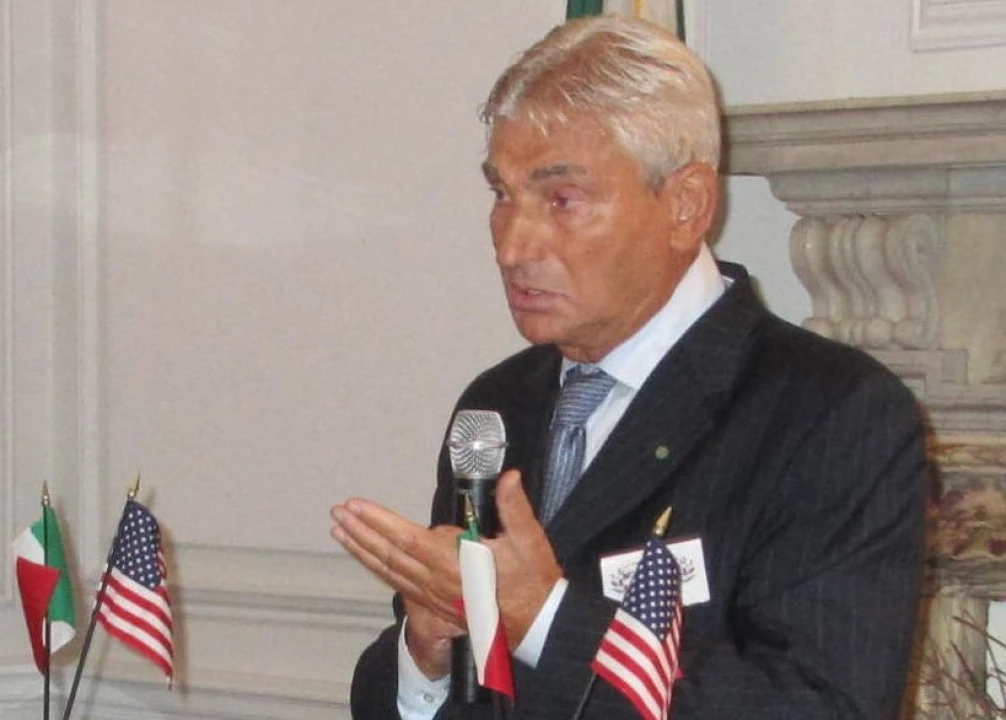
Today is the twentieth anniversary of a historic moment for everyone, but also of the death of many, too many innocent people. And today We the Italians makes its small contribution to the memory of the victims of those attacks, hosting Cavalier Giulio Picolli, who since that day has tirelessly fought and fights not to forget and to tell in any way possible about the Italian victims of September 11. We welcome him and in embracing him virtually we embrace all the Italian families who have lost someone in a day we will never forget.
Dear Giulio, you are the coordinator of the Italian September 11 families. We ask you to tell us a little more about yourself and whom you lost in that horrible day
I arrived here in the United States in 1966, so I have a great experience of life lived in the New York metropolitan area.
My godson Luigi Calvi, who had grown up with my children, worked in the twin towers: I baptized him, I confirmed, he was and is a son to me. Today he would be 52 and half years old, he was born in Naples and died when he was 32 and a half. He had been married for about 4 years, but he didn't want to raise a family yet because he was very busy in his work, he imagined he had a long life ahead ...
Luigi worked for one of the largest New York brokers of the time, Cantor Fitzgerald, which lost nearly 85% of its employees that day. Luigi had been hired for less than 3 months, because in addition to his professional level, he had the advantage of speaking Italian well. From his corner office up there he could see as far as New Jersey. At 6 in the morning he had to be there already, because he worked with the European stock exchanges. He left New Jersey at 4:30 in the morning to arrive at the office at 6.
I have somewhat confused memories of that day. My earliest memory is when at 9 in the morning my sister from Naples calls me and she asks me what is going on. I didn't know anything, as soon as I turned on the television I immediately phoned Emma, Luigi's mother, and then his father, Mario. My dear friends Mario Calvi was on the highway from New Jersey to Brooklyn looking over Manhattan, and so he saw that the traffic had stopped and looking to the left was this smoke coming from lower Manhattan. Unable to reach him on the phone, I spoke to Emma, who had just turned on the television and did not understand if what she was seeing was a movie. It was difficult to understand what was happening in those moments. It took several hours.
In the evening, my children and I rushed to Manhattan, but they blocked the tunnel and the bridges wouldn't let us through. We managed at two in the morning: my son managed to convince a soldier to let us pass through a policeman who was a friend, we arrived near Ground Zero and it was an infernal chaos: the sirens, the ambulances, who ran here and there, you could not get close.
Back at home, we were impressed and disappointed by the broadcast on Italian television. It was "Porta a porta" with Bruno Vespa, who announced with certainty that there were no Italian victims. It was enough to know Manhattan to know that unfortunately it was not possible, given the high percentage of Italians who lived and worked in the twin towers. It hurt me particularly because I founded and am part of several Italian associations, and I know very well that among the police and firefighters there are many Italians who proudly bear their surname on their identification badge.
In the following days we returned to Manhattan to look for Luigi, or rather Gigetto, as we called him: but we didn't succeed. His mother and I went around to all the hospitals, all the gathering places, we went to the most unexpected places, night and day to try to get news or find the body, until we got hold of a list, in which Luigi Calvi was among the names mentioned as not deceased, those of which no proof of death had been found. We went back to look for him, but we didn't find anything. It is an atrocious memory; in Manhattan we all walked with a photograph around our neck of the person we knew nothing about, in the hope that someone had seen them somewhere. Along Broadway Street that led down to the skyscrapers there were thousands of people, children, adults, women crying and walking and asking for information. I will never forget it.
Unfortunately, we later received the news that despite this list, the origin of which was not well known, our dear Luigi was dead. We gave him 3 funerals. The first funeral was a declared but not confirmed death, so it was all done here in New Jersey. The second was done when there was confirmation that there were no more survivors and that he was nowhere else, therefore a declared death without the body. Then in November a part of the boy's body was found, which was delivered to us, and that's when we had the third funeral. At that point there was already a tombstone in the cemetery, but it was empty, there was no body inside, but this story is the same as that of hundreds of other people.
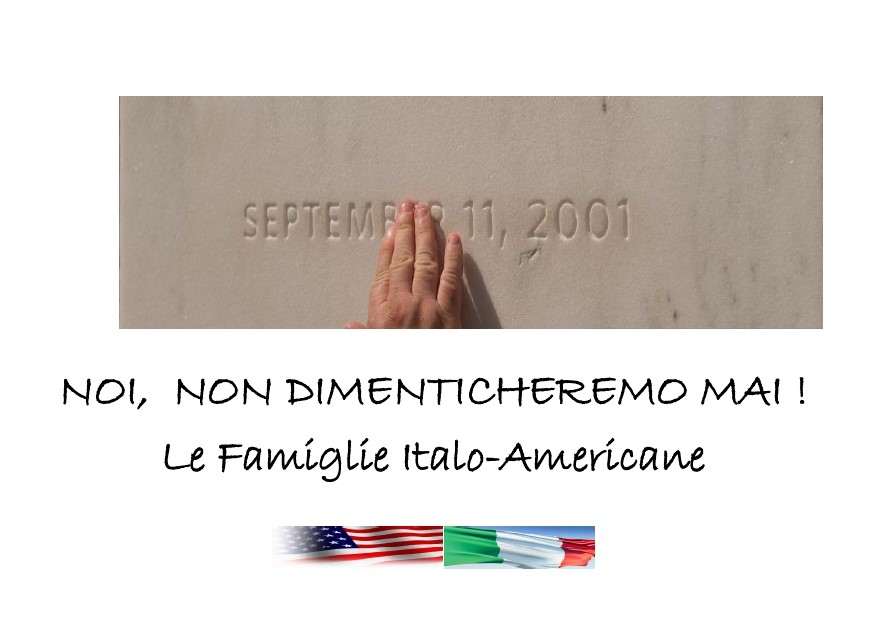
This was the beginning of my involvement, and from that day on I promised myself to commit myself so that the memory of the Italian Americans would not be erased. It has happened on other occasions, unfortunately, and I didn't want it to happen in this circumstance too. This is why I have dedicated myself to looking for the names. Now there is a list that contains the names of the 3,042 official victims, plus I have also included those of the four planes, on which there were also Italian Americans, one of whom was born in Italy. There are no names of the dead victims inside the Pentagon because they have not been officially published.
At the moment I have a list that says there were 208 Italian American victims. It is an estimate, a list on which I have worked a lot, but there is no certainty that the Italian American victims in reality have not been more. I relied on first and last names. I asked the Italian Consulate and the New York City Hall to help me in this search, but no one could do anything, due to privacy.
Are these 208 Italian Americans or are there also people officially born in Italy and then immigrated to America?
In my book those who were born in Italy are marked in yellow, while for the others there is the place of birth in America, many were born in New York or New Jersey ... it's all recorded.
Some of these people may not have had Italian citizenship or Italian origins, but they did have an Italian surname. And in some cases I had to exclude from my list someone who had a typically Italian surname, but a first name that made one think of belonging to another ethnic group. My children are named Gennarino and Giuseppe, it is clear that they are Italian; my daughter is called Amanda, and with her perhaps one might think that she is not, but there would be no certainty. In short, it was a complicated job that could have been more precise if I had received the help I requested.
But is there a group, an association of relatives of the victims?
No, I did not consider it necessary to establish it; it would have become an insult to the families. The year following the events of 11 September I got the Italian Consul at the time involved to organize a ceremony in which to honor our victims, with the reading of the names I had then. In the second and third years I managed to draw up a more organized list and many families followed me. At the time, I represented the Campania Region as a Consultant. I managed to convince the Regional Assessor for Emigration Adriana Buffardi to allocate $ 100,000 to be distributed to the families of the victims who had origins in Campania, I had found about thirty. These funds, which I received and put into the bank, were delivered directly by the President of the Bassolino Region when he visited New York, during an event at the Italian Consulate.
I took care of identifying families and helping them in various ways: I remember a father who asked me for help, a former policeman. He was the father of a young man who died on September 11, and his daughter-in-law did not want to tell him where his son's body was buried. I tried to look for news, but nobody wanted to tell me anything, again for privacy reasons. They are dramatic stories, and unfortunately sometimes there was nothing to be done.
Once, during the reading of the names at the Consulate, there was a very unpleasant episode. At the end of the reading of the names, a lady felt ill and passed out. She was the mother of a very young Sicilian boy who had not been named: he had died on September 11, but his name was not on the list. I was very upset and I apologized, mortified. I took responsibility for this mistake in front of everyone, but the mistake came from the list published by the New York Times, which I had trusted. There, that name was not present. Even today there are two lists of victims, one with 2,980 names, the other with 3,042: and they are both official lists.
Is the reading of names repeated every September 11th?
Yes, every anniversary in the consulate from 5:30 to 6:30 in the evening, except this year when the commemoration will take place at 2:30
Twenty years have passed. Maybe something seems different after so many years ... if you think about all the years that have passed, is there an aspect of what happened that you consider differently now than you thought in those days?
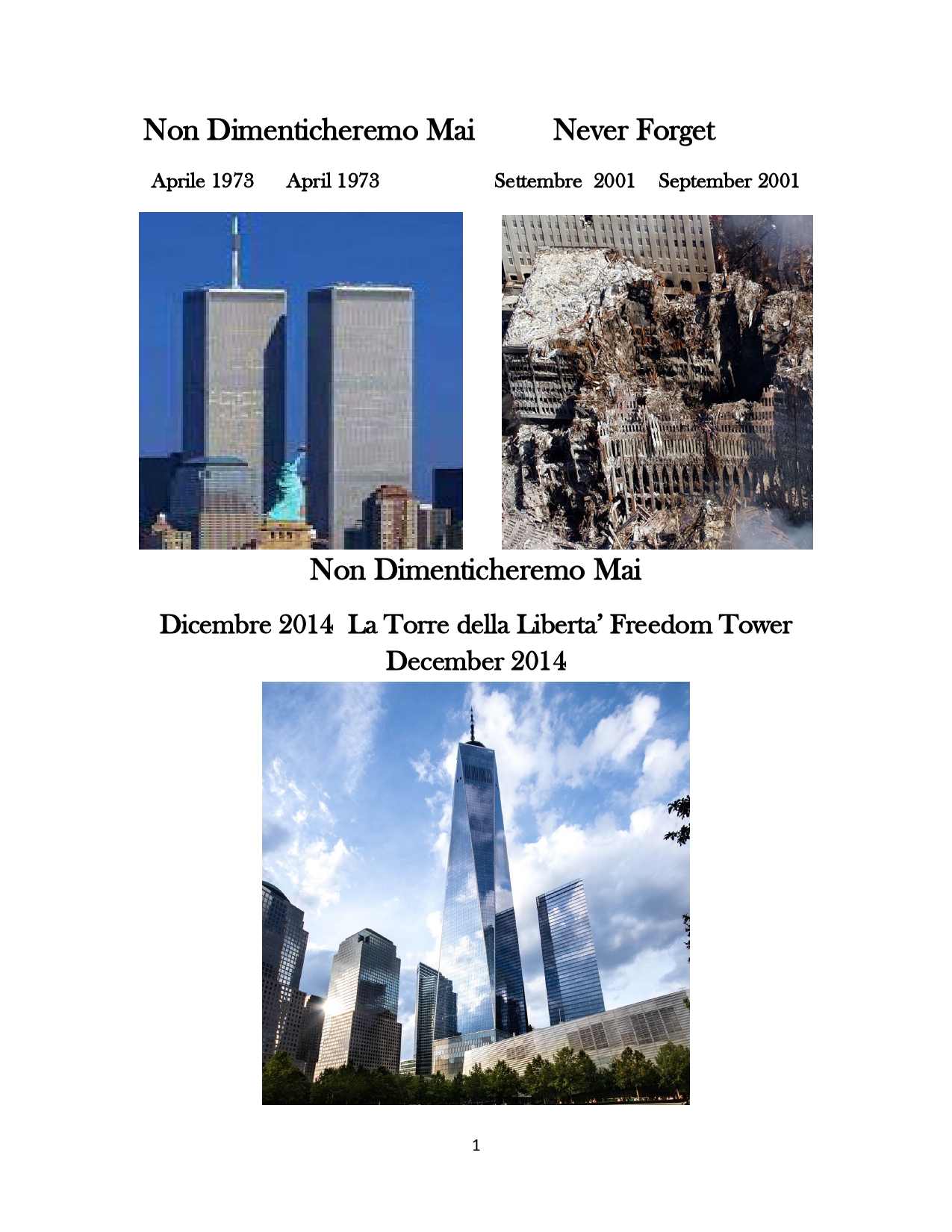
Nothing has ever changed. Also this year, between September 1st and 12th, television will do nothing but review the images, show the stories: it is always hard for a family that has lost someone dear. After the attacks, American television spoke almost only of September 11, showing images of people jumping from skyscrapers in the hope of being able to save themselves. Resuming one’s daily life was not easy; certainly that day will never be forgotten.
Luigi was an athletic boy, he ran a marathon, he rode a bicycle. When the first plane hit the first tower, his desk colleague phoned his father in New Jersey saying, "Something happened, Luigi and I are running away." The only way to escape was to take the stairs and run for over ninety floors. The boys were athletes, but it didn't help: the torn bodies were recovered, in November, down near the subway. It means that he and the other boy had almost reached a way out, then the building collapsed on itself and overwhelmed even those who were inside. These things cannot be forgotten.
When I was in the military in Italy I was sent to the place where a tragedy had occurred, the collapse of the Vajont dam. We found a town submerged by mud, so many dead, so much silence: where there was life in an hour everything disappeared, except the church bell tower. A tragedy that seemed distant to me, I don't know why, maybe I was young and I couldn't understand everything with the required maturity. But going to New York, entering a hospital, asking questions, showing a photo to a nurse who did not know what to answer you except to direct you to the morgue to see if there was the body of the person dear to you ... these are things you don't forget easily. I had to convince Emma, Luigi's mother, not to come anymore, after a while I went to hospitals with my children, with Luigi's brother, Alex, but no longer with the mother, because it was too heartbreaking for her.
Tell me about the monument to the Italian victims, which has been at the Italian Consulate in Manhattan since 2006...
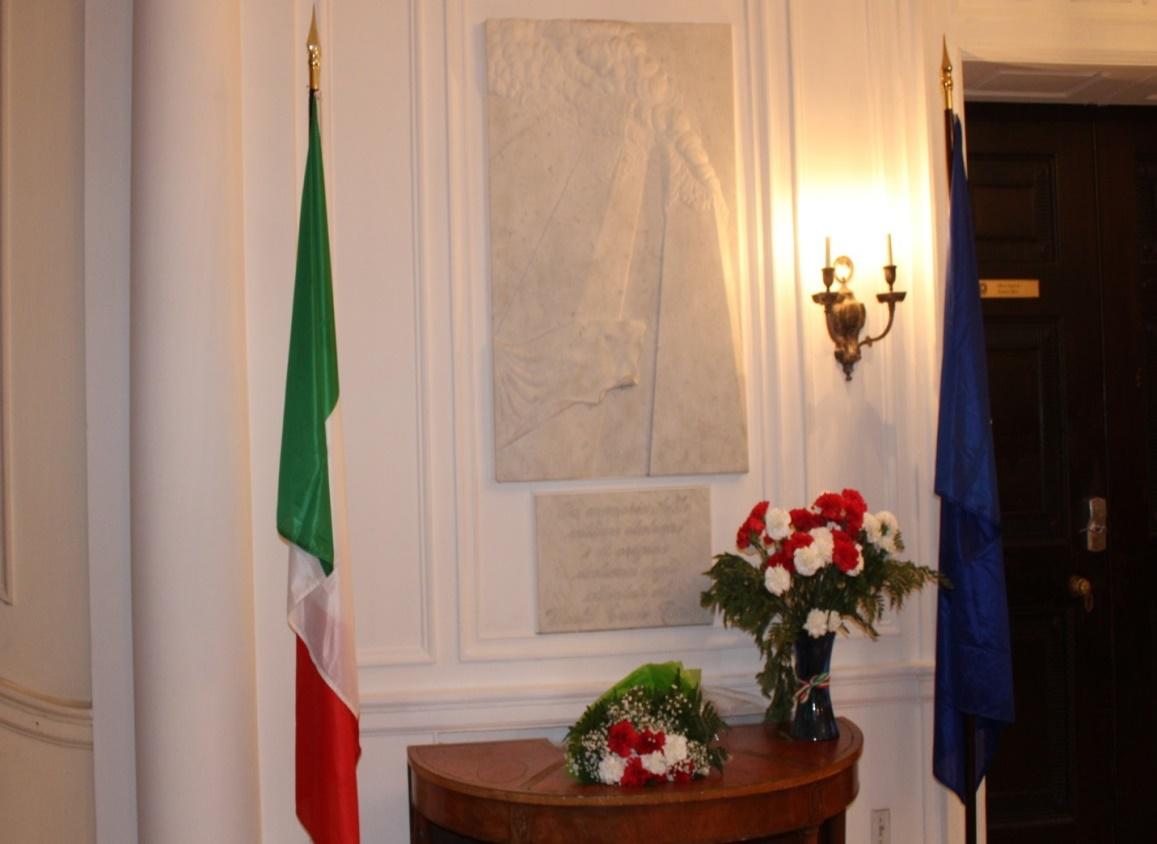
It was not easy to get this monument approved, funded and then physically installed, but in the end, in 2007 we did it. The stone came from Italy together with the then Foreign Minister and the sculptor who had won the competition, Antonio Monfredi, from Casoria in the province of Naples.
By now the monument is a fixed point honored by every institutional personality who comes to visit the Consulate General of Italy in New York, where the reading of the 208 Italian American victims is organized, which I divide into 10 pages that I give to personalities from the Italian community so they can read them, and of course there are also the families of the victims.
Aside from that, in several cities in New Jersey, Connecticut and Upstate New York, there is a memorial to the victims of September 11. In Lyndhurst, New Jersey, which is 7 miles from Manhattan and where the population is 80% Italian American, including major institutions, every September 11th there is a solemn ceremony organized by local authorities in a park dedicated to September 11, where families gather in prayer.
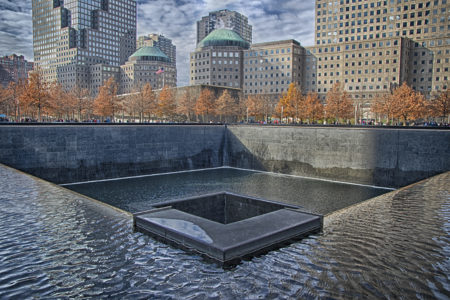
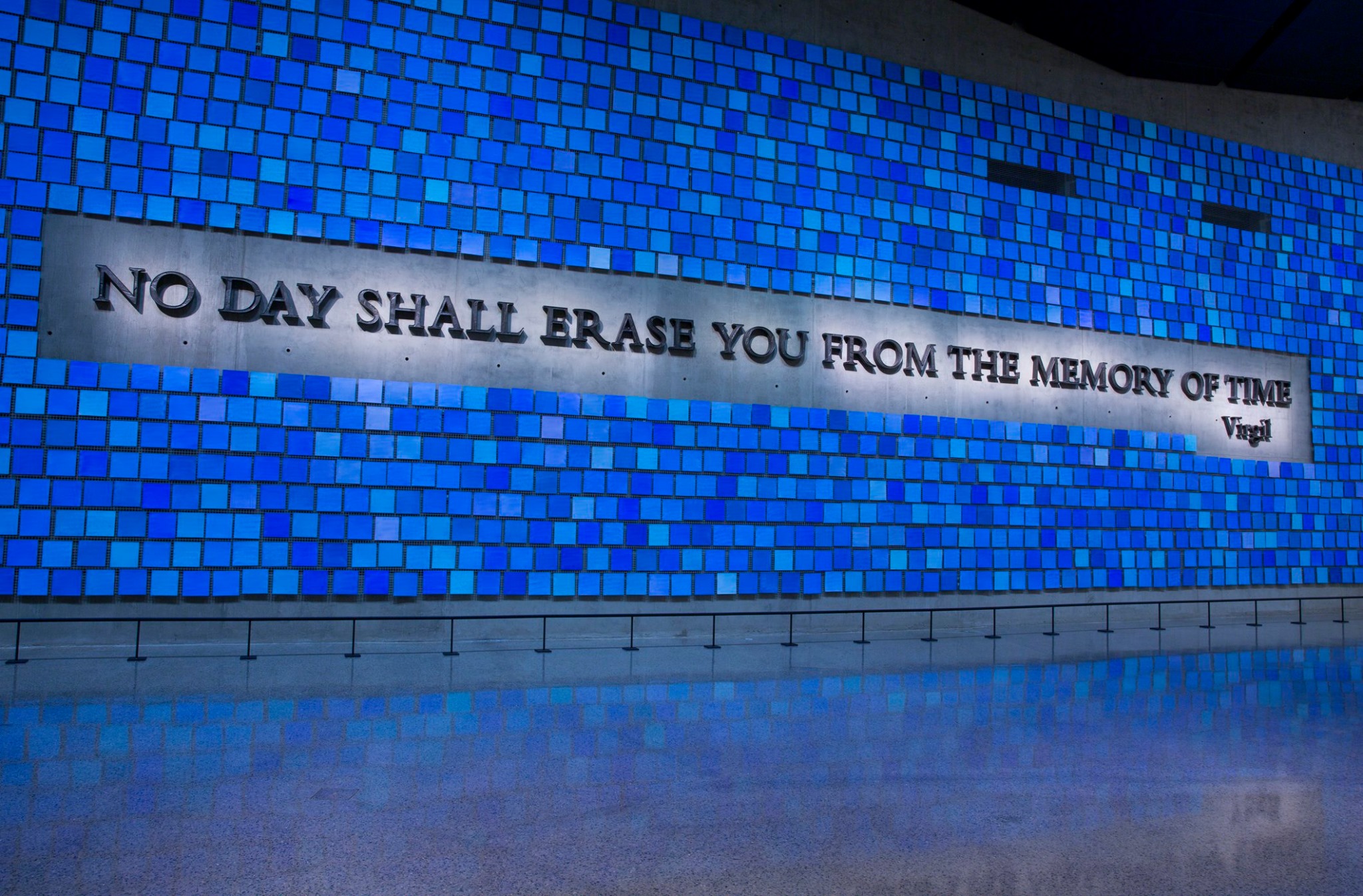
The site where the World Trade Center once stood is now completely rebuilt. In one of the buildings there is a very moving museum that remembers what happened that day, and who died. Have you ever been there, and if so, do you go often?
At Ground Zero I went to the reading the names of the victims for 5 years, after which politics took over and it no longer seemed like a place of commemoration for families, but rather a catwalk for notables.
When the museum was inaugurated, I didn't go there, I went the following week. I don't feel very well comfortable there, it seems a bit commercial to me. Many prefer to remember their loved ones in their city, where they can gather in memory of this event in a more private way. I'll probably go back this year, to read the names in the morning.
When does the book come out?
When we do this interview, which obviously precedes the day of publication, I tell you that I should be able to get it printed before September 11, 2021.
In reality, more than a book it is a collection of photographs and facts that aims to represent the sacrifice of our Italians and Italian Americans. It is a gift to families; it is not a commercial endeavor. I feel it as a duty. This land has given me so much. All the members of the diplomatic staff I have met in recent years have approved my work, aware of my dedication to the project. When it comes out I will hand it over to the families, the authorities and I will leave copies of it at the Consulate, whoever wants it can have it. There are no sponsorships; the responsibility is mine alone, for better or for worse.
Questa è un'intervista molto particolare per me, e ovviamente, non solo per me. Anche se non ero a New York, la mia vita è cambiata per sempre, l'11 settembre del 2001. E' cambiata per sempre ma, naturalmente, non come avvenne ai parenti delle vittime di quell'orrendo giorno. Per tutti questi anni ho passato ogni 11 settembre limitando il più possibile la mia attività lavorativa: usando invece il mio tempo per riflettere, ricordare, rinnovare il mio rispetto per chi quel giorno fu ucciso.
Oggi è il ventesimo anniversario di un momento storico per tutti, ma anche della morte di tante, troppe persone innocenti. E oggi We the Italians dà il suo piccolo contributo alla memoria delle vittime di quegli attacchi, ospitando il Cavalier Giulio Picolli, che da quel giorno instancabilmente si è battuto e si batte per non dimenticare e per raccontare come possibile le vittime italiane dell'undici settembre. Gli diamo il benvenuto e nell'abbracciarlo virtualmente abbracciamo tutte le famiglie italiane che hanno perso qualcuno in una giornata che non dimenticheremo mai
Caro Giulio, sei il coordinatore delle famiglie italiane dell'11 settembre. Ti chiediamo di dirci qualcosa in più su di te e su chi hai perso in quell’orribile giorno
Io sono arrivato qui negli Stati Uniti nel 1966, quindi ho una bella esperienza di vita vissuta nell’area metropolitana di New York.
Nelle torri gemelle lavorava il mio figlioccio Luigi Calvi, che era cresciuto coi miei figli: io l’ho battezzato, gli ho fatto fare la cresima, per me era ed è un figlio. Oggi avrebbe 52 anni e mezzo, era nato a Napoli ed è morto quando ne aveva 32 e mezzo. Era sposato da circa 4 anni, però ancora non aveva voluto far crescere la famiglia perché era molto impegnato nel suo lavoro, immaginava di avere una lunga vita davanti…
Luigi lavorava per uno dei più grandi brokers di New York dell’epoca, la Cantor Fitzgerald, che ha perso quel giorno quasi l’85% dei suoi impiegati. Luigi era stato assunto da meno di 3 mesi, perché oltre al suo livello professionale aveva il vantaggio di parlare bene l’italiano. Dal suo ufficio d’angolo là in alto lui vedeva fino al New Jersey. Alle 6 del mattino doveva già essere lì, perché lavorava con le borse europee. Lui partiva dal New Jersey alle 4 e mezzo del mattino per arrivare in ufficio alle 6.
Io di quella giornata ho ricordi un po’ confusi. Il mio primo ricordo è quando alle 9 del mattino mi chiama mia sorella da Napoli e mi chiede cosa stesse succedendo. Io non sapevo nulla, appena accesa la televisione ho subito telefonato a Emma, la madre di Luigi, e poi al padre, Mario. Il mio caro amico Mario Calvi era sull’autostrada che porta dal New Jersey a Brooklyn e che guarda Manhattan, e quindi lui ha visto che si era fermato il traffico e guardando a sinistra c’era questo fumo che veniva dalla parte bassa di Manhattan. Non potendo raggiungerlo al telefono ho parlato con Emma, che aveva appena acceso la televisione e non capiva se quello che stava vedendo fosse un film. Era difficile capire cosa stesse accadendo, in quei momenti. Ci sono volute diverse ore.
Alla sera, io e i miei figli ci siamo precipitati a Manhattan, ma avevano bloccato il tunnel e i ponti non ci lasciavano passare. Ci siamo riusciti alla due di notte: mio figlio è riuscito a convincere un militare a farci passare tramite un poliziotto amico, siamo arrivati vicino a Ground Zero ed era un caos infernale: le sirene, le autoambulanze, chi correva di qua e di là, non ci si poteva avvicinare.
Tornati a casa, siamo rimasti colpiti e delusi dalla trasmissione in onda sulla televisione italiana. Era “Porta a porta” di Bruno Vespa, che annunciava con certezza che non c’erano vittime italiane. Bastava conoscere Manhattan per sapere che purtroppo non era possibile, vista l’alta percentuale di italiani che vivevano e lavoravano proprio nelle torri gemelle. Mi ha ferito particolarmente perché io ho fondato e sono parte di diverse associazioni italiane, e so benissimo che tra la polizia e i vigili del fuoco sono moltissimi gli italiani che orgogliosamente portano il loro cognome sul distintivo di riconoscimento.
Nei giorni successivi siamo tornati a Manhattan per cercare Luigi, o meglio Gigetto, come lo chiamavamo noi: ma non ci siamo riusciti. Io e sua mamma abbiamo fatto il giro di tutti gli ospedali, di tutti i luoghi di raccolta, siamo stati nei luoghi più impensati, per notte e giorno per cercare di avere notizie o trovare il corpo, fino a che siamo entrati in possesso di una lista, in cui Luigi Calvi era tra i nomi menzionati come non deceduti, coloro dei quali non era stata ritrovata prova di morte. Siamo tornati a cercarlo, ma non abbiamo trovato nulla. E’ un ricordo atroce, a Manhattan camminavamo tutti quanti con una fotografia attaccata al collo della persona di cui non sapevamo nulla, nelal speranza che qualcuno l’avesse vista da qualche parte. Lungo la Broadway Street che portava giù ai grattacieli c’erano migliaia di persone, bambini, adulti, donne che piangevano e camminavano e chiedevano informazioni. Non lo scorderò mai.
Successivamente purtroppo ci arrivò la notizia che nonostante questa lista, la cui provenienza non si conosceva bene, il nostro caro Luigi era morto. Gli abbiamo fatto 3 funerali. Il primo funerale era di morte dichiarata ma non accertata, quindi è stato fatto tutto qui nel New Jersey. Il secondo è stato fatto quando c’è stata la conferma che non c’erano più sopravvissuti e che lui non era in nessun altro posto, quindi una morte dichiarata senza il corpo. Poi a novembre è stata ritrovata una parte del corpo del ragazzo, che ci è stata consegnata, ed è allora che abbiamo fatto il terzo funerale. A quel punto già c’era una lapide al cimitero, ma era vuota, non c’era il corpo all’interno, ma questa storia è uguale a quella di altre centinaia di persone.
Questo è stato l’inizio del mio coinvolgimento, e da quel giorno mi sono ripromesso di impegnarmi perché la memoria degli italoamericani non venisse cancellata. E’ successo in altre occasioni, purtroppo, e io non volevo succedesse anche in questa circostanza. E’ per questo che mi sono dedicato a cercare i nomi. Ora c’è una lista che racchiude i nomi delle 3042 vittime ufficiali, in più ci ho messo anche quelle dei quattro aerei, sopra i quali c’erano anche degli italoamericani, di cui uno nato in Italia. Non ci sono i nomi delle vittime morte all’interno del Pentagono perché non sono stati pubblicati ufficialmente.
Al momento io ho una lista che dice che ci sono state 208 vittime italoamericane. E’ una stima, una lista sulla quale ho lavorato moltissimo, ma non c’è certezza che le vittime italoamericane in realtà non siano state di più. Io mi sono basato sui nomi e i cognomi. Ho chiesto al Consolato Italiano e al Municipio di New York di aiutarmi in questa ricerca, ma nessuno ha potuto far nulla, per via della privacy.
Questi 208 sono italoamericani o ci sono anche persone ufficialmente nate in Italia e poi emigrate in America?
Nel mio libro quelli che sono nati in Italia sono marcati in giallo, mentre per gli altri c’è il luogo di nascita in America, molti nacquero a New York o nel New Jersey… è tutto scritto.
Alcuni di queste persone potrebbero non avere avuto la cittadinanza italiana o origini italiane, ma avevano un cognome italiano. E in alcuni casi ho dovuto escludere dal mio elenco qualcuno che aveva un cognome tipicamente italiano, ma un nome che faceva pensare all’appartenenza ad un altro gruppo etnico. I miei figli si chiamano Gennarino e Giuseppe, è chiaro che sono italiani; mia figlia si chiama Amanda, e con lei forse si potrebbe pensare che non lo sia, ma non ci sarebbe certezza. Insomma, è stato un lavoro complicato che avrebbe potuto essere più preciso se io avessi ricevuto l’aiuto che ho richiesto.
Ma esiste un gruppo, un’associazione di parenti delle vittime?
No, non ho ritenuto necessario costituirla, sarebbbe divenuta una offesa ai familiari. L’anno successivo agli eventi dell’11 settembre ho coinvolto il Console italiano di allora per organizzare una cerimonia in cui onorare le nostre vittime, con la lettura dei nomi che io avevo allora. Nel secondo e nel terzo anno sono riuscito a stilare una lista più organizzata e molte famiglie mi hanno seguito. Io all’epoca rappresentavo come Consultore la Regione Campania. Riuscii a convincere l’Assessore regionale all’emigrazione Adriana Buffardi a destinare 100.000 dollari da distribuire alle famiglie delle vittime che avevano origini campane, ne avevo trovate circa una trentina. Questi fondi, da me ricevuti e messi in banca, furono consegnati direttamente dal Presidente della Regione Bassolino quando venne in visita a New York, durante un evento al Consolato italiano.
Io mi occupai di individuare le famiglie e aiutarle nei piu’ svariati modi: ricordo un padre che mi chiese aiuto, un ex poliziotto. Era il padre di un giovane morto l’11 settembre, e sua nuora non voleva dirgli dove fosse sepolto il corpo di suo figlio. Provai a cercare notizie, ma nessuno mi volle dire nulla, sempre per motivi di privacy. Sono storie drammatiche, e purtroppo a volte non c’è stato nulla da fare.
Una volta, durante la lettura dei nomi al Consolato, c’è stato un episodio molto spiacevole. Al termine della lettura dei nomi una signora si è sentita male ed è svenuta. Era la madre di un giovanissimo ragazzo siciliano che non era stato nominato: era morto l’11 settembre, ma il suo nome non era nell’elenco. Io ci sono rimasto malissimo e le ho chiesto scusa, mortificato. Mi sono assunto davanti a tutti la responsabilità di questo errore, ma l’errore veniva dall’elenco pubblicato dal new York Times, del quale mi ero fidato. Lì, quel nome non c’era. Ancora oggi ci sono due elenchi delle vittime, uno con 2.980 nomi, l’altro con 3.042: e sono entrambi elenchi ufficiali.
La lettura dei nomi si ripete ogni undici settembre?
Sì, ogni anniversario in consolato dalle 5.30 alle 6.30 di sera, a parte quest’anno che la commemorazione avverra’ alle 15:30
Sono passati vent'anni. Forse qualcosa sembra diverso, dopo tanti anni... se pensi a tutti gli anni che sono passati, c'è un aspetto di quello che è successo che consideri diversamente ora rispetto a quello che pensavi a quei tempi?
Non è mai cambiato nulla. Anche quest’anno, tra il primo e il 12 settembre la televisione non farà altro che far rivedere le immagini, mostrare le storie: è sempre duro per una famiglia che ha perso qualcuno caro. Dopo gli attentati la televisione americana ha parlato quasi solo dell’undici settembre, mostrando immaggini di persone che si buttavano dai grattacieli con la speranza di potersi salvare. Riprendere la propria vita quotidiana non è stato facile, certamente quel giorno non sarà mai dimenticato.
Luigi era un ragazzo atletico, correva la maratona, andava in bicicletta. Quando il primo aereo colpì la prima torre, il suo collega di scrivania telefonò a suo padre nel New Jersey dicendo “è successo qualcosa, io e Luigi scappiamo”. L’unico mezzo per poter scappare era prendere le scale e correre per oltre novanta piani. I ragazzi erano atleti, ma non è servito: i corpi dilaniati sono stati recuperati, a novembre, giù vicino alla metropolitana. Significa che lui e l’altro ragazzo erano quasi arrivati a una via d’uscita, poi il palazzo è crollato su sé stesso e ha travolto anche quelli che stavano dentro. Queste cose non si possono dimenticare.
Quando ero militare in Italia fui inviato sul luogo dove era successo una tragedia, il crollo della diga del Vajont. Trovammo un paese sommerso dal fango, tanti morti, tanto silenzio: lì dove c’era vita in un’ora era tutto scomparso, tranne il campanile della chiesa. Una tragedia che però mi sembrava distante, non so perché, forse ero giovane e non riuscivo a comprendere tutto con la dovuta maturità. Ma andare a New York, entrare in un ospedale, fare delle domande, far vedere una foto a un’infermiera che non sapeva cosa risponderti se non indirizzarti verso la camera mortuaria per vedere se lì c’era il corpo della persona a te cara… sono cose che non dimentichi facilmente. Io dovetti convincere Emma, la mamma di Luigi, a non venire più, dopo un po’ andavo negli ospedali con i miei figli, con il fratello di Luigi, Alex, ma non più con la madre, perché era troppo straziante per lei.
Parlami del monumento alle vittime italiane, che è presso il Consolato italiano a Manhattan dal 2006…
Non è stato facile fare approvare, finanziare e poi installare materialmente questo monumento, ma alla fine, nel 2007 ce l’abbiamo fatta. La lapide è arrivata dall’Italia insieme all’allora Ministro degli Esteri e lo scultore che aveva vinto il bando, Antonio Monfredi, di Casoria in provincia di Napoli. Ormai il monumento è un punto fermo onorato da ogni personalità istituzionale che viene in visita al Consolato Generale d’Italia a New York, dove viene organizzata la lettura delle 208 vittime italoamericane, che io divido in 10 pagine che consegno a personaggi dalla comunità italiana che così possono leggerli, e in più naturalmente sono presenti le famiglie delle vittime.
A parte questo, in diverse città del New Jersey, del Conneticut e di Upstate New York, c’è un monumento alle vittime dell’undici settembre. A Lyndhurst in New Jersey, che dista 7 miglia da Manhattan e dove la popolazione è dell’80% italoamericana, comprese le principali istituzioni, ogni undici settembre c’è una solenne funzione organizzata dalle autorita’ locali in un parco dedicato al 9/11 dove le famiglie si riuniscono in preghiera
Il sito dove sorgeva il World Trade Center è ora completamente ricostruito. In uno degli edifici c'è un museo, molto commovente, che ricorda quello che è successo quel giorno, e chi è morto. Ci sei mai stato, e se sì, ci vai spesso?
A Ground Zero sono stato per la lettura dei nomi delle vittime per 5 anni, dopo la politica ha preso possesso e non mi e’ sembrato piu’ un luogo di commemorazione per le famiglie, ma bensi una passerella per i notabili.
Quando è stata fatta l’inaugurazione del museo non ci sono andato, sono andato la settimana successiva. Non mi trovo molto bene lì, mi sembra un po’ commerciale. Molti preferiscono ricordare i loro cari nella loro città, dove si possono raccogliere in memoria di questo avvenimento in maniera più privata. Probabilmente ci tornerò quest’anno, per la lettura dei nomi alla mattina.
Quando esce il libro?
Nel momento in cui facciamo quest’intervista, che ovviamente è precedente al giorno di pubblicazione, ti dico che dovrei riuscire a farlo stampare prima dell’11 settembre 2021.
In realtà, più che un libro è una raccolta di fotografie e fatti che vuole rappresentare il sacrificio dei nostri italiani e italoamericani. E’ un regalo alle famiglie, non è un’operazione commerciale. Io lo sento come un dovere. Questa terra mi ha dato tanto. Tutti i membri del personale diplomatico che ho incontrato in questi anni hanno approvato questo mio lavoro, consapevoli della mia dedicazione al progetto. Quando uscirà lo consegnerò alle famiglie, alle autorità e ne lascerò copie al Consolato, chiunque lo voglia lo potrà avere. Non ci sono sponsorizzazioni, la responsabilità è solo mia, nel bene e nel male.