The first Italians who came to the US during the mass migration age spent their first years basically without any right. Some of them because they considered themselves "birds of passage": they came to the US with the full intent of making money and then come back to Italy. Some of them because they weren't interested in losing their Italian citizenship to acquire the American one. Some of them because they were discriminated and maybe they didn't even know, working two or even three jobs, that they could have rights.
In 1905, after many local religious societies, a first national association was born, to defend them, to aggregate them, to let them know that together they could have had rights, and improve their conditions: it was the Order Sons of Italy, OSIA. One hundred and ten years after, OSIA is still alive and kicking, and Philip R. Piccigallo is OSIA the National Executive Director/CEO. We are honored to be able to talk to him.
Philip, you are the OSIA National Executive Director/CEO. Please tell our readers something about the past, the present and the future of OSIA, the most ancient Italian American organization, born in 1905
The OSIA was originally funded as a burial society. It was an opportunity for the newly arrived immigrants, who were penniless or very poor, to be assured a christian burial. It then later became known by the founder, which was doctor Vincenzo Sellaro and his colleagues, that there was need for greater help for the newly arrived immigrants, who were not very favorably welcomed when they arrived: there were discriminations, linguistic problems, housing problems, other kind of problems like getting jobs and finding places to live in a new country. OSIA then blossomed into a sort of service organization to provide the newly arrived immigrants with assistance for all their needs.
So, after a humble and minimal and modest founding in 1905, OSIA later became a very large organization of Italian Americans and an advocacy group for the new immigrants. We're the third oldest ethnic association in the United States and the only other two that are older are "The Ancient Order of The Hibernians", which is Irish and dates to 1840s, and the "B'nai B'rith", which is composed of Jewish people and dates to the 1896: and then there's OSIA. The NAACP was founded in 1909.
From 1905 to 1959 OSIA grew in chapters and reached a peak of about 2300 lodges around the country, as the immigrants went west, and south, and north. As it grew and provided more services for the immigrants, they assimilated into American society: at that time Italian Americans worked very, very hard. I've been in this job 27 years, I'm an Italian American and in all my life I've never met a lazy Italian American, ever. They work too much, most of them work two jobs, even three jobs, they retire only to take new jobs. And so they prospered, they became educated, they enlisted and performed bravely, they were one of the highest accomplished ethnic groups within the military in WWII, they took advantage of the G.I. Bill, they saved, they struggled, they sacrificed, they bought their own houses, they raised families, they insisted that their children become educated and by the late 50s they were wealthy: Italian Americans had done it.
It was at that time that OSIA decided to do something to give back to the country that had provided them these opportunities. And the way we do that in America was through philanthropy. So, in 1959 we created a nonprofit institution called The Sons of Italy Foundation, and originally the foundation was intended to assist in emergency international relief efforts, whenever there was the flood, as in Florence in the 60s, or earthquakes as in Southern Italy, in Sicily, Naples in the 80s, L'Aquila in 2009. The Sons of Italy Foundation has given tens of millions of dollars to emergency situations to help Italians, to help Italy.
Since 1959 the foundation has grown, we have given more than one hundred sixty-three million dollars in contribution to help medical research. We have three notable charities and they are: the "Cooley's Anemia Foundation" which is about Thalassemia, a Mediterranean illness that effects Italians but also people from the southern parts of the Mediterranean; "Alzheimer's Association"; and recently the "Doug Flutie Jr. Foundation for Autism". We also assisted in areas such the cure of cancer, multiple sclerosis, we gave nearly fourteen million dollars to the "March of Dimes", which help moms have full-term pregnancies and healthy babies. Then, we gave sixty-three million dollars to scholarship to help educating Italian Americans kids; and we have given money to international emergency disaster relief, including the earthquake in Mexico, famine throughout Africa, the hurricane in Haiti, the tsunami in Japan and also to the domestics social crisis like hurricanes Katrina and Andrew.
In recent years, since 2010, we've begun to support Veterans groups more: a principle recipient of our donations has been the "Wounded Warrior Project", but also the "Gary Sinise Foundation" for disabled veterans, and some other important organizations active to help our military heroes.
For the future, we hope to do more. We recently produced a film called "Seize the future", a hundred and ten years of OSIA and SIF giving: and it documents not only what we've done till today, but also what we intend to do, to increase, to give more. We feel that Italians have succeeded and they've done very, very well. We will continue to support cultural projects, and of course that includes the support of the Italian language, its growth, its expansion, its study in America through the events, interchange programs and strong cultural relations with Italy.
I'm very impressed, about everything: but in particular let me thank OSIA very much, on behalf of We the Italians, for what you for the Veterans, because they deserve any possible help. Your organization is truly spread all over the US: on national, State and local level. Is this what make OSIA different than other big Italian American organizations? How many lodges are there, and how does your organization work?
We have nearly eight hundred lodges throughout the country, but we have members in all 50 states and the islands, and there's an OSIA in Canada, as well. We're a truly national organization: OSIA is a grassroots organization because we have chapters and lodges where people come together and meet on the local level.
We have 20 Grand Lodges (they are at the State level): these Grand Lodges are comprised of at least five hundred members, each. Some of them are very large. Then we've got the local lodges, which would be at city level, that together with the Grand Lodges form a Supreme Council, and then we have the Supreme Lodge of The Order of the Sons of Italy in America, which has its headquarter in Washington DC, where I am right now, and it is comprised by the all the States Presidents, 5 Vice Presidents, national Presidents, Chairmen, financial officers, etc. etc.
OSIA has been recognized by every United States President since Woodrow Wilson, and the Congress knows us as well, for one major reason: our members. We have 450,000 members, with their families: and they vote. That's the key, it's not a Chamber of commerce, we vote. So, if there's an issue of concerning, we can get three hundred people to write three hundred different letters to their Senators and Representatives and Governors.
The Sons of Italy Foundation organized on May 21 its 27th Annual National Education & Leadership Gala. Please tell us more about this wonderful event.
The gala began modestly in 1988, as a breakfast on Capitol Hill where we honored a former Congressman at that time: there was 88 people back then, but we were able to read a letter that day, from President George H. Bush recognizing what we were trying to do. Then it grew over the years, and now it is held the third Thursday in May, every spring, at the National Building Museum. Every year we attract close to a thousand people: we could lower the price and attract two thousands, but we rather keep it on a certain level. It was intended, and still is, to highlight the achievements of the Italian Americans, on many levels. So, we recognize professional accomplishments, but we also recognize the aspirations of the younger Italian Americans who want to achieve those type of success: that's why it is called the "National Education & Leadership Awards Gala". The leaders we recognize, essentially "pass the baton" to the young kids, because we give from 10 to 12 scholarships that night: that's about a hundred thousand dollars, while we give a total over the entire year of over one million dollars, every year. But that night, 10 to 12 young Italian Americans get about a hundred thousand dollars, they are brought into the city with their families, they are brought upon the stage and presented the scholarships by individuals or lodges that have underwritten the scholarship itself. It becomes a very memorable experience.
President Bill Clinton has been attending four times as President and three times since he left the office, and each time he said he did it to meet the kids, because he knew his meeting with John F. Kennedy in 1963 inspired him to go to Public Service and helped him become the President of the United States.
We've recognized people of the highest order, just the top of their fields: doctors, military or political leaders, corporate executives, entertainers. We added in 2009 a yearly "Lifetime Achievement Award" for outstanding individuals who are not of Italian heritage.
Another important part of OSIA is the Commission for Social Justice. What is it?
Commission for Social Justice was founded in the late 80s, it is within the Sons of Italy, and it is a sibling organization. It's dedicated to the achievements of social justice for all people, but it focuses on the defamation and stereotyping of the Italian Americans that unfortunately occurs in the motion pictures and in marketing and in advertisings, television, and even in the press. So, if there's something egregiously brought up which seeks to exploit Italian American's good name because it can sell a product, we will step in and gently, but sometimes not so gently let them know that we don't accept that, and there will be consequences.
Let's talk about the Garibaldi-Meucci Museum, a National Landmark owned and operated by the Sons of Italy Foundation
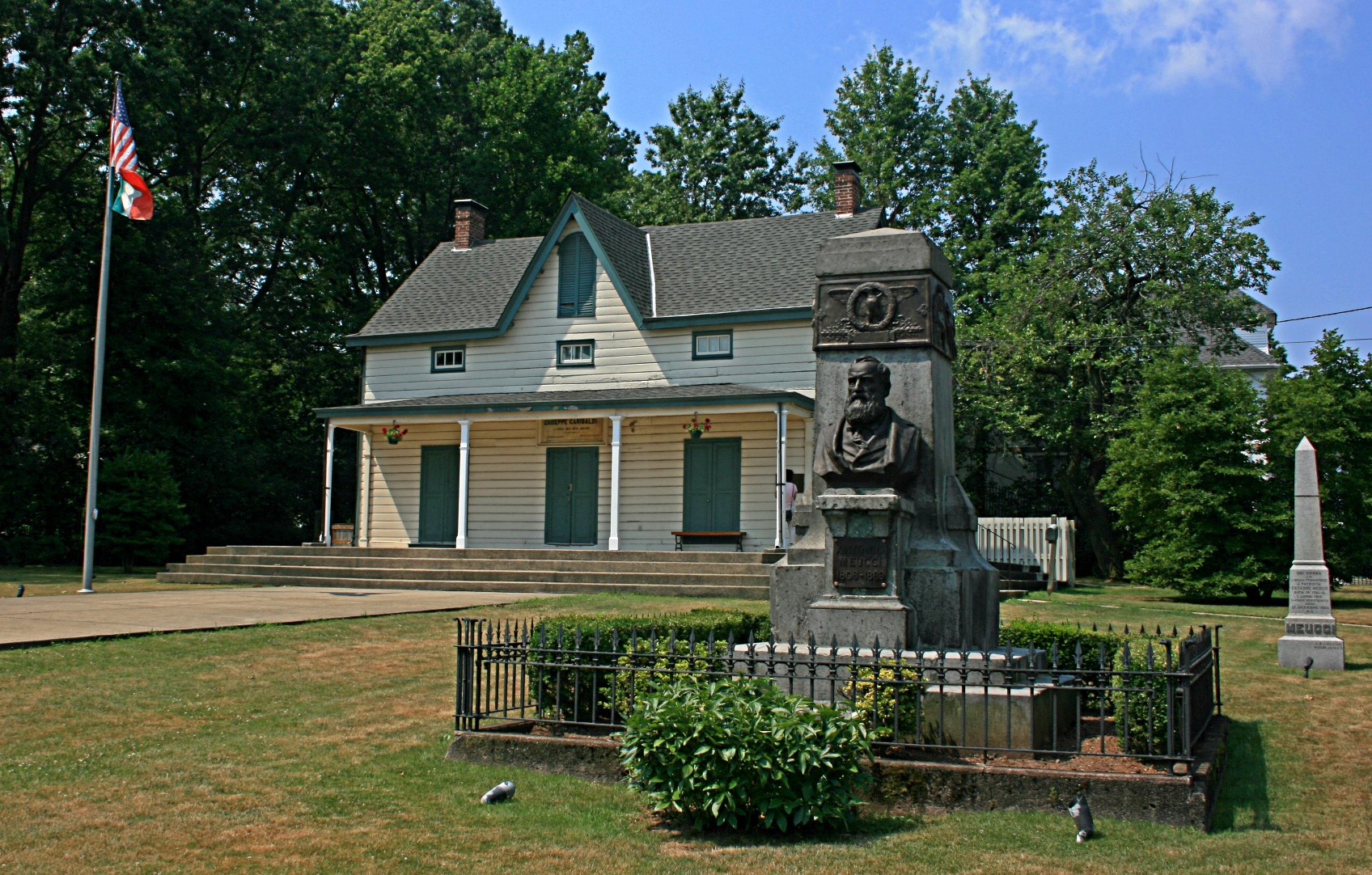
We're proud of it. The Garibaldi-Meucci Foundation is located in Staten Island, NY, and it is run on a daily basis by the Grand Lodge of New York, but it's owned by the Sons of Italy Foundation and hence it has a nonprofit status: it is a cultural icon, people don't realize that are very few, maybe three or four other museums in the entire country, dedicated to ethnic groups, that are national landmarks. The only other one that I know is the Polish American one in Philadelphia. So, there may be others but it's one of the very rare ones and of course it is the house where Antonio Meucci grew up, he who invented the telephone, notwithstanding the efforts to market it by Alexander Graham Bell. But also Garibaldi came here and rested for years and remained friend with Antonio Meucci, over many years. We maintain it, we teach Italian language courses there, we do our best to reinforce the cultural and historical aspects that it represents.
At We the Italians we daily monitor every possible content regarding Italy and the US online. What are your plans regarding how the web could improve the communication among the whole Italian American community?
I have the same approach you have, and today if one is not deeply and actively involved in online activities and social media, then one is outside the main stream of the world because that is certainly the future. We're doing the best we can and we're going to try to improve and expand our website and our involvement on the internet.
It's very crowded, the internet: people, I think, understand that. And so, more is not always better. But one must carve a niche out, and we are doing it slowly but steadily: we have our OSIA website, we have a blog, we have a Twitter account, we have regular social media posting, we have fifity-two thousand like on our Facebook page... but the key to it I firmly believe is maintaining an ongoing dialogue with people who find interesting who you are and what you do. And so, we must do much, much, much more. We're working with other Italian American organizations, particularly with the young, dynamic leader of the National Italian American Foundation, John M. Viola. We've done things together. And we're going to continue and to expand, we have recently hired brand new staff people to handle social media, we're going to be discuss that in a national convention in August, in Florida.
Is OSIA represented in Italy? Is there room to improve the links between OSIA and the Italians who live here, in Italy?
We are not officially represented in Italy beyond our regularly relations with the US Embassy in Rome and through the Italian Embassy here, in Washington. We should do much more. What might be a good idea is to have a yearly conference in Italy whereby Italian Americans like us and others are invited, and they can go and exchange ideas. Maybe something like this could be done, we should talk about this with the other organizations.
I primi italiani che arrivarono negli Stati Uniti durante il periodo dell'emigrazione di massa passarono i primi anni praticamente senza alcun diritto. Alcuni di loro perché si consideravano "birds of passage": andarono negli Stati Uniti con l'intento di fare soldi e poi tornare in Italia. Alcuni di loro perché non erano interessati a perdere la cittadinanza italiana per acquisire quella americana. Altri perché pesantemente discriminati e forse perché non sapevano nemmeno, facendo due o anche tre lavori contemporaneamente, che potevano avere alcuni diritti.
Nel 1905, dopo l'istituzione di molte società religiose locali, nacque una prima associazione nazionale per difenderli, aggregarli, per far sapere loro che insieme avrebbero potuto contare di più e migliorare le loro condizioni: era l'Order Sons of Italy, OSIA. Centodieci anni dopo, l'OSIA è ancora viva e attiva più che mai, e Philip R. Piccigallo è il suo Direttore Esecutivo. Siamo onorati di poter parlare con lui.
Philip, ti preghiamo di dire ai nostri lettori qualcosa sul passato, il presente e il futuro di OSIA, la più antica organizzazione italoamericana, nata nel 1905
L'OSIA nacque originariamente con la finalità di poter dare degna sepoltura ai nostri connazionali deceduti in America. Essi erano molto poveri, e per poter dare loro una sepoltura cristiana, si pensò di organizzarsi. In breve il fondatore Vincenzo Sellaro e ai suoi colleghi capirono che c'era bisogno di maggiore aiuto per gli immigrati appena arrivati, che non erano accolti molto favorevolmente quando arrivavano: c'erano discriminazioni, problemi linguistici, di alloggio, di lavoro. OSIA quindi divenne presto un'organizzazione di servizi che potesse aiutare in ogni loro esigenza i nuovi immigrati italiani.
Così, dopo un inizio umile, minimale e modesto nel 1905, OSIA in seguito crebbe fino a divenire una grande organizzazione di italoamericani e un gruppo di sostegno per i nuovi immigrati. Siamo la terza più antica associazione etnica negli Stati Uniti, subito dopo " The Ancient Order of The Hibernians ", che è irlandese e risale al 1840, e il "B'nai B'rith", che è ebraica e risale al 1896: poi c'è l'OSIA. La NAACP fu fondata nel 1909.
Dal 1905 al 1959 l'OSIA è cresciuta e ha raggiunto un picco di circa 2300 logge in tutto il paese, quando gli immigrati si spostarono anche verso ovest, e sud, e nord. Grazie anche all'a crescita e all'aiuto di OSIA, gli Italiani si assimilarono nella società americana, soprattutto per merito della loro abitudine a lavorare molto duramente. Da 27 anni mi occupo di OSIA, sono un italoamericano e in vita mia non ho mai incontrato un italoamericano pigro, mai. Lavorano troppo, la maggior parte di loro fa due lavori insieme; anche quando vanno in pensione ma continuano a fare altro e lavorare. E così hanno avuto modo di guadagnare, sono diventati istruiti, si sono arruolati nell'esercito e con valore hanno difeso il loro nuovo Paese (gli italiani furono uno dei gruppi etnici più meritevoli durante la seconda guerra mondiale) e poi hanno approfittato delle leggi in favore dei veterani di guerra, hanno risparmiato, hanno lottato duramente e si sono sacrificati, hanno comprato le loro case, hanno cresciuto le loro famiglie, hanno fatto sì che i loro figli ricevessero un'istruzione, e alla fine degli anni '50 erano divenuti ricchi.
E' stato in quel momento che OSIA ha deciso di fare qualcosa per "give back" al Paese che aveva fornito loro queste opportunità. E il modo in cui lo facciamo in America è tramite la filantropia. Così, nel 1959 abbiamo creato un ente no-profit chiamato "Sons of Italy Foundation", che in origine aveva lo scopo di aiutare in operazioni di soccorso di emergenza internazionale, ogni volta che c'era un'alluvione, come a Firenze negli anni '60, o un terremoto come nel Sud Italia, in Sicilia, o Napoli negli anni '80, o L'Aquila nel 2009. La Sons of Italy Foundation ha donato decine di milioni di dollari per situazioni di emergenza per aiutare gli italiani e l'Italia.
Dal 1959 la Fondazione è cresciuta, abbiamo dato più di 163 milioni di dollari in contributi per aiutare la ricerca medica. Abbiamo tre importanti associazioni di beneficenza: la "Cooley's Anemia Foundation", che si occupa di talassemia, una malattia che colpisce gli italiani, ma anche persone provenienti da tutto il Mediterraneo; la "Alzheimer's Association"; e di recente la "Doug Flutie Jr. Foundation for Autism". Abbiamo anche aiutato donando in settori quali la cura del cancro, la sclerosi multipla, e abbiamo dato quasi quattordici milioni di dollari per la "March of Dimes", un progetto che aiuta alcune mamme a portare avanti gravidanze difficili partorendo bambini sani. Poi, abbiamo dato 63 milioni di dollari per borse di studio per contribuire a educare i ragazzi italoamericani; e abbiamo donato a favore di operazioni di soccorso internazionale di emergenza, tra cui il terremoto in Messico, la carestia in Africa, l'uragano ad Haiti, lo tsunami in Giappone e anche crisi domestiche come gli uragani Katrina e Andrew.
Negli ultimi anni, dal 2010, abbiamo iniziato a sostenere maggiormente i gruppi di veterani di guerra: il principale progetto che abbiamo sostenuto è il "Wounded Warrior Project" ma anche la "Gary Sinise Foundation" per i veterani disabili, e alcune altre importanti organizzazioni attive nell'aiuto ai nostri eroi militari.
Per il futuro, speriamo di fare di più. Recentemente abbiamo prodotto un film che si chiama "Seize the future", centodieci anni di OSIA: documenta non solo quello che abbiamo fatto fino ad oggi, ma anche quello che abbiamo intenzione di fare, per migliorare e per dare di più. Continueremo a sostenere progetti culturali, e naturalmente a promuovere la lingua italiana, la sua crescita, la sua espansione, il suo studio in America.
Provo molta ammirazione per tutto ciò che fate, ma in particolare vorrei ringraziarvi per quello che fate per i veterani di guerra, perché meritano ogni possibile aiuto. La vostra organizzazione è diffusa veramente in tutto gli Stati Uniti: a livello nazionale, statale e locale. E' questo ciò che rende OSIA diversa rispetto ad altri grandi organizzazioni italoamericane?
Abbiamo quasi ottocento logge in tutto il Paese, ma abbiamo membri in tutti i 50 stati e le isole, e c'è un OSIA anche in Canada. Siamo veramente una organizzazione nazionale: OSIA è un'organizzazione che parte dal basso perché abbiamo luoghi in cui le persone si incontrano realmente.
Abbiamo 20 Grandi Logge (a livello statale): queste Grandi Logge sono composte da almeno cinquecento membri ciascuna. Alcune di loro sono molto grandi. Poi abbiamo le logge locali, a livello cittadino, che insieme con le Grandi Logge formano il Consiglio Supremo; e poi abbiamo la Suprema Loggia dell'OSIA, che ha sede a Washington DC, dove mi trovo in questo momento, ed è composta dai Presidenti di tutte le logge, 5 Vice Presidenti, i Presidenti nazionali, i responsabili finanziari ed altri. OSIA è stata riconosciuta e celebrata da ogni Presidente degli Stati Uniti da Woodrow Wilson in poi, e anche il Congresso ci conosce bene, per una semplice ragione: i nostri membri. Abbiamo 450.000 soci, con le loro famiglie: e votano. Questa è la chiave: non siamo una Camera di commercio, votiamo. Quindi, se c'è un problema, possiamo avere trecento persone che scrivono trecento diverse lettere ai loro senatori e rappresentanti e governatori.
OSIA ha organizzato lo scorso 21 maggio il suo 27° Annual National Education & Leadership Gala. Di che si tratta?
Il primo gala fu molto semplice, lo organizzammo nel 1988con una colazione a Capitol Hill, dove onorammo un ex membro del Congresso di quel tempo: c'erano 88 persone allora, ma fummo in grado di leggere una lettera inviataci dal presidente George H. Bush che celebrava e riconosceva le nostre attività. Poi il gala è cresciuto molto nel corso degli anni, ed ora è tenuto ogni anno il terzo giovedì di maggio, ogni primavera, presso il National Building Museum. Ogni anno attira quasi un migliaio di persone: potremmo abbassare il prezzo e attrarne duemila, ma vogliamo piuttosto tenerlo su un certo alto livello. Era ed è dedicato a evidenziare i risultati degli italoamericani, in diversi settori. Quindi, premiamo personalità che hanno raggiunto un grande successo nel loro campo, ma anche le aspirazioni dei giovani italoamericani che vogliono raggiungere quello stesso successo: è per questo che è chiamato "National Education & Leadership Gala". I leader che premiamo essenzialmente "passano il testimone" ai giovani ragazzi, perché diamo 10-12 borse di studio in quell'occasione, per un valore di circa un centinaio di migliaia di dollari, su un totale di borse di studio che sull'intero anno supera il milione di dollari. Ma durante il gala da 10 a 12 giovani italoamericani ricevono in totale quella cifra, vengono portati in città con le loro famiglie, e poi accompagnati sul palco dove ricevono le borse di studio da parte di individui o logge che hanno sottoscritto la borsa di studio stessa. Per loro è un'esperienza memorabile.
Il presidente Bill Clinton ha partecipato quattro volte durante i suoi due mandati, e altre tre volte dal 2000 ad oggi, e ogni volta ci dice che lo fa per incontrare i ragazzi, perché sa che il suo incontro con John F. Kennedy nel 1963 lo ha spinto a fare politica e poi lo ha aiutato a diventare Presidente degli Stati Uniti.
Abbiamo premiato personaggi di prim'ordine, solo il meglio nei loro rispettivi campi: medici, leader militari e politici, imprenditori, personalità dello spettacolo. Abbiamo aggiunto nel 2009 un "Lifetime Achievement Award" per premiare persone eccezionali che non sono di origine italiana.
Un'altra parte importante del OSIA è la Commission for Social Justice...
La Commission for Social Justice è stata fondata alla fine degli anni '80, èd è un'organizzazione interna all'OSIA dedita a difendere la giustizia sociale per tutti, ma si concentra in particolare sulla diffamazione e gli stereotipi contro gli italoamericani, che si verificano purtroppo nei media, nel marketing, nella pubblicità, in televisione, e anche sulla stampa. Quindi, se c'è qualcosa di forte e dispregiativo contro il buon nome degli italoamericani, la Commission for Social Justice interviene, cercando di farlo delicatamente, anche se a volte serve farlo con forza, per fare sapere che noi non accettiamo discriminazioni e diffamazioni contro gli italoamericani, e che esse generano conseguenze.
Parliamo del Garibaldi-Meucci Museum, un fantastico luogo di interesse nazionale di proprietà e gestito dall'OSIA ...
Siamo orgogliosi del Garibaldi-Meucci Museum, che si trova a Staten Island, NY, ed è gestito dalla Gran Loggia di New York, ma è di proprietà della Sons of Italy Foundation, e quindi è a tutti gli effetti senza scopo di lucro: si tratta di una vera e propria icona culturale, sono molto pochi, forse tre o quattro in tutto il paese, i musei dedicati a gruppi etnici che sono anche luoghi di interesse culturale ufficialmente riconosciuti a livello nazionale. L'unico altro che io conosco è il Museo polacco americano di Philadelphia.
Il Garibaldi-Meucci Museum è la casa in cui Antonio Meucci è cresciuto: Meucci è colui che inventò il telefono, nonostante il fatto che poi fu Alexander Graham Bell che lo commercializzò. Garibaldi la frequentò e ci venne per riposarsi per alcuni anni, e rimase in seguito amico di Antonio Meucci. Noi teniamo in ordine il museo, ci insegniamo corsi di lingua italiana, facciamo del nostro meglio per rafforzare gli aspetti culturali e storici che esso rappresenta.
We the Italians esegue un monitoraggio quotidiano circa ogni possibile contenuto online riguardante insieme Italia e Stati Uniti. Quali sono i vostri progetti per quanto riguarda il web, per migliorare la comunicazione tra tutta la comunità italoamericana?
La penso come te, oggi se non si è profondamente e attivamente coinvolti online e sui social media, si è al di fuori del flusso principale del mondo, perché questo è certamente il futuro. Stiamo facendo del nostro meglio e stiamo cercando di migliorare ed espandere il nostro sito e il nostro coinvolgimento su internet.
E' molto affollato, internet: e non sempre più cose ci sono e meglio è. Ma bisogna ritagliarsi una nicchia, e noi lo stiamo facendo lentamente ma costantemente: abbiamo il nostro sito web, abbiamo un blog, un account Twitter, una quotidiana attività sui social media, 52.000 like sulla nostra pagina su Facebook... credo fermamente che sia fondamentale mantenere un dialogo costante con le persone che trovano interessante chi sei e cosa fai. E così, dobbiamo fare molto, molto di più. Stiamo lavorando con altre organizzazioni italo-americane, in particolare con il giovane, dinamico leader della NIAF, John M. Viola. Vogliamo continuare a espanderci in questo campo, abbiamo recentemente assunto nuove persone proprio per gestire i social media, e di questo parleremo anche nella convention che terremo ad agosto in Florida.
Esiste una rappresentanza dell'OSIA in Italia? C'è spazio per migliorare i collegamenti tra OSIA e gli italiani che vivono qui in Italia?
Non siamo ufficialmente rappresentati in Italia, al di là delle nostre regolari relazioni con l'Ambasciata americana a Roma, e con l'Ambasciata italiana qui, a Washington. Dobbiamo fare molto di più. Una buona idea potrebbe essere quella di avere una conferenza annuale in Italia in cui gli italoamericani siano invitati e possano andare e scambiarsi idee. Forse qualcosa di simile potrebbe essere fatto, dovremmo parlare di questo con le altre organizzazioni.