
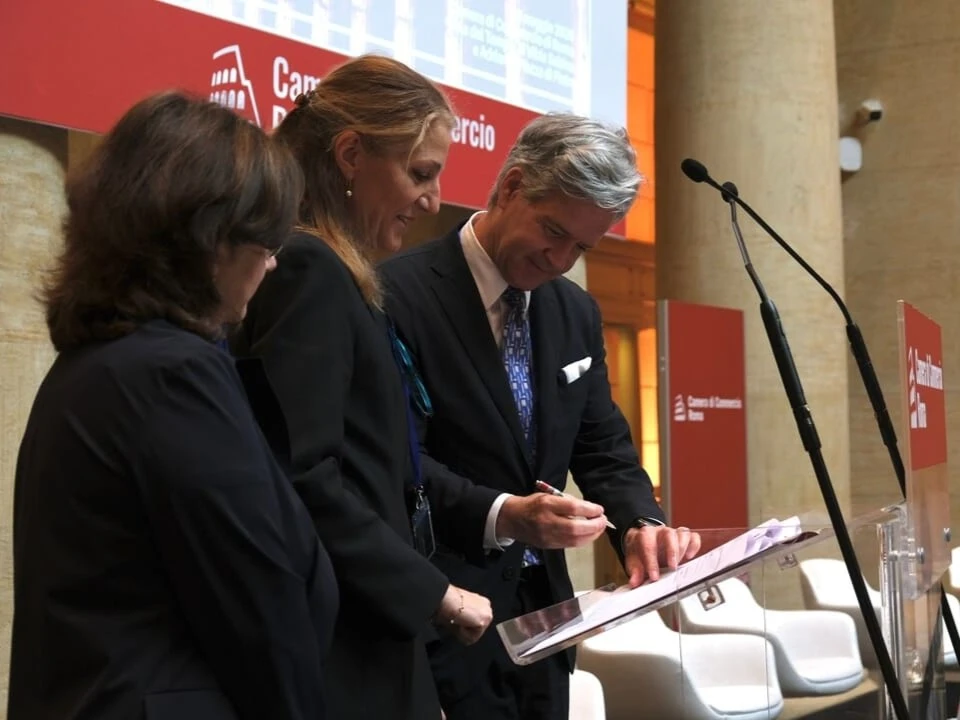
Rome and New York have launched a new cultural alliance aimed at connecting two of the world’s most recognizable historic urban centers through art, education, and institutional cooperation. The agreement, signed on May 20, 2026, links Rome’s Municipio I – the historic heart of the Italian capital – with Manhattan, the symbolic and cultural core of New York City.
The initiative was conceived by Giulia Silvia Ghia, Councillor for Culture of the Rome's Municipio I, who promoted the project as part of the “Forum Cultura Roma Centro” held at the Chamber of Commerce of Rome.
The three–year protocol establishes a framework for cooperation between museums, archives, libraries, schools, universities, and cultural institutions on both sides of the Atlantic. Planned activities include artistic exchanges, youth programs, public art initiatives, and discussions on how historic districts can remain vibrant and livable while preserving their heritage. Officials described the agreement as the first formal partnership of its kind between major historic city centers.
The partnership reflects a broader idea of “urban cultural diplomacy,” where cities collaborate directly to address shared challenges such as sustainability, accessibility, tourism pressure, and community identity. Rather than treating historic centers as open–air museums, leaders from both cities emphasized the need to keep them active places shaped by residents, students, artists, and local businesses.
Manhattan Borough President Brad Hoylman-Sigal attended the signing in Rome, while New York City Mayor Zohran Mamdani delivered a video message highlighting culture as a driver of education, economic growth, and social cohesion. According to organizers, the agreement could become the foundation for a wider international network connecting historic districts in major global capitals.
For Rome, the initiative also reinforces the international role of Municipio I, home to many of Italy’s most important museums, institutions, universities, and archaeological landmarks. For New York, it represents another step in strengthening cultural ties with Italy, a country whose heritage continues to shape the identity of millions of Italian Americans and the broader cultural landscape of the United States