
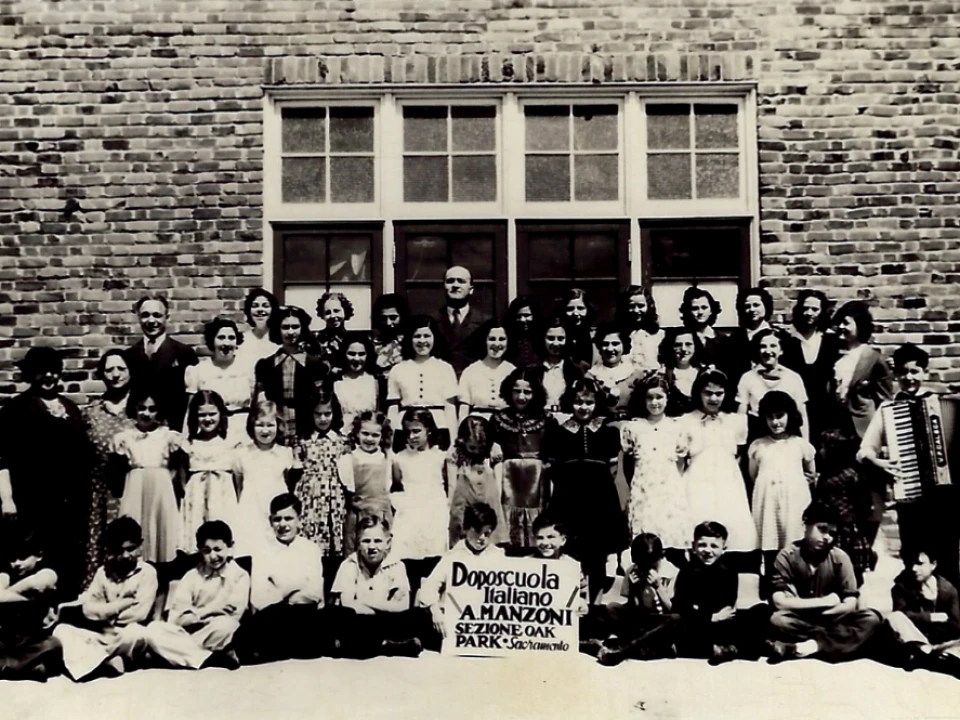
Since the beginning of the year, the new history committee of volunteers for the Little Italy Historic district have been engaged in collecting the history of the Italian American people that have lived there.
Building on past projects to document the Italian community in Sacramento, the new committee has developed guidelines and lists of Italian families and businesses to interview and are making progress.
For those who grew up in east Sacramento there is a saying: "if you know one Italian, you knew them all. And past projects have relied on that collective connection among Italian Americans. In other words, everyone knew everyone's business, and that is part of the story we are looking for.
In recent years we have witnessed the passing of many of those who lived in East Sacramento so the mission to uncover more of their history through their memories and that of their descendants is urgent.
These were a distinct community of people. Theirs is a story of a neighborhood that was once a rural area developed heavily by Italian immigrants and Italian farmers. Italians came with the Gold Rush in 1850, 175 years ago. And they stayed.
Italian Americans have a history of place in East Sacramento with roots that are deep in the history of the area. Most Italian immigrants came before World War II. And others immigrated after the war during the postwar era of Italian immigration. By the 1940s, whole blocks in East Sacramento were populated by Italian Americans. They built their own homes, their own Italian national Church, social institutions, and business district serving the needs of the Italian community.
A walk down 48th Street in east Sacramento between Folsom Boulevard and J street, a two-block stretch, one finds a narrow street with little 2-bedroom bungalow houses crowded next to each other. In 1940, more than 75 Italians lived on those two blocks. Their names and addresses are listed in the Little Italy section of the Italian Cultural Society website at italiancenter.net.
One can only imagine the close communal life on that street, our version of the crowded tenement districts of other cities. Our own urban village. Similar concentrations of Italians were widespread throughout the East Sacramento Little Italy Historic district.
These are the stories we want to tell, stories that echo the shared experiences of our Italian people. To document the cultural and physical impact of the Italians and help us claim and celebrate our roots.
Our goal is to collect their memories and preserve them so they will not be forgotten.
History is a story, one that can inform us of who we are, where we come from, and why we are the way we are today.


Subscribe to our Newsletter
By subscribing, you'll get the latest blog post and news by email.
SUBSCRIBE