

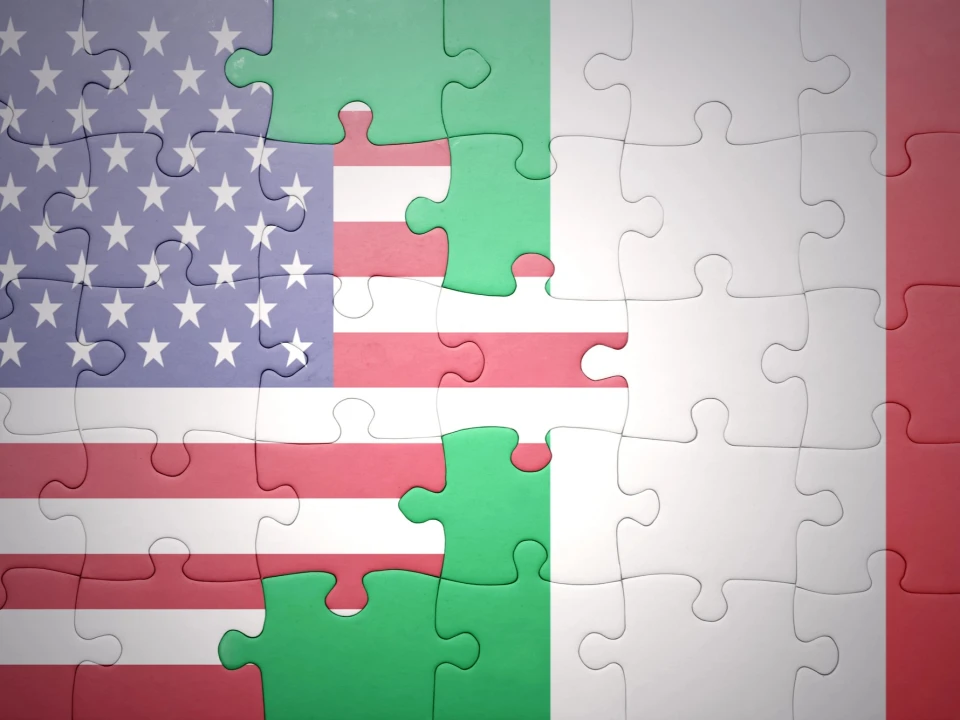
In August 2025 the U.S. commercial deficit narrowed to US $59.6 billion – a drop of 23.8% from July’s US $78.2 billion. At the same time U.S. imports fell by 5.1% to US $340.4 billion, while exports rose slightly to US $280.8 billion. These shifts reflect the impact of tariff measures and changing demand patterns across the American market.
For Italy the United States remains a crucial outlet. In 2024 Italian exports to the U.S. reached roughly US $70.16 billion, confirming the strength of the bilateral relationship. Early 2025 data show continued resilience: during the first four months Italian exports totaled about US $26.1 billion, compared with US $25.1 billion during the same period in 2024. This pushed Italy’s trade surplus with the U.S. to around US $15.1 billion.
These figures reveal a contrast – overall U.S. imports declined sharply in August, yet Italian shipments to the American market remain solid and, in key categories, continue to grow. Italy is benefiting from strong demand for high-value goods such as machinery, design, luxury products, and specialty food items, all of which hold a stable position in U.S. consumption patterns.
The reduction of the U.S. deficit in August signals a shift in American purchasing behavior – fewer total imports and only modest growth on the export side. For Italian businesses this environment presents both opportunities and challenges. The U.S. market remains large and receptive to premium goods, but higher trade barriers and increased logistical costs require companies to refine pricing strategies and strengthen local partnerships.
Despite these pressures, Italy–U.S. trade stands out as one of the more stable and dynamic relationships within global commerce. The coming months will show whether Italian exporters can maintain momentum in a market that is adjusting rapidly to tariff changes and evolving consumer priorities.