
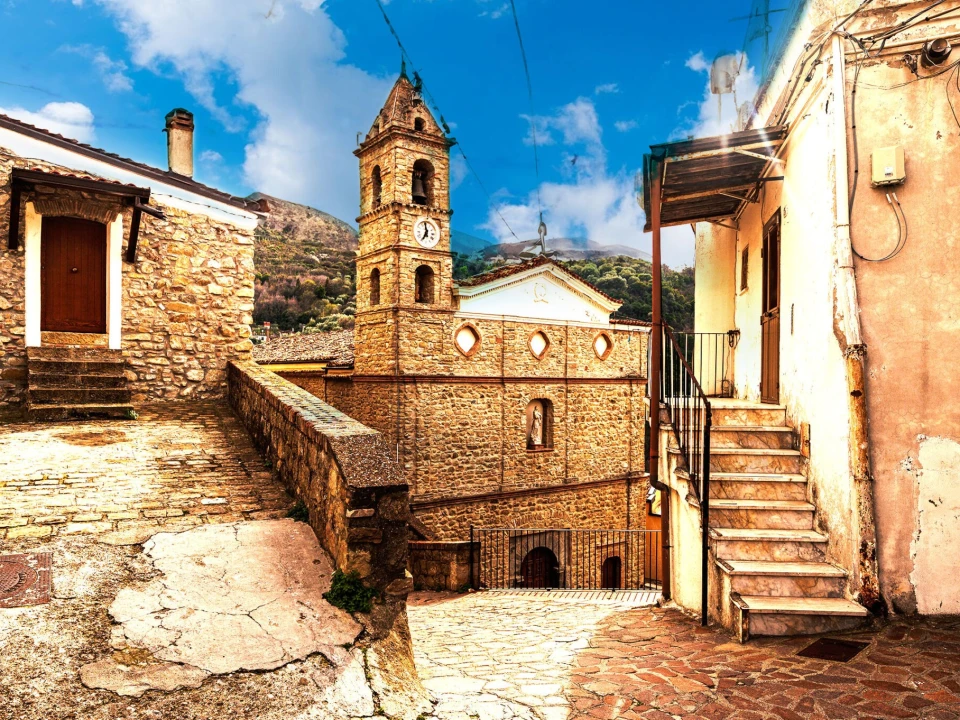
In the hills of southern Basilicata, above the broad course of the Sinni Valley, we can find Valsinni, one of those Italian villages that can easily mislead you: it is small, with fewer than two thousand residents, and quiet enough to seem almost detached from the noise of modern tourism, yet it carries a larger-than-life identity, influenced not only by history and geography, but also by literature.
The village lies in the province of Matera, around 55 miles south of Matera itself, roughly 95 miles southwest of Bari, and within reach of the Ionian coast. Its name is generally understood as meaning the “valley of the Sinni,” the river that has long marked the life of this corner of Basilicata; like many Italian places, however, the village had other names before arriving at the present one: for centuries it was known as Favale, later Favale di Malvarosa, before taking its current toponym in the nineteenth century.