
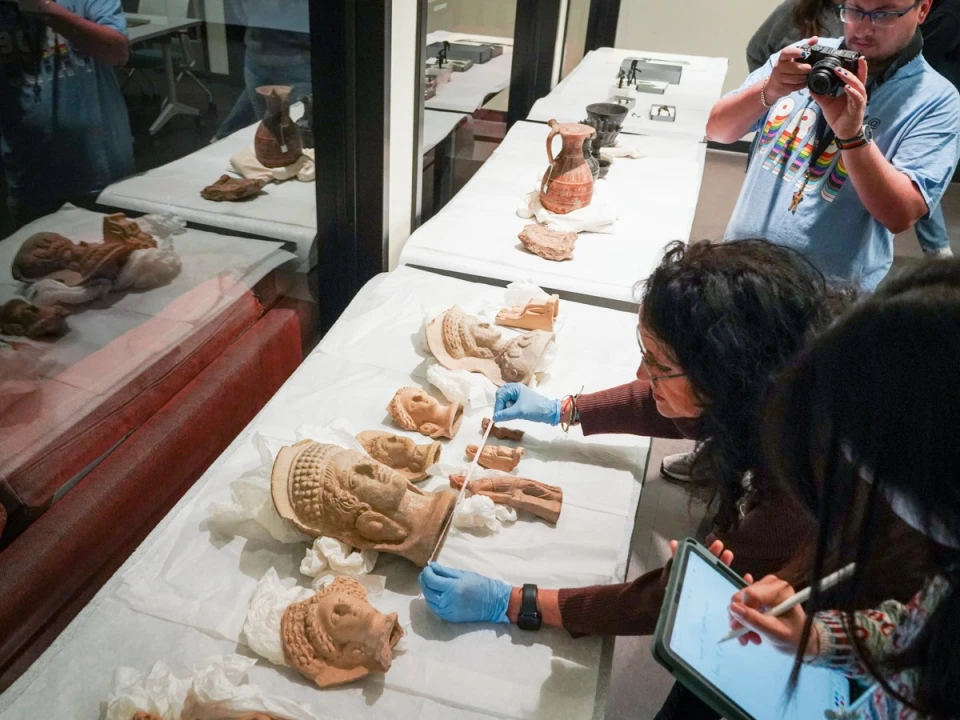
The students leaned in to get a closer look at the object on the table: a small terracotta figurine of a woman cradling a baby, her features softened by time. On the back, pressed into the clay more than 2,000 years ago, was a fingerprint — a trace of the maker’s hand and a link to the worshipper who once carried the statuette as an offering to a goddess.
For the students gathered in the quiet classroom that day, the ancient world felt suddenly close.“Pressing the clay inside the mold, where you actually see those fingerprints, is really the most poetic time-traveling you can do,” said Lisa Pieraccini, a continuing lecturer in the Department of History of Art.